Autism Acceptance Month

Some Quick Tips, and Why Autistic People Belong in Publishing By: Lindsay Fortin Hi! I’m Lindsay, one of the bloggers with the Secret Writers Guild, …

Autism Acceptance Month

Did you know April is Autism Acceptance Month? We didn’t. So we’re taking this opportunity to boost the signal and support neurodiversity!

Is your rewrite rut trying to tell you something?

Have you gotten stuck in a rewrite rut? We certainly have! A rewrite rut is when you keep rewriting and polishing instead of moving on and getting the rest of your first draft written. Last month’s East Bay Science Fiction and Fantasy Writers Craft Klatsch’s topic was “How do you know when to stop editing?” The discussion got us thinking; there just might be a good reason you’re in a rut.

The standard advice on getting out of a rewrite rut is all about wrangling your perfectionism demons. And it’s not wrong—learning to ignore your inner critic and give yourself permission to just get the bare bones down and make it pretty later is hard.

We found that choosing a low-pressure writing project to practice helped. For us low-pressure meant writing a short story for a friend’s eyes only about a vampire and a hellhound’s perfect date. Keeping the mood campy and darkly humorous helped us not take ourselves too seriously. Knowing only our friend would read it helped us feel safe making mistakes.

But sometimes your inner critic is trying to tell you something really important.

We realized one reason we’d gotten stuck in a rewrite rut was that there were some fundamental flaws in our first chapters that needed addressing before we moved on, and it took us several rewrites to figure out what they were. To wit, we needed to change the setting from San Francisco to New York, rewrite one chapter from a different character’s point of view so it made more sense, and turn Mama Cleo’s pack of six werewolves into three. All of these would’ve meant major—like throw it all out and start over major—revisions if we’d kept going. Thankfully, we could feel something was amiss. The rewrite rut helped us identify the problems so we could safely move forward.

We also got stuck because we weren’t mentally ready to write some of the scenes we knew were coming up. We plan to write more about this in another post, but it’s okay to stop and put your mental health first. Writing is emotionally taxing. Maybe you’re not ready to go where the story will take you yet.

So if you’re in a rewrite rut, try asking yourself these questions:

  • Is perfectionism the primary problem? If so, what sort of project would make it feel safe to practice just keeping writing?
  • Is there a fundamental flaw here I’m trying to figure out? Has my inner critic spotted a problem I really do need to fix before writing more?
  • Am I reluctant to write a difficult scene because I’m not ready? Do I need to take a mental health break from this project?

Sometimes a rewrite rut is productive! The trick, as always, is telling the difference. 😊

Ch-ch-ch-changes!

A belated Happy New Year to all! 2018 has brought changes in several areas.

I discussed kindred (vampire) biology with my bestie and science editor, Mad Doktor Matt, and realized I need to make the following changes:

  • The faction of kindred my characters deal with has a worldwide system of government, but is just one example of kindred culture and government. As kindred spread across the earth along with humans, they would have developed different cultures and governments.
  • I got a bit too enthusiastic about borrowing from camels’ water and heat management techniques. It didn’t occur to me, for example, that 30 gal of water weighs 250 lbs! So being able to drink 30 gal in 10 min would be impossible for a human-sized being. I’ll also have to lower the hydration requirements.
  • We came up with a 12 hour time limit between blood feedings in a late night brainstorming session, imagining a dramatic death scene. On further examination, if kindred evolved in parallel with humans from shortly after the evolution of humans, this wouldn’t work. In order to get enough blood to sustain themselves and avoid detection, kindred would have to be able to travel between settlements. Since they primarily require white blood cells, I’ll change the time limit to 13-20 days + a week. So I’ll also have to recalculate their carrying capacity accordingly.
  • Matt mentioned the feeding allergy part sounded like a game mechanic. It makes more sense to have the sensitization occur over a series of feedings. So one way to tell there’s a vampire around is if a lot of people start getting anaphylaxis.
  • We discussed what happens if a kindred turns into a flock of bats or mist and some of the bats get killed or someone sucks up the mist with a towel. We decided that the kindred would transform back, but be more emaciated, having lost an equivalent amount of mass. For example, a kindred turns into a flock of 10 bats and an enemy kills 1. When the kindred changes back they will have lost 10% of their mass.

I’m glad we had the discussion. These all serve as great examples of how every writer has blind spots.

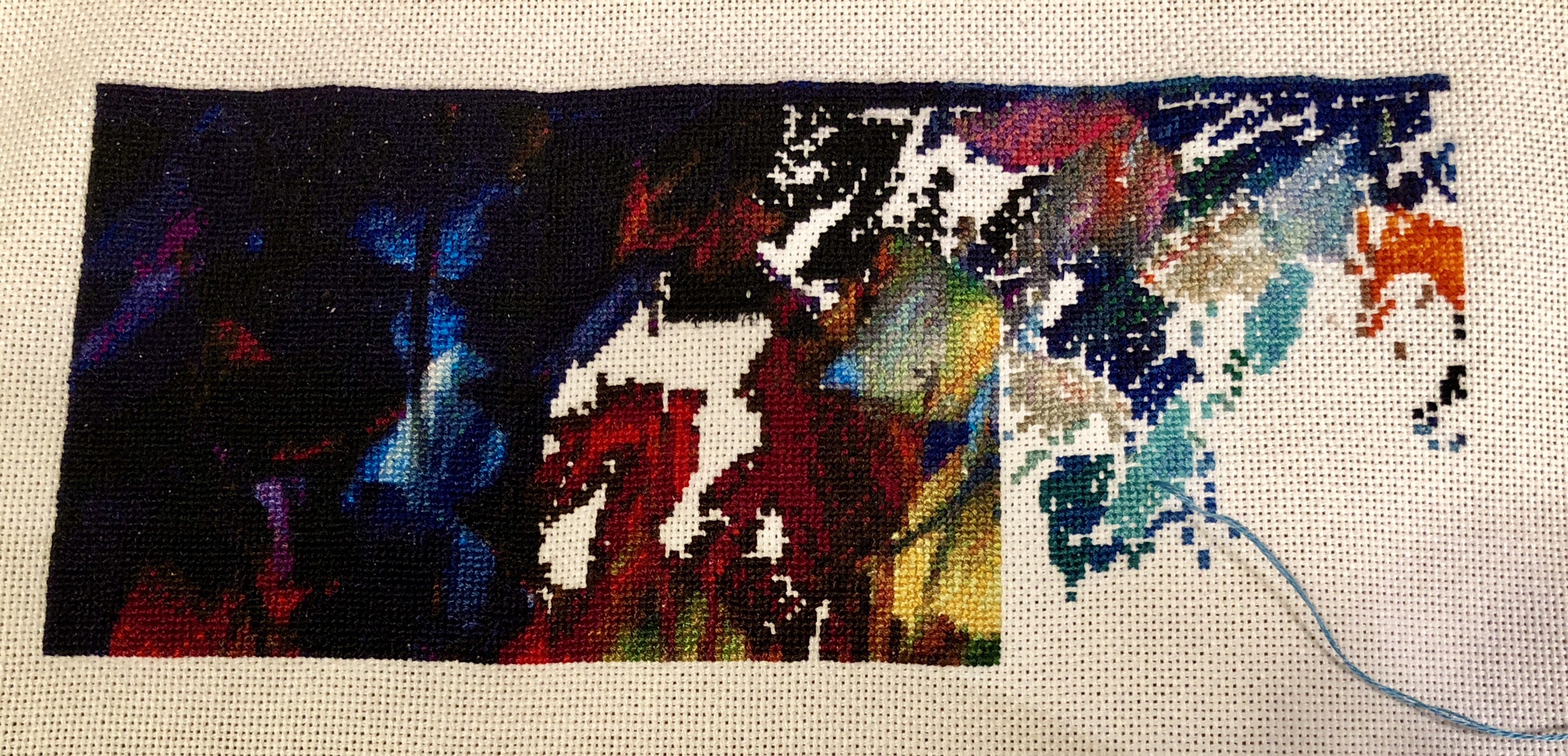
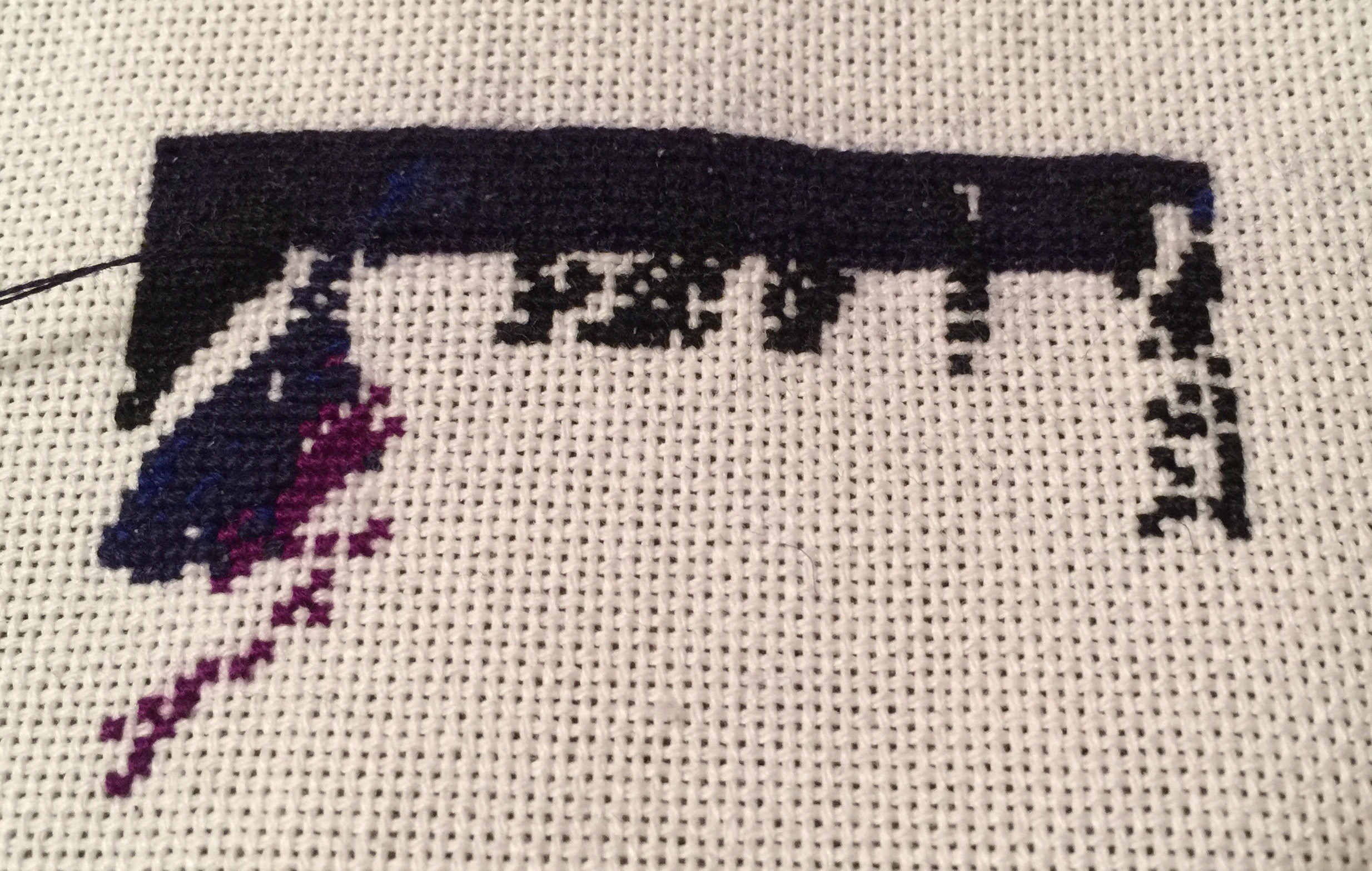
As I mentioned previously, I’m having another release surgery. All burn survivors need such surgeries periodically as the scar does not grow with the rest of the body. Burn scars actually contract over time. I’ll be getting a combination of z-plastys and laser treatment tomorrow. Right now I’m bummed I’ll have to stop work on my cross stitch project so I don’t leak all over it, but it helps to have gone through all this before. Here’s a shot of my work in progress:

I’m a little over halfway across the top. I still haven’t filled in the background on the chart’s second page because the post office lost my floss. Hopefully they’ll find it!

I plan to use some of my downtime to fulfill a childhood dream and learn Русская (Russian)! I think I was attracted to the Cyrillic alphabet. I’ve also always loved Russian fairytales. I’ve always wanted to learn all the languages in the world! It amuses me that once I learn Russian and Italian, I’ll know all the axis languages. (Totally unplanned!)

While I’m healing, I wish all of you tranquility and joy in abundance.

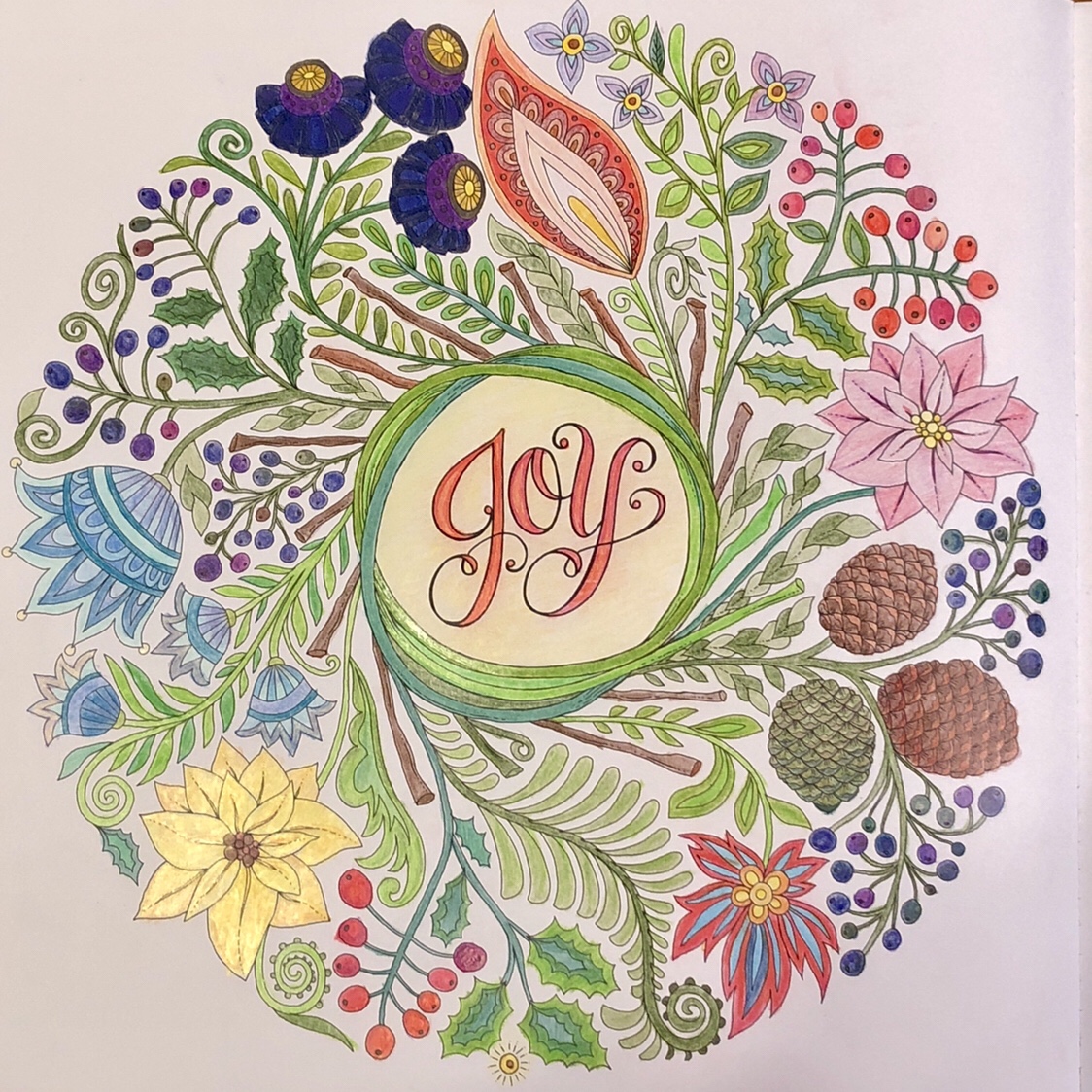
Joy wreath from Christmas to Color by Mary Tanana, colored by yours truly.

Changing Coasts

This weekend I realized that I’ve been setting my story in San Francisco when I’ve been visualizing it in NYC. D’oh! I’ve been imagining House Ibsen’s exterior as an old brownstone. While this wouldn’t have been an insurmountable problem, many of my characters work in film and fashion, and these industries are much larger in the Big Apple. I’m working with a Fall 2001 time frame because I know I want Hurricane Katrina to take place during the second novel. This means 9/11 will play a larger role than I’d originally planned.

Most of all this means that all the background work I’ve done on setting my first novel in San Francisco—divvying up the city into territories, choosing real world locations for certain scenes, etc.—has to be redone for NYC. Hopefully I’ll be able to use the SF background I’ve developed for a later installment. I don’t know where my characters will take me after Hurricane Katrina, but they’ll probably hit the West Coast eventually.

I’m happy I caught this now! I feel a little foolish, but it can be difficult to get out of our own heads and see the gaps in our thinking.

Have you had to make a similar turn-around in your writing? Please tell me about it in the comments!

On Alphas and Omegas

Yesterday I took a walk and ran into an older woman. She was also out walking and just seemed to need to talk. It sounds like she’s alone in her home most of the time. I can relate. It’s increasingly easy to become isolated in today’s world. When you’re not young, healthy, and able to be active in work, school, or social groups, the walls close in. Many people seem to think social media is an adequate substitute for real contact and communication. I think that’s because these folks have a vibrant support network and active life which social media merely supplements. For those who can’t fully participate in our able-body-oriented world, social media is something, but nothing can replace in person interaction. So I let the woman bend my ear for a while and validated the positive choices she was making.

The interaction made me think of a line in Patricia Briggs’ Alpha and Omega series (I’ll paraphrase since I listen to the audiobooks):

“I bet complete strangers come up to you and tell you their deepest secrets all the time.”

Charles says this to Anna, explaining that it’s a trait of omega wolves. In Briggs’ universe, omega wolves are a rare combination of dominant and submissive traits. Omega wolves share the dominant urge to protect, but don’t feel the need to fight for dominance or kill like submissive wolves. Omegas also are the only wolves that are not affected by a magical compulsion to obey a more dominant wolf’s orders. One character in the Alpha and Omega series calls omegas “dominants who are really, really zen.”

If I lived in Briggs’ universe, I’d be an omega. I’ve had total strangers come up to me and say, “I have this feeling I need to talk to you,” and proceed to spill their darkest troubles. The closer our association, the more people seem to feel compelled to tell me everything. This is a useful trait for an author, as I get to hear a lot of fascinating stories. I also enjoy helping people attain some measure of peace.

Being an omega is tricky, however. I’ve run into trouble because those with more…aggressive…natures sometimes suddenly realize they’ve told me highly sensitive information. Even though I’m good at keeping secrets, these people suddenly view me as a threat. Their fear then drives them to attack.

Another trait of omega wolves is that others feel the need to protect them. This is also a double-edged sword. Sometimes I have unconsciously relied on that protection and left myself vulnerable to harm.

I won’t list all the reasons I’d be an omega, but thinking about this topic in conjunction with world-building, I decided that the dominance angle comes from werewolves’ human creators and is not an essential part of werewolves.

From my participation in BDSM, I’ve seen extremes of dominance and submission. Werewolves as presented in Patricia Briggs’ novels offer a useful paradigm for categorizing kinky humans.

  • An Alpha is the most dominant person or wolf in a given area. They assume responsibility for others’ safety. Dominants feel compelled to jockey for position and will fight to attain and maintain the highest social rank possible. Kinky human dominants who pursue healthy relationships usually want to be alphas.
  • A Beast is an alpha who does not feel the need to protect others. In kink terms, this equates to the predators, abusers, bullies, and well-named Assholes in Leather among us. These people promulgate the disgusting trope that submissives are (or should be) doormats. This GoodReads thread has a great discussion on this topic re: the Alpha and Omega series.
  • Omegas may equate to switches. In the kink world, a switch has both dominant and submissive aspects which they switch between.
  • Submissives are those humans and wolves who aren’t preoccupied with fighting for position (at least not to the extent dominants are). In the context of a BDSM dynamic, a submissive obeys their dominant and does their best to please them within agreed bounds. Contrary to the belief of many human Beasts, submissives need not submit to anyone but their dominant partner(s) without prior consent. Briggs’ werewolves are different in that all wolves must submit to the most dominant wolf present. This and several quotes from the books perpetuate the “submissives are doormats, the lowest of the low” trope.

This paradigm can even be useful outside of kink circles. In my mind it runs into two problems, however:

  1. The aforementioned “submissives are doormats, the lowest of the low” trope. Submissives can be very powerful!
  2. Actual wolf pack dynamics.

I encourage you to read the full article I’ve linked above. Here’s the gist, though:

studies of wild wolves have found that wolves live in families: two parents along with their younger cubs. Wolves do not have an innate sense of rank; they are not born leaders or born followers. The “alphas” are simply what we would call in any other social group “parents.”

The whole alpha thing was a mistake born from observing captive wolves. Captive wolves are usually a group of unrelated specimens. They’re not family. This leads to the abnormal preoccupation with social dominance researchers observed. I also think researchers may have laid human preoccupation with dominance over their observations, distorting what they actually saw. This doesn’t mean wolves in the wild don’t care about dominance at all, just that it’s not behind a lot of pack behavior.

I’ve already noted that I like to remain as true to current science in my writing as possible. Therefore, the werewolves in my universe will not have any of that “alpha vs. omega” nonsense. Therianthropes of all kinds will behave according to a combination of their human nature and the way their animal nature behaves in the wild. That means my werewolf packs will be families. (And yes, I’m planning more than just werewolves!)

Introducing Homo sapiens sanguis

A guest post by Emily Graves, DO and Yoko Ichinose, PhD¹

We’re delighted to publish excerpts from our paper “Introducing Homo sapiens sanguis”.


Homo sapiens sanguis is a novel subspecies of Homo sapiens. Known in folklore and myth as vampires, this is the first scientific paper on H. s. sanguis and their culture. We have named this subspecies to reflect their diet and predatory nature.

H. s. sanguis refer to themselves in English as kindred and in Arabic as ainsiba’. Arabic is the official kindred language. H. s. sanguis diverged from H. sapiens about 98,000 BCE. They evolved in parallel with their primary prey, H. sapiens. The kindred feel that speaking Arabic helps preserve their culture and continues to connect them to their subspecies’ origins in the Fertile Crescent. […..]

A bloodborn, or naturally concieved, specimen’s lifespan averages 1,000 years. Gestation takes 90 months. Puberty occurs at 100 years of age. H. s. sanguis are considered adults upon completing the fledging ceremony. This ceremony takes place in up to four stages: ceremonial first kill after onset of puberty, ceremonial first kill after emergence of talent (if later date), fledging journey, final ceremony. Kindred are considered elderly at about 700 years old. Talents will be discussed later in this paper.

Turned specimens live a maximum of 900 years as their resurrection makes them at least the equivalent of a pubescent ainsiba’.

Most H. s. sanguis die in combat in the prime of life.

Ainsiba’ government places strict controls on the birth or creation of new kindred. The aim is to maintain a 1 death to 1 birth or creation ratio. [….]

All H. s. sanguis require blood from H. sapiens to survive.  The bloodborn meet nearly all their dietary requirements with human blood alone, but they can eat human food in order to keep up appearances. Turned kindred must supplement their blood diet with human food. All H. s. sanguis require Vitamin D supplementation because they cannot make it from sunlight due to an extreme UV-B allergy. Kindred cannot survive more than 24 hours without blood. Blood from non-human animals is not an adequate substitute. Animal blood can sustain kindred for up to a week, but has many painful and debilitating side effects. Infant bloodborn, the newly turned, or the elderly (~700+ years old) can only go a maximum of 12 hours without blood.

Figure 1 shows the minimum number of H. sapiens prey required to feed one ainsiba’ for 1 year. In this scenario the H. s. sanguis may create a menagerie of human prey upon which they feed in rotation. The standard U.S. Blood donation is 500 ml or 1 pint and contains roughly 450 calories.  Male H. sapiens provide slightly more protein, as their blood’s plasma content is 55%. Female H. sapiens’ blood is 60% plasma, making them more desirable when an H. s. sanguisrequires an immunity boost. We will not discriminate between sexes in our calculations. An average bloodborn ainsiba’ must consume 3,000 calories per day from blood to survive, while an average turned kindred must consume only 2,000 calories of blood per day and can make up the remaining third of their daily calorie requirement with food. Thus a bloodborn requires 3,333.33 ml or 6.67 pints per day while a turned requires 2,222.22 ml or 4.44 pints per day. We will use the bloodborn figures in our calculations.

The Red Cross requires that humans wait 8 weeks minimum between donations for full reccovery. However, humans generally take 4 to 6 weeks to regenerate 1 pint of blood. Let r represent the number of days a bloodborn allows a human to regenerate blood. Let represent the number of pints or feedings per cycle. This gives us the formula:

7 x r =

Figure 1.

r

28

196

42

294

56

392

Figure 1 shows that an H. s. sanguis feeding from an H. Sapiens menagerie at 1 pint per human on a 28 day cycle requires a minimum of 196 humans to survive. A bloodborn feeding from their menagerie at 1 pint per human on a 56 day cycle requires a minimum of 392 humans to survive.

Maximum allowable bloodloss and minimum allowable hemoglobin are highly individual statistics. H. s. sanguis learn quickly to estimate the point at which they must stop feeding by their prey’s symptoms and the blood’s qualities. This is only partially instinctual and must be taught. This fact along with the desire not to overhunt their prey led to a prohibition on creating kindred by any means without government permission. Kindred born or turned without government permission are called orphans and are hunted and exterminated. Any ainsiba’ who create orphans are executed. The kindred goverment maintains staff whose mission is to report suspected orphans in emergency rooms worldwide.

An adult human male weighing 175 lbs with an intial hemoglobin of 17 g/dl and a final hemoglobin of 10 g/dl may loose 2456.6 ml or 4.91 pints before transfusion is required. Thus, if a bloodborn drinks 4 pints of blood from each human, a minimum of 49 and a maximum of 98 humans are required to feed 1 bloodborn per day.

Feeding from so many humans each day and maintaining such a large menagerie are prohibitive in practical terms. Many H. s. sanguis therefore either supplement their diet with or subsist entirely on bloodbags.

Using the above calculations, however, we can estimate the maximum population of H. s. sanguis which can exist for a given H. sapiens population. To do so we use the following formula, where p represents the human population and v represents the kindred population:

p / 392 = v

For example, the 2011 human population of San Francisco, California is about 706,856 people. Therefore a maximum of 1,803 kindred may live and hunt in this city. These calculations presume that every member of the adult human population is a feeding candidate. The actual ainsiba’ population is likely half to two-thirds this quotient. [….]

The one food  H. s. sanguis avoids is garlic. Garlic causes no ill effects, but it smells like rotting flesh to them and is unappetizing. Kindred have twice the number of olfactory receptors as humans: 12 million compared to humans’ 6 million. This assists H. s. sanguis in hunting prey. They use a combination of the chimicals in sweat, scent, and exhaled carbon dioxide to track and select prey. Kindred can discriminate potential prey’s state of health, whether they have any drugs in their system and, often, which drugs, and blood type. Bloodborn kindred tend to prefer blood type O. This may be due to the properties which make it the universal donor. The turned generally prefer blood types compatible with the blood type they had prior to resurrection. Both types of  H. s. sanguis prefer overweight and obese prey. Obese prey are less likely to escape and their blood provides more calories. [….]

H. s. sanguis adapts their internal temperature according to their fluid levels. When water reserves are full, their resting body temperature is 99.9℉, measured orally. When reserves are low, the acceptable temperature range shifts to 93-106℉. Heat accumulated during the day is offloaded as much as possible at night.

Due to the above, H. s. sanguis generally require more frequent hydration than humans, particularly when active, and are more susceptible to heat exhaustion. Depending on humidity, an apparent temperature of 80°F or above could be dangerous for a kindred. This is another reason H. s. sanguis traditionally prefer nighttime. Crypts, caves, and the like offered stable, comfortable temperatures and humidity before air conditioning.

When H. s. sanguis experiences heat exhuastion or dehydration, first they will go mad with thirst. If the kindred cannot quench it and the heat exhaustion is not ameliorated, starvation will be accelerated by continued fluid loss. As the ainsiba’ continues to dry out, a point of no return is reached when a biological self destruct signal is tripped and the immune system imitates the UV-B allergy, immolating them. The length of time this takes is highly individual, depending on many factors including individual biology, nutrition, weather, and access to aid. The longest our colleague, researcher Dane Grokelstern, PhD, has observed a subject surviving is 8 hours. The average so far appears to be 3. If you have any specimens, please direct them to Xeno Labs, care of Dr. Grokelstern.

All of the above helps explain why  H. s. sanguis has not physically taken over Earth. During times of famine prior to industrial agriculture, kindred were more vulnerable than humans.

Most have milder allergies to silver. Silver causes contact dermatitis. Lengthy exposure can result in welts, rash, hives, blisters, and lesions. If any silver is left in a wound, it will heal as slowly as the same wound on a human body.

As noted above, H. s. sanguis is also allergic to UV-B. This is an extreme allergy cumulating in immolation. The mechanism of immolation is unknown at this time. [….]

H. s. sanguis may appear pale, however this is the effect of lack of blood rather than little melanin. Contrary to popular belief, H. s. sanguis are dark-skinned. The bloodborn are born with dark complexions. Turned ainsiba’ complexions resemble their most tanned possible state as a human. This provides some protection against UV-B. The darker a kindred’s skin, the longer they can stand exposure to UV-B.


¹These are characters from my novel, House Ibsen. All facts and calculations in their paper are real except for the existence of Homo sapiens sanguis. As far as we know, anyway… 😉

Bday 💖, Walkin’ in the Rain, and Musings on Needlework and Writing

Today’s post is a bit of a mixed bag. 🙂

🎁First, a very happy birthday to my bestie and science editor, Mad Doktor Matt! Many happy returns! 🎂 Matt has helped me brainstorm the biology of my supernatural beings over many lengthy conversations. He helps me stay true to the science and decide when to depart from (known) reality. He’s also a fantastic first reader and support! Much love to you, my friend!

Today I took a walk in the rain. In yesterday’s Japanese post I mentioned my pain doc gave me some good advice. As it gets darker, I start getting the urge to hibernate. He said I could combat my sleepiness with daily walks. The mornings are best because there’s more light.

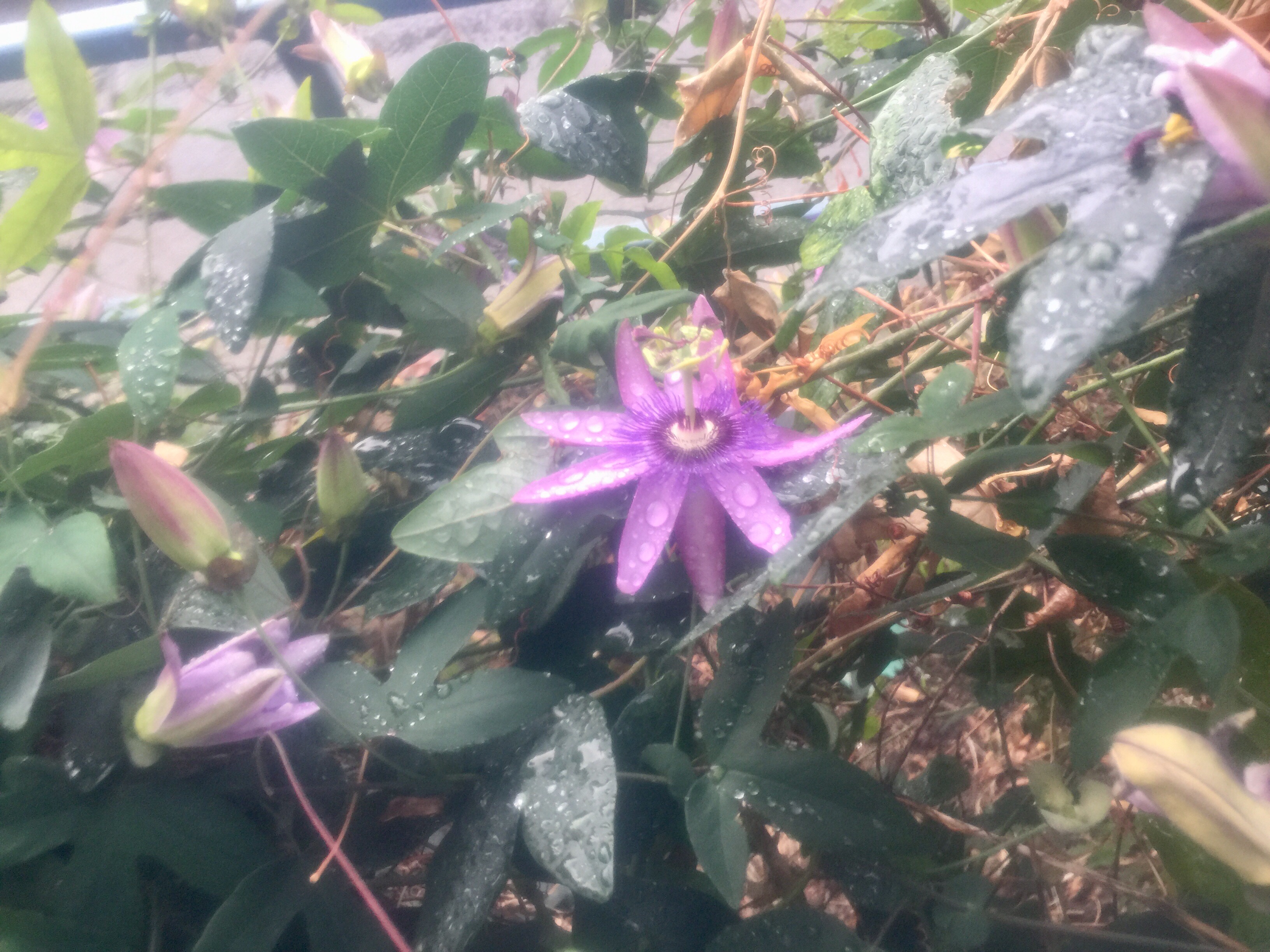
I like to hunt Pokémon as I walk. I had a lucky day, snapping up a Bellsprout and a Mareep. I stopped at a nearby church to take over the gym and I noticed how beautiful this flower looked in the rain.

The glam-shot quality comes from the sandwich bag I used to keep the rain off my iPhone. Anyone know what kind of flower this is?

I also wanted to share that I’ve started my next cross stitch project. This one will be a wedding gift for my friend and Matt’s sister, Julie. Julie is a phlebotomist and has given me lots of details about blood and how the collection system works. These are vital details for any vampire-centric novel, in my opinion.

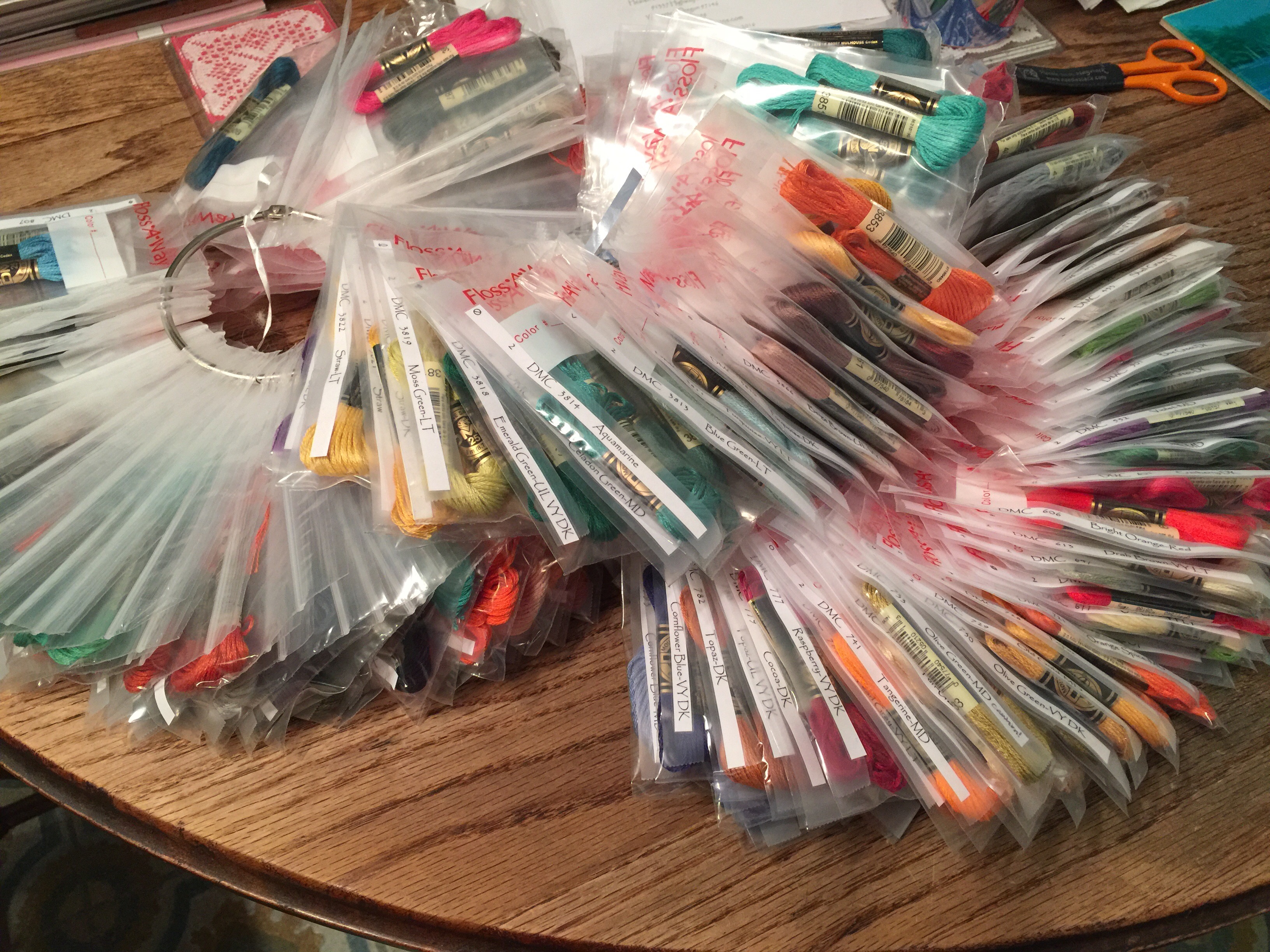
I’m keeping the painting I’m stitching a surprise. I can tell you that it’s a max color chart by Heaven and Earth Designs, which means it contains over 200 colors!

I’m trying the Floss-A-Way organization system this time and I really like it. The system consists of rings like those in a binder and small ziplock bags with a hole in one corner. I cut up the list of symbols and DMC floss numbers. Then I taped one on each bag. This makes it really easy to flip through and find the color I’m looking for. I can also keep lengths of thread neatly tucked away with their skeins. Really helpful for such a large project!

This is my first time stitching on 25-count linen (which means there are 25 stitches per inch). So tiny! Most of the design will be very colorful, but the corner I’m starting with is dark. There are four colors of thread in this picture. Can you find them all?

Challenging, right? As I was stitching today I thought how much it’s like writing a novel. Small, consistent additions add up over time and what starts out amorphous and murky turns into a beautiful whole.

Audiobooks are Tricky Critters

I really enjoy audiobooks. Over the last few years I’ve read more books using my ears than my eyes! But audiobooks are tricky critters.

An audiobook makes you pay attention to every word. There’s no skimming long pastoral sections to get to the action. This can either make you appreciate hidden gems in these sections, or underline a writer’s weakness. We do need description, world-building, and character backgrounds, but it takes skill to smoothly incorporate these into a narrative without bogging it down. Whenever I listen to Katherine Kerr’s Deverry series, I find clever elements I’d overlooked in print.

Stories also have a rhythm to them. There are down or quiet moments in between the heart-hammering up scenes. Many writers are weaker in one of these tempos and audiobooks bring this out.

For example, while I wouldn’t say that Robert Jordan is necessarily weaker in one tempo, I did notice that The Eye of the World’s rhythm matched The Lord of the Rings’ almost point for point. This was so distracting, I couldn’t enjoy the story.

These are just a couple of the reasons it’s a good idea to record your completed draft and listen to it. What eludes you on the page will jump out at you on audio.

Once you have a polished tale, audiobooks can still play you false.

Professional editors will tell you it’s better to just use “said” in dialogue, especially lengthy dialogue. They reason that it’s easier on the reader because said fades into the background. But if you’re an audiobook reader, a lot of “said”s in a short span is repetitive and grates on the ears. At least on my ears. 🙂 I vastly prefer writers with a more varied approach to dialogue.

The voice actor who reads your work is important as well. And authors generally have no say in the casting process unless they’re reading themselves. For example, I recently listened to American Gods by Neil Gaiman on CD. A friend had recommended the TV show to me and I didn’t like it. I decided to see if the book was better (it definitely was!). I’m not sure I got the full impact of it, though. The reader’s voice had this Lake Wobegone quality to it that sucked all the extremes out of the narrative. The result was rather ho-hum. And ho-hum is generally the last word people use for Neil Gaiman’s writing.

Audiobook companies are also notorious for switching narrators in the middle of a series. Occasionally this is a good thing because the first reader was dreadful. Most of the time it gets the readers up in arms. We’ve grown accustomed to associating a certain voice with the series and its characters. It’s really jarring to change that and throws most readers right out of the story.

In a recent example, Lorelei King has read all of Patricia Briggs’ Mercy Thompson series until the most recent addition, Silence Fallen. In Silence Fallen Lorelei King still reads the chapters from Mercy’s point of view, but a male narrator now reads chapters from Adam’s point of view. I didn’t like it, but had finally started to get used to it when, for example, the female narrator would pop in to the male section to let us know time was passing differently for each character. That was so jarring! I honestly don’t know why audiobook companies persist in doing this kind of thing.

To sum up, I think it’s wise for writers to keep the audio version in mind. And maybe insist on casting control in your contract. 😉

It’s NaNoWriMo Time!✍🏻

November is National Novel Writing Month, NaNoWriMo for short. You can click on the link above to join in all the fun!

I’m not sure I’ll be doing NaNoWriMo myself this year. I’m at a place where I need to really nail down a lot of background stuff, like the various supernatural entities’ biology and cultures. I have it in my head, but I want to get it all written down so I can easily reference for consistency. I’m also one of those writers who uses science to make the magic as plausible as possible. I base my creatures as much in our known world as I can, down to figuring out the carrying capacity for vampires to ensure their population statistics are reasonable.

NaNoWriMo is based on word count. The goal is to write a 50,000+ word novel by the end of the month. But the background stuff I’m working on doesn’t contribute to my novel’s overall word count. So depending on how quickly that goes, I may not participate this year.

And I think we’ve all learned this last week that I have trouble with energy management. 😓 Chronic pain and illness make it really hard. But that’s another post.

If you are participating in NaNoWriMo this year, I’d love to cheer you on! Let me know your NaNoWriMo handle and the project you’re working on in the comments so I can find you on the website.

✒️Choose your weapon carefully… and let the adventure begin!

My Monster, the Vampire

It’s Friday, October the thirteenth today! (Pro tip: not the day to schedule your secret society meeting. 😉) That makes this the perfect day to blog about vampires.

Why vampires? For one thing, they’re at the core of the novel I’m writing, House Ibsen. There are lots of other classic monsters, too, like werewolves and witches and trolls (oh my! 😉), though the focus is on vampires.

But the real reason is that vampires are my monsters.

You see, every Fall I’d dread October’s arrival. The horror genre took over the airwaves. You couldn’t turn on the TV without seeing some sort of monster. I have always been prone to night terrors, the kind of nightmares where you thrash about and scream in your sleep. One time I backhanded my babysitter in the face mid-nightmare, but that’s another story.

Every October for years I’d have a nightmare that I was trapped in a treehouse and vampires were coming to get me. Every year like clockwork. It scared the bejeezus out of me. I can’t remember if it started before the The Simpsons’ “Treehouse of Horror” episode or not.

It finally stopped recurring sometime in junior high when I realized why I was particularly terrified of vampires; vampires are real and I was surrounded by them in my daily life.

I don’t mean that I was literally surrounded by the bloodsucking undead. I mean that many of the people in my life were like vampires. These people drained their victims of energy, money, and power. In psychology terms, they were toxic people high on the malignant narcissism scale. I believe that vampires function as a metaphor for humans who abuse power and prey on others.

I’ve read a lot of scholarly twaffle about vampires representing fears of blood borne disease and promiscuity. I don’t buy it. It makes much more sense to me that werewolves represent fears of infection (and being preyed upon by animals). The promiscuity angle comes from vampires and toxic people both using seduction to lure prey.

I have come to have a greater appreciation for vampires and worked on desensitizing myself. My best friend Matt helped. We’d rent vampire films and mock them mercilessly.

But I’m still afraid of vampires. They’re my monster because they continue to pop up in real life. They also continue to be the number one boogie man in my dreams. In fact, I was inspired to start writing HouseIbsen by a terrible nightmare involving vampires.

Which monster is your monster?


Bonus tidbit: one of my grandfathers believed Friday the 13th was his lucky day because good things always happened to him on that date. Specifically, he disembarked safely in Europe in World War II, returned home from the war, and died having a great day on the golf course, all on Friday the 13th.