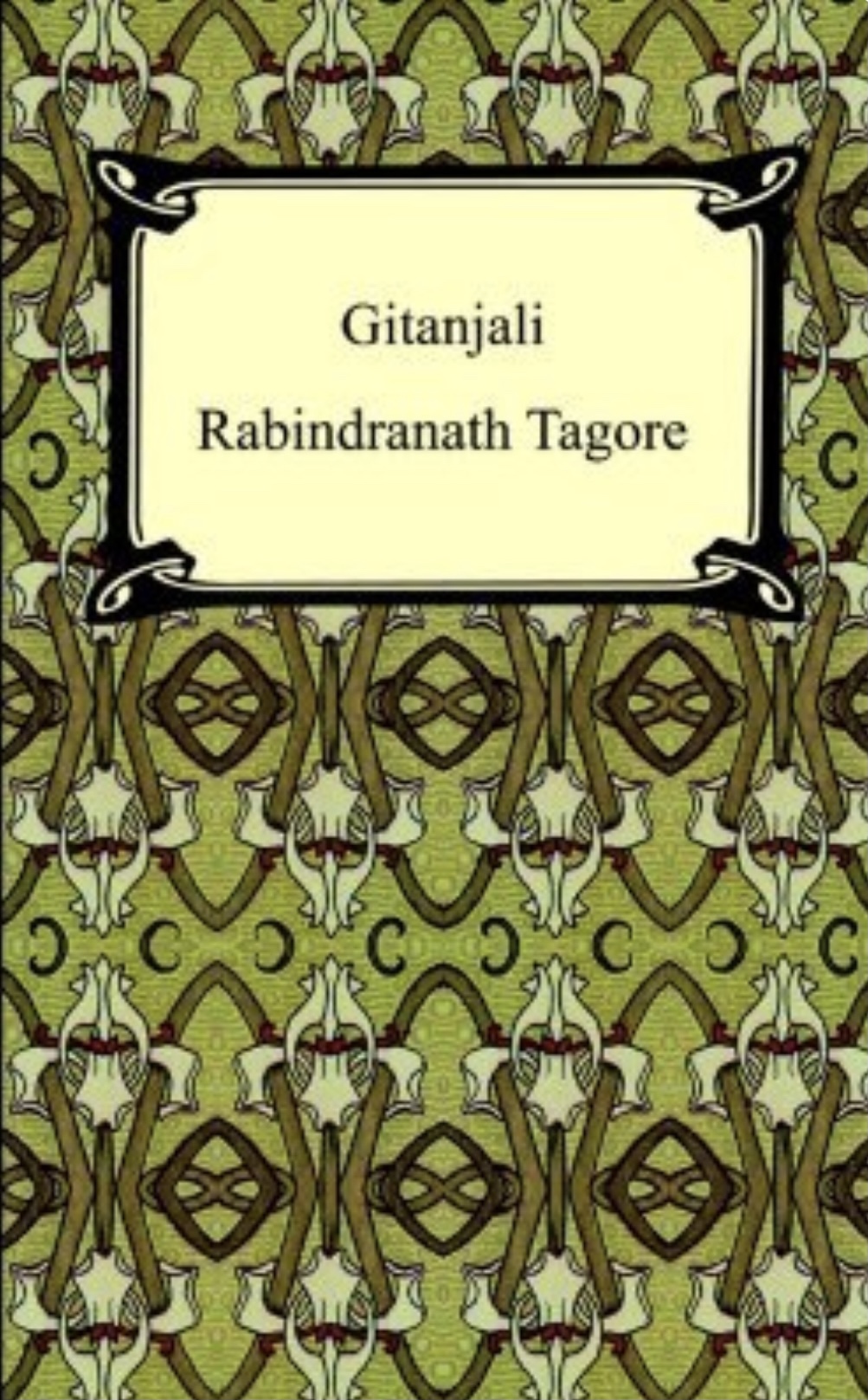
Gitanjali is a collection of poems by Bengali poet Rabindranath Tagore. It was first published in 1913 and is one of his best known works, for which he earned the Nobel Prize in Literature. We read the English translation. We aren’t clear whether it was translated by W.B. Yeats, or Yeats had it translated, but it is clear from his introduction that Yeats greatly admired Tagore’s work. Since we have enjoyed Yeats, we were intrigued.
We had never heard of Rabindranath Tagore before. We discovered Gitanjali when we were looking for a book that would fulfill The StoryGraph’s 2021 Genre Challenge’s “Read a poetry collection under 100 pages” prompt. Happily, we could also use this book to fulfill prompts for The StoryGraph’s 2021 Translation Challenge and as a bonus read for ReadWithCindy’s 2021 Asian Readathon. (If you decide to participate in reading challenges, we suggest doubling up on prompts as much as possible.)
Since Gitanjali is now in the public domain, you can find it for free online. We happened to find the copy we read on spiritualbee.com. The website also has several of Rabindranath Tagore’s other works and they recommend you read his prose first so you can better appreciate his poetry. Good advice we cheerfully ignored.
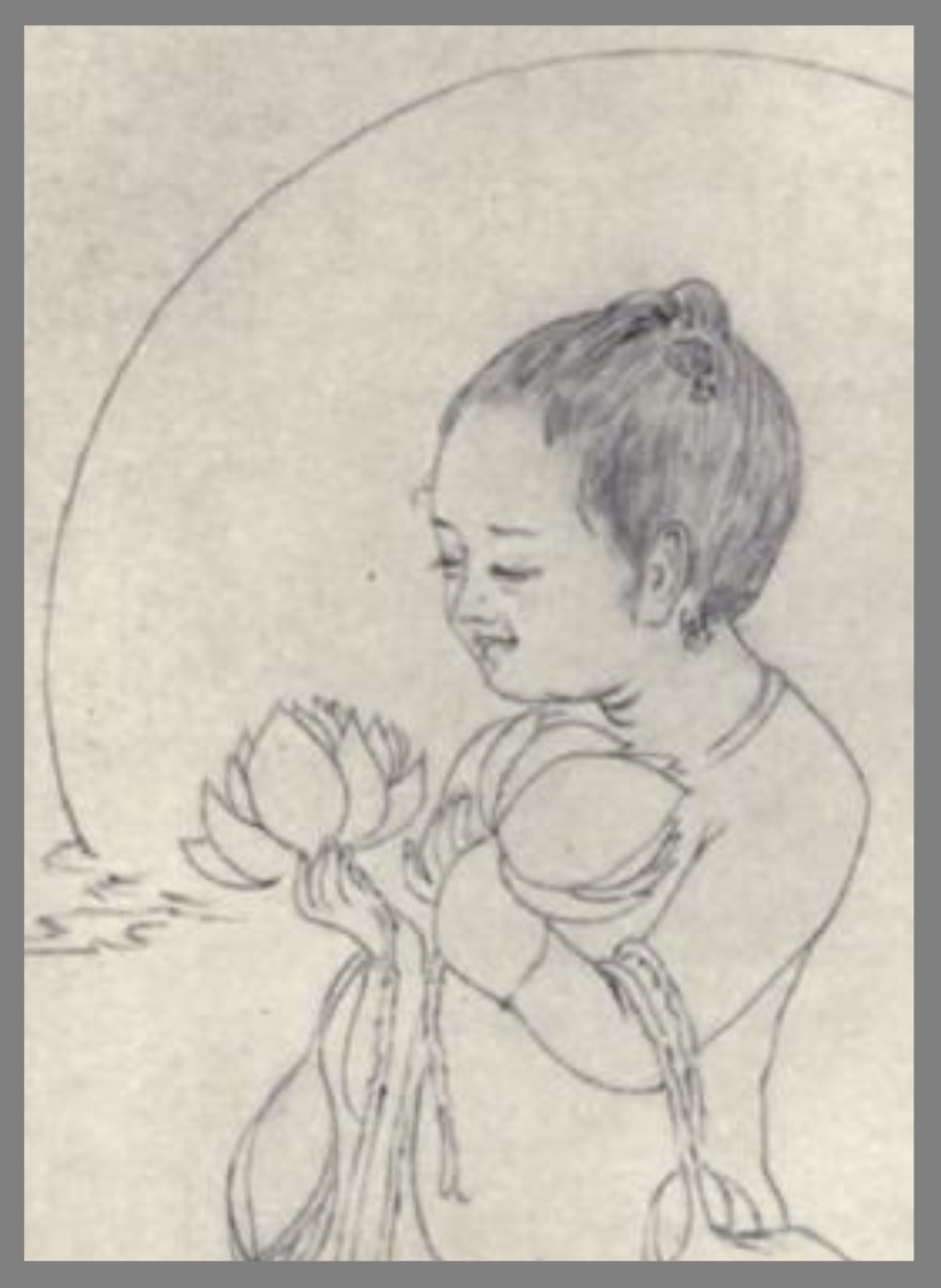
One of the things we enjoyed about this edition were the included illustrations, like this drawing by Asit Kumar Haldar, which accompanies one of our favorite poems in the collection, number 96 or “When I go from hence let this be my parting word”.
We ended up rating Gitanjali three out of five stars. Most of it is deeply spiritual poetry which addresses the author’s relationship with God, and as we do not share his faith, and perhaps also because we do not know the allusions to his prose work, it did not speak to us. The format also makes it difficult to tell whether each poem is supposed to stand alone or is a continuation of the previous poem. But there are still several gems in the collection that speak to universal themes of joy, oneness with the universe, and human nature.
Poem number 30 made us laugh:
I CAME out alone on my way to my tryst. But who is this that follows me in the silent dark?
I move aside to avoid his presence but I escape him not.
He makes the dust rise from the earth with his swagger; he adds his loud voice to every word that I utter.
He is my own little self, my lord, he knows no shame; but I am ashamed to come to thy door in his company.
Rabindranath Tagore, Gitanjali, poem no. 30
Who hasn’t experienced this? Perhaps last time we were in our friends company we were arrogant and boastful or couldn’t help lashing out in anger and despair.Now we come to our friend sheepishly, hoping they will still embrace us despite the dumbass things we did.
There were also poems that gave us goosebumps from sheer brilliance. One of these was poem number 74:
THE day is no more, the shadow is upon the earth. It is time that I go to the stream to fill my pitcher.
The evening air is eager with the sad music of the water. Ah, it calls me out into the dusk. In the lonely lane there is no passer by, the wind is up, the ripples are rampant in the river.
I know not if I shall come back home. I know not whom I shall chance to meet. There at the fording in the little boat the unknown man plays upon his lute.
Rabindranath Tagore, Gitanjali, poem no. 74
This poem gives a feeling of ineffable sadness, but also beauty, and makes us think of Swan Lake’s haunting refrain. We can easily envision the dusk closing in on this nearly deserted shore. Even the lute player has a sense of ghostly liminality. It is the sort of scene where worlds meet and tales begin.
So if you enjoy poetry, are looking to expand your knowledge of Bengali writers, or both we encourage you to read this small poetry collection for the few gems that might sparkle as brightly for you.
May is Asian and Pacific Islander Heritage Month and we will be participating in ReadWithCindy’s 2021 Asian Readathon to celebrate! The readathon is meant to be a very accessible and easy to complete event that promotes Asian and Pacific Islander author and protagonist visibility. There are five challenges:
Read any book written by an Asian author.
Read any book featuring an Asian protagonist.
Read any book written by an Asian author in your favorite genre.
Read any nonfiction book written by an Asian author.
Read any book written by an Asian author that’s not US-centric.
You can fulfill multiple prompts with one book, but if you read multiple books, each book needs to be by an author of a different Asian heritage, because diversity! Not sure what counts as Asian? Cindy has a list! She also has a directory of books by Asian authors on StoryGraph to help you choose! We usually don’t care about the author’s ethnicity or gender as long as the writing is good, so the database was very helpful.
We decided to make this extra challenging for ourselves by adding a personal rule that we can’t count authors we’ve read before. Of course, you don’t have to, but we think this gets into the spirit of stretching horizons! 😄
On to our picks!
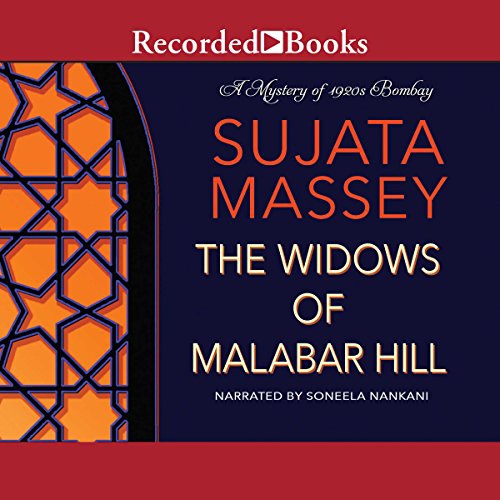
To fulfill challenges #1, 2, and 5, we decided to read The Widows of Malabar Hill by Sujata Massey. We already had this delicious-looking mystery in our Audible library, but haven’t listened to it yet. We were attracted by the pro-feminist narrative, which promises a strong female lawyer who champions the titular widows in the face of cultural tensions that escalate to murder. Add the 1920s Bombay setting, and we were sold! This book promises to tick many of our favorite boxes.
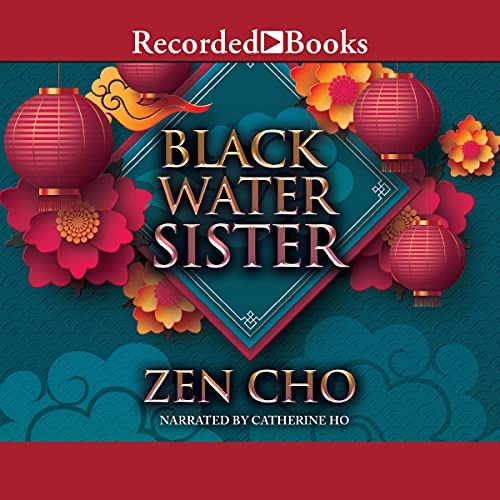
As delicious as The Widows of Malabar Hill sounds, if we were forced to pick a favorite genre it would be fantasy. So for challenge #3, we selected Black Water Sister by Zen Cho. Coming to Audible on May 11, 2021 and available now in paperback and Kindle, Black Water Sister looks like an exciting ride!
Reluctant medium Jessamyn Teoh returns home to Malaysia where her grandmother’s spirit contacts her, demanding Jessamyn take revenge on a gang boss on behalf of Black Water Sister, the diety her grandmother served. Of course, it’s a dangerous mission made even more perilous because grandmother and Black Water Sister may not be what they seem. We’re really looking forward to this book and just hope it doesn’t get too dark for us, since it is also marketed as a thriller.
Surprisingly, challenge #4, nonfiction by an Asian author, was the most difficult to find. We typically avoid memoirs because they are often too sad or dark for us, but we expected it to be easy to find a science book by an Asian author. Guess that’s one stereotype we didn’t realize we believed busted! This readathon has already succeeded!
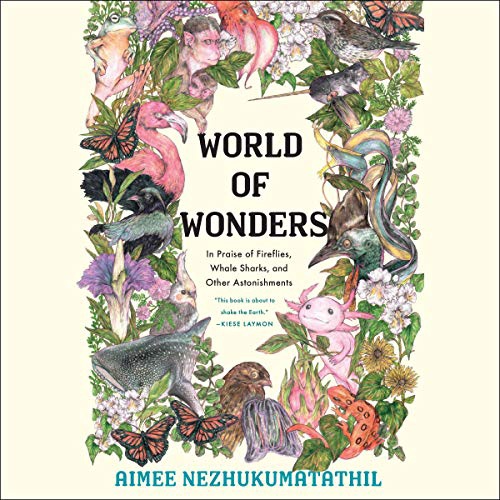
We spent a lot of time perusing the nonfiction part of the directory. We really appreciated StoryGraph’s content warnings feature, which lets other readers warn you of potentially triggering material. We’d click on an interesting-looking title, check the content warnings, and nope on out of there. We eventually settled on a book, but after talking to our friend AdventuRyn, we’re saving that one for Pride in June. Instead we will be joining them in reading World of Wonders: In Praise of Fireflies, Whale Sharks, and Other Astonishments by Aimee Nezhukumatathil. The Audible version is read by the author, and from the sample she gives it a cozy, exciting bedtime fairy story feel! We’re hoping we are in for a book in the vein of Braiding Sweetgrass by Robin Wall Kimmerer. In other words, a beautiful and poetic exploration of some of nature’s wonders.
Of course we will review these books as we read (or listen, lol) to them, so stay tuned to this blog for more!
Advertising Disclosure: As an Amazon Associate we earn a commission on qualifying purchases.
In other words, you can send some pocket change our way at no additional cost to you by clicking on one of the affiliate links in this post and then buying whatever you were going to buy from Amazon anyway. Win-win!
We recently discovered The StoryGraph thanks to ReadWithCindy’s 2021 Asian Readathon (check out our picks here). According to the website, “The StoryGraph helps you track your reading and choose your next book based on your mood and your favorite topics and themes.” Intrigued, we decided to take it for a test drive.
A Few Caveats
We’ve only checked out The StoryGraph on our iPhone, so keep in mind that the desktop version may have features we didn’t get to experience. But let’s be honest, all major features should work on all versions of a site, especially when users can’t opt to switch to desktop mode. If we can’t do it on our iPhone, it might as well not exist. 😆
It’s also important to note the site is still in beta mode and actively adding new features while troubleshooting existing ones. The StoryGraph seems very responsive to user demand and it’s fair to expect many of the limitations we experienced will be temporary.
The StoryGraph Difference: Things to Love
The StoryGraph’s UI is clean and minimalist. We appreciate the calming, uncluttered vibe. It does lack a dark mode, though, so photosensitive viewers may want to use a dark reader. Sign up is quick, easy, and doesn’t ask for sensitive information. We haven’t been spammed since we signed up, either! The StoryGraph can import your Goodreads library for you, but we decided to start with a fresh slate.
Let’s talk about how The StoryGraph stands out from the crowd. Two things are at the heart of the StoryGraph experience: moods and statistics.
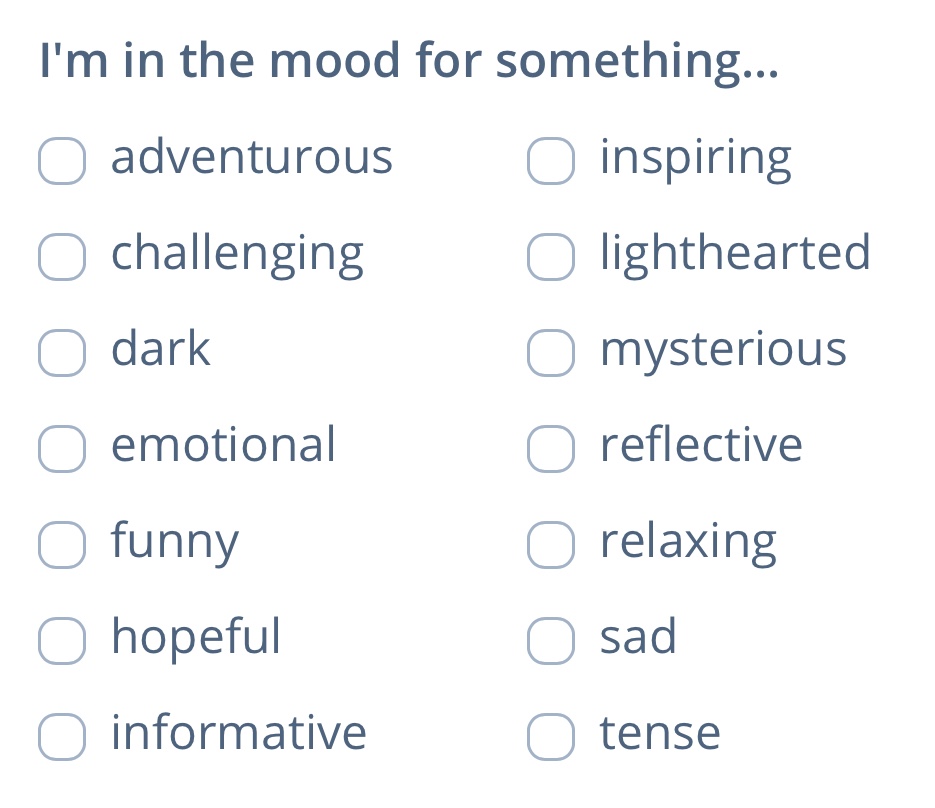
The StoryGraph’s tagline is “Because life’s too short to read a book you’re not in the mood for.” Thus, books are primarily judged on feels. In addition to the mood list to the right, readers can indicate a book’s pace, length, whether it’s plot- or character-driven, and even content warnings. These are great metrics for deciding whether a book is a good fit for you. We’d like a few more mood options, but the current set covers a lot of ground.
We’re especially excited about the ability to flag content warnings! This is extremely useful. You can note whether potentially triggering material is major, moderate, or mild. We would like the ability to do this if we haven’t finished a book, though. What if the material was so triggering we had to stop reading? That’s important information for others to know without having to check out the written review. It should be part of the aggregate data. It also needs to be easier to add content warnings to the menu. The StoryGraph figures this is covered by tags, but as far as we can tell, tags are useless. The tagging function might as well not exist.
Of course, you can rate books you’ve read out of 5 stars, but The StoryGraph lets you do so to a quarter-star level of granularity! You can also add a written review and include links.
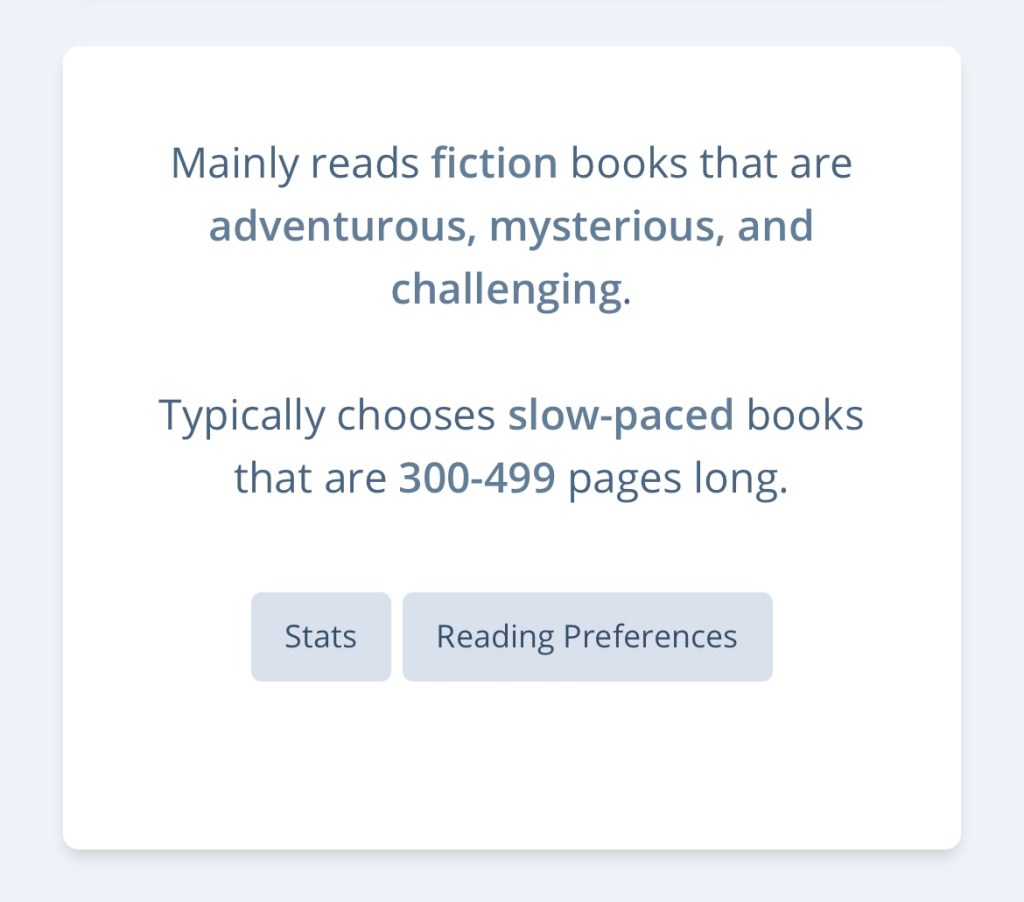
The StoryGraph takes all the data you’ve given it about what kind of books you enjoy and generates a reader profile. Even with little to go on, it had us pretty well pegged from the get-go.
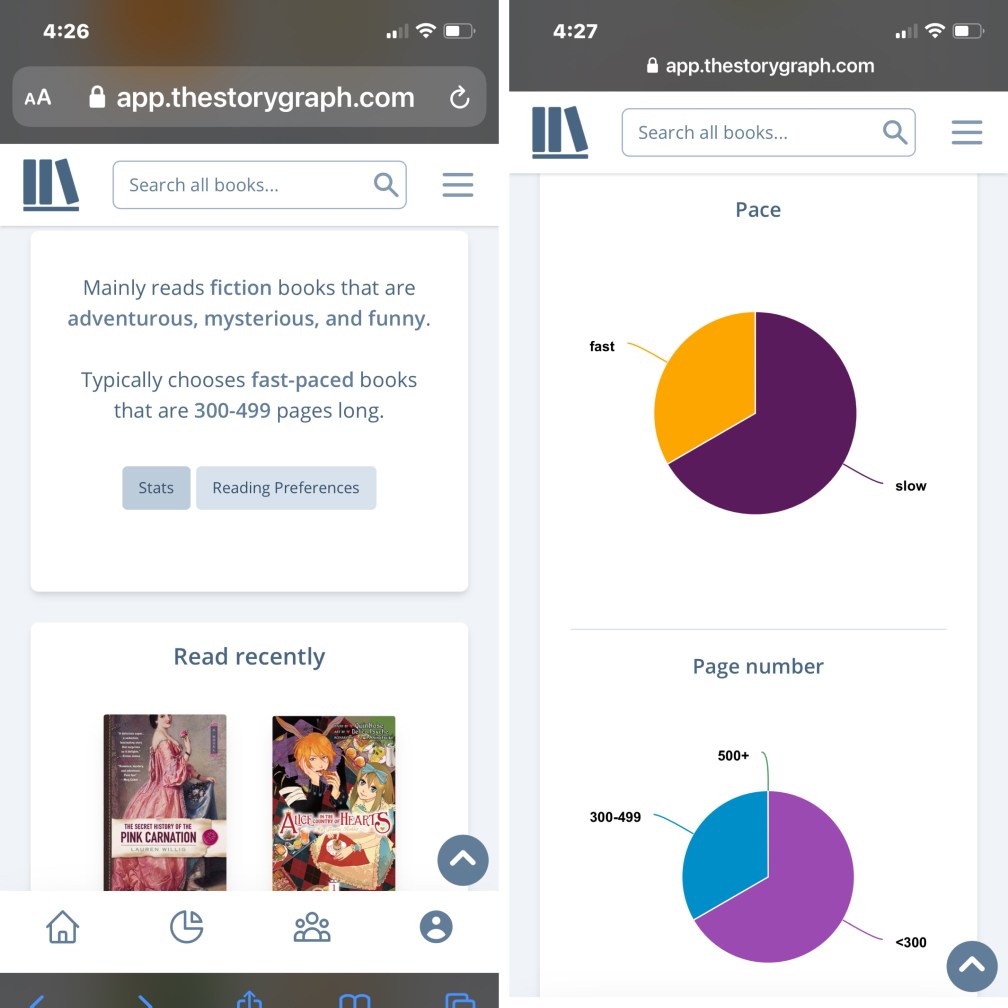
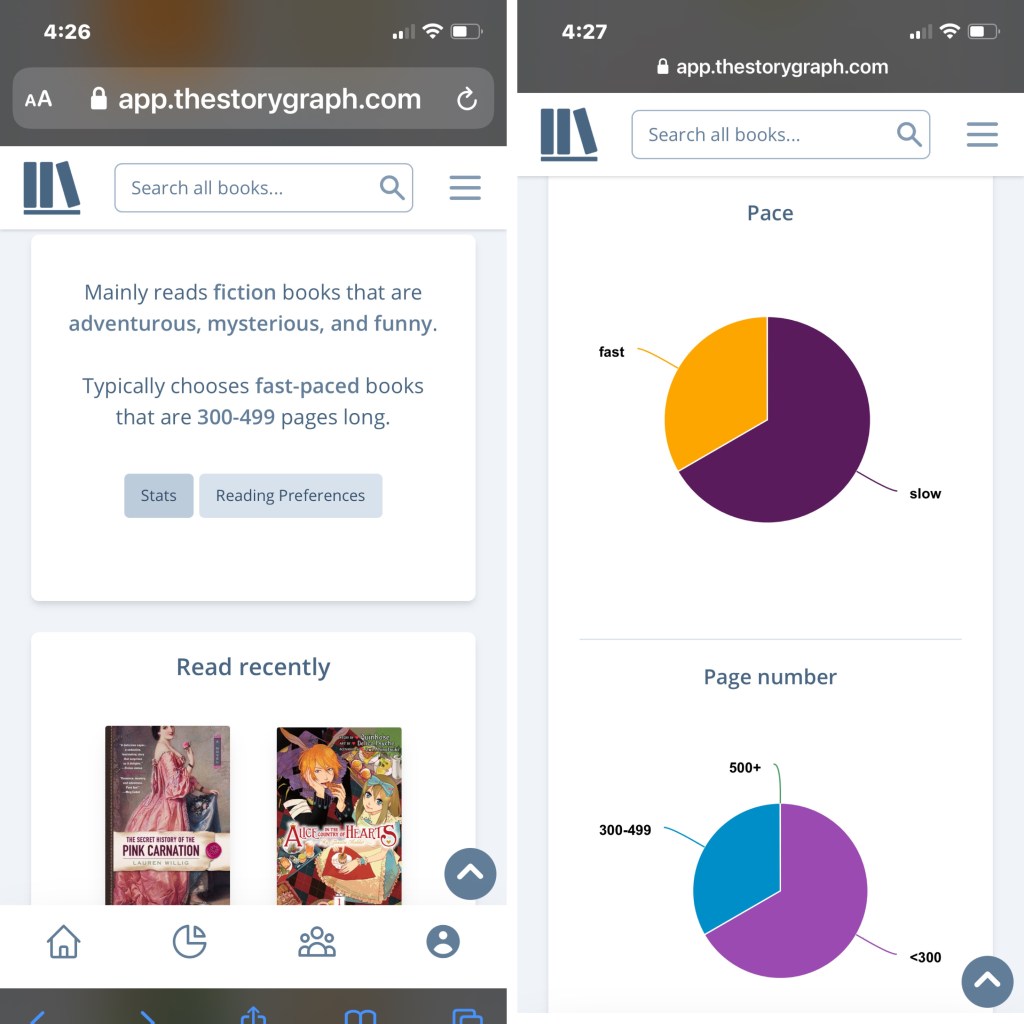
This assessment gets more accurate the more you fill out your The StoryGraph library. Ours changed from the initial, “Mainly Reads fiction books that are adventurous, mysterious, and challenging. Typically chooses slow-paced books that are 300-499 pages long,” to adventurous, mysterious, funny, and fast-paced. The StoryGraph uses this profile to generate recommendations—which are pretty good—and pretty graphs of your reading stats. Unfortunately, there is a lag between updating the profile and the graphs, which can result in confusing mismatches like the one shown below.
Which is correct? In these screenshots, taken just a few seconds apart, our reader profile says we typically choose fast-paced books that are 300-499 pages long, but our stats say we typically choose slow-paced books under 300 pages.
The graphs are fun, though, and the way they crunch the days really does make it easier to find books you’ll love. The StoryGraph also sidesteps the Goodreads toxicity simply by not having a social media aspect. The only way to interact with others on the site is to follow them or join a reading challenge. Even so, it’s at a remove. “This is what I read and what I thought. The end.” It’s rather refreshing and adds to the chill vibe.
We’ve found the biggest reason to stay active on The StoryGraph are the reading challenges. These are a fun way to stretch your reading horizons. When you challenge yourself to read books that fit theprompts, you’ll find yourself adding new authors and genres to your TBR pile! It’s also easy to create your own reading challenges and you can keep them to yourself, share privately with friends, or make them public so anyone can join.
What Needs Work
Navigation overall is clunky. For example, if you use the reading journal feature to jot down a note about your reading and then save it, there is no button to add another entry on the resulting screen. You have to go back to the book’s page and press “track progress” and then “add note”.
It’s easy to search for and add books by title or author using the main search bar. Key word: or. As of this writing, you can’t do both. You cannot filter those results or search for tags. You can only filter results from the “Browse all books” search. As power searchers, we hate this with the same passion we hated Google doing away with Boolean operators. You can’t use the main search bar to find other users or reading challenges, either. That has to be done in their respective sections. Searching by ISBN doesn’t work, unless you’re in the “add a book/edition” dialogs (which, while we’re on the subject, aren’t user-friendly—and we say this with librarian training). The StoryGraph’s selection is mostly English titles that are currently in print. The site also isn’t set up to track journals and periodicals. We want to be able to search for anything using the main search bar, or at least have an advanced search mode that does that. If we have a physical copy, we also want to be able to use our phone camera to “scan” the barcode.
What would’ve been really useful would’ve been a way to import our Audible library and listening history. Unfortunately, The StoryGraph, like all the other reading sites out there, doesn’t cater to audiobook lovers. Their form for manually adding other editions makes it look like they are planning to correct this, since you can manually add an audiobook edition and input length in hours and minutes. We have yet to see an audiobook edition on The StoryGraph “in the wild”, though, probably because you have to add it yourself—a pain in the ass most users won’t have time for.
Even if you do add an audiobook edition, you can only track your reading progress by percentage read. That means we have to look at the progress bar in our audio player and guesstimate. The site should be able to do the math for you; just put in the hours and minutes you’ve listened so far and—lo!—a progress bar appears! But no, they want you to do division in base 60. Hopefully addressing these issues is in the works. We think it would help The StoryGraph stand out as a welcoming site for neurodivergent and disabled readers.
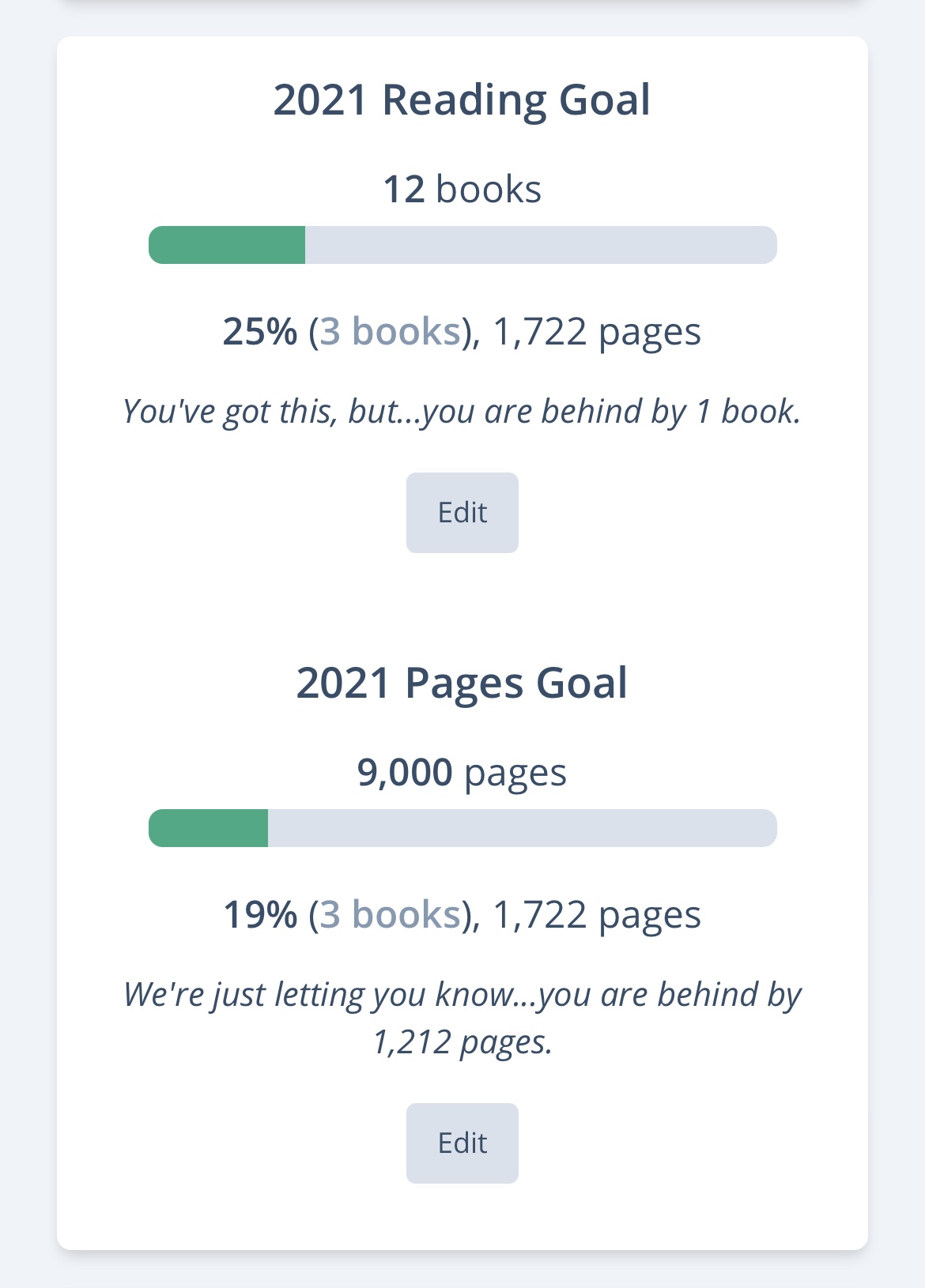
Our final complaint is that whoever designed the books and pages read goals is a sadistic bastard. We are here for fun. We really do not need the site to push our anxiety buttons by telling us we’re behind. Once we took a screenshot for this review, we deleted our goals for our mental health.
TL;DR:
Being able to find books based on what you’re in the mood for is fabulous!
Content Warnings! SO USEFUL! It needs to be easier to add CWs that aren’t on the list yet, though.
Reading challenges are what keep us coming back. They’re great fun!
Reader profiles, and thus recommendations, are very good with only limited data, which does the strength of their algorithms.
The site looks pretty and soothing, but needs a dark mode.
Love the lack of social media features! Makes it a chill, nontoxic environment.
Navigation is clunky and less-prominent features are hard to use.
Tags are pretty much useless. The function might as well not exist.
As much as we love ye olde paper books, The StoryGraph needs to get with the times and support audiobook and ebook readers.
Whoever designed the books and pages read progress reporting is a sadistic bastard. We do not recommend anyone with anxiety, perfectionism, or workaholism issues use this feature.
Most of the flaws are probably due to The StoryGraph being fairly new and primarily relying on librarian volunteers. Hopefully they’ll improve if the site continues to grow and gain traction.
Final Thoughts
We think we will be sticking with The StoryGraph for a while and encourage you to check it out for yourself if you haven’t yet! We look forward to the site growing into its shoes, so to speak, and are thrilled to have a site where we can share our love of books without getting overwhelmed by the social aspect.


 Honeycomb's Hive