The Fresh Air Hypothesis

We just watched this excellent video by Rebecca Watson which discusses, among other things, the hygiene hypothesis. The hygiene hypothesis is the theory that early life exposure to a variety of allergens and benign microbes trains your immune system not to go apeshit over every little thing. If you’ve seen Cells at Work Season 1 Episode 5, you know all about this. Cedar pollen shows up. It’s big and bumbles about, but is essentially harmless. Until the immune system decides it’s an enemy invasion and causes harm (i.e. an allergy attack) trying to eradicate the pollen.

Group of white blood cells anthropromorphized as assassins going after a harmless cedar pollen, represented as a large yellow blob creature.
White blood cells ganging up on an innocent cedar pollen, causing havoc. Screenshot from Cells at Work S1 E5.

According to the hygiene hypothesis, if the body had enough exposure to harmless visitors early on, the immune system would chill and ignore the cedar pollen. No allergy apocalypse.

But the hygiene hypothesis is far from settled science. Or, as this journal article puts it:

Recent evidence does not provide unequivocal support for the hygiene hypothesis: […] asthma prevalence has begun to decline in some western countries, but there is little evidence that they have become less clean[.…] It is possible that a more general version of the hygiene hypothesis is still valid, but the aetiologic mechanisms involved are currently unclear.

Brooks, Collin; Pearce, Neil; Douwes, Jeroen The hygiene hypothesis in allergy and asthma, Current Opinion in Allergy and Clinical Immunology: February 2013 – Volume 13 – Issue 1 – p 70-77
doi: 10.1097/ACI.0b013e32835ad0d2

In other words, it’s possible that the hygiene hypothesis partly explains why some people get allergies and asthma while others don’t. It’s certainly not the whole picture. And if it is a thing, we don’t really know how it works.

In her video, Rebecca Watson mentions that the hygiene hypothesis goes back to at least the early 1800s, when doctors noted allergies and asthma were almost exclusively upper class diseases.

Hay-fever is said to be an aristocratic disease, and there can be no doubt that, if it is not almost wholly con- fined to the upper classes of society, it is rarely, if ever, met with but among the educated.

Blackley, Charles H. Experimental researches on the causes and nature of catarrhus æstivus (hay-fever or hay-asthma). (London : Bailliere, Tindall & Cox, 1873), 6, section 20, Wellcome Library, https://archive.org/details/b20418620/page/6/mode/2up, accessed April 18, 2021.

This piqued our interest. The strongest, most consistent evidence for the hygiene hypothesis is that farmer’s children get allergies and asthma far less than other children. Something about the rural lifestyle seems to be protective. Brooks, Pearce, and Douwes note while it “remains unclear which specific factors are most important, […] microbial exposures may play a role” (Brooks, Pearce, and Douwes, “The hygiene hypothesis”).

There are many pieces to this puzzle, but what if major contributors are being overlooked? We spent plenty of time in dirty outdoor pursuits as a kid, and we still wound up with allergies and asthma up the wazoo. Sure, there’s a genetic predisposition in our family, but what else could be going on?

What is a major difference between 1800s aristocrats and farmers? Time spent outdoors engaged in physical labor. This means there are two major contributors that appear to be overlooked in the literature: physical fitness and access to fresh air.

The available evidence indicates that physical activity is a possible protective factor against asthma development.

Eijkemans M, Mommers M, Draaisma JM, Thijs C, Prins MH. Physical activity and asthma: a systematic review and meta-analysis. PLoS One. 2012;7(12):e50775. doi: 10.1371/journal.pone.0050775. Epub 2012 Dec 20. PMID: 23284646; PMCID: PMC3527462.

In addition, asthmatics can improve their heart and lung function via exercise, leading to reduced symptoms and increased quality of life. We’ve seen this in our own life. When we were on a water polo team, we were in amazing shape and could actually enjoy running a mile in P.E.! The jury is still out on whether exercise protects against allergies, but studies seem to indicate moderate exercise lowers inflammation. In other words, it helps your immune system chill out, which means less “ERMAHGAWD, CEDAR POLLEN!!! KILL IT! KILL IT! KIIIILLLL IIIIIT!!!” episodes.

Access to good air quality with plenty of ventilation is also an important factor, and it’s in increasingly short supply.

In the last several years, a growing body of scientific evidence has indicated that the air within homes and other buildings can be more seriously polluted than the outdoor air in even the largest and most industrialized cities. Other research indicates that people spend approximately 90% of their time indoors. Thus, for many people, the risks to health from exposure to indoor air pollution may be greater than risks from outdoor pollution.

Centers for Disease Control and Prevention and U.S. Department of Housing and Urban Development. Healthy housing reference manual. Atlanta: US Department of Health and Human Services; 2006, Chapter 5, https://www.cdc.gov/nceh/publications/books/housing/cha05.htm, accessed April 18, 2021.

Or to put it more succinctly:

Walking into a modern building can sometimes be compared to placing your head inside a plastic bag that is filled with toxic fumes.

John Bower, founder Healthy House Institute, quoted in Centers for Disease Control and Prevention and U.S. Department of Housing and Urban Development. Healthy housing reference manual. Atlanta: US Department of Health and Human Services; 2006, Chapter 5, https://www.cdc.gov/nceh/publications/books/housing/cha05.htm, accessed April 18, 2021.

And you’re probably spending 90% of your time with your head stuck in that plastic bag. Unless you have a job like farming, which requires you to be outside most of the time. Even though we spent many hours gardening, hiking, and animal canoodling as a kid, we still spent the vast majority of our life indoors. Maybe if we’d grown up on a working farm our immune system wouldn’t have had as much exposure to toxins. See how it all comes together?

We hope that scientists will start investigating the indoor toxicity angle in particular. If the evidence backs our hypothesis, we hope it will drive policy changes that help make the great indoors a healthier place to be.

Ch-ch-ch-changes!

A belated Happy New Year to all! 2018 has brought changes in several areas.

I discussed kindred (vampire) biology with my bestie and science editor, Mad Doktor Matt, and realized I need to make the following changes:

  • The faction of kindred my characters deal with has a worldwide system of government, but is just one example of kindred culture and government. As kindred spread across the earth along with humans, they would have developed different cultures and governments.
  • I got a bit too enthusiastic about borrowing from camels’ water and heat management techniques. It didn’t occur to me, for example, that 30 gal of water weighs 250 lbs! So being able to drink 30 gal in 10 min would be impossible for a human-sized being. I’ll also have to lower the hydration requirements.
  • We came up with a 12 hour time limit between blood feedings in a late night brainstorming session, imagining a dramatic death scene. On further examination, if kindred evolved in parallel with humans from shortly after the evolution of humans, this wouldn’t work. In order to get enough blood to sustain themselves and avoid detection, kindred would have to be able to travel between settlements. Since they primarily require white blood cells, I’ll change the time limit to 13-20 days + a week. So I’ll also have to recalculate their carrying capacity accordingly.
  • Matt mentioned the feeding allergy part sounded like a game mechanic. It makes more sense to have the sensitization occur over a series of feedings. So one way to tell there’s a vampire around is if a lot of people start getting anaphylaxis.
  • We discussed what happens if a kindred turns into a flock of bats or mist and some of the bats get killed or someone sucks up the mist with a towel. We decided that the kindred would transform back, but be more emaciated, having lost an equivalent amount of mass. For example, a kindred turns into a flock of 10 bats and an enemy kills 1. When the kindred changes back they will have lost 10% of their mass.

I’m glad we had the discussion. These all serve as great examples of how every writer has blind spots.

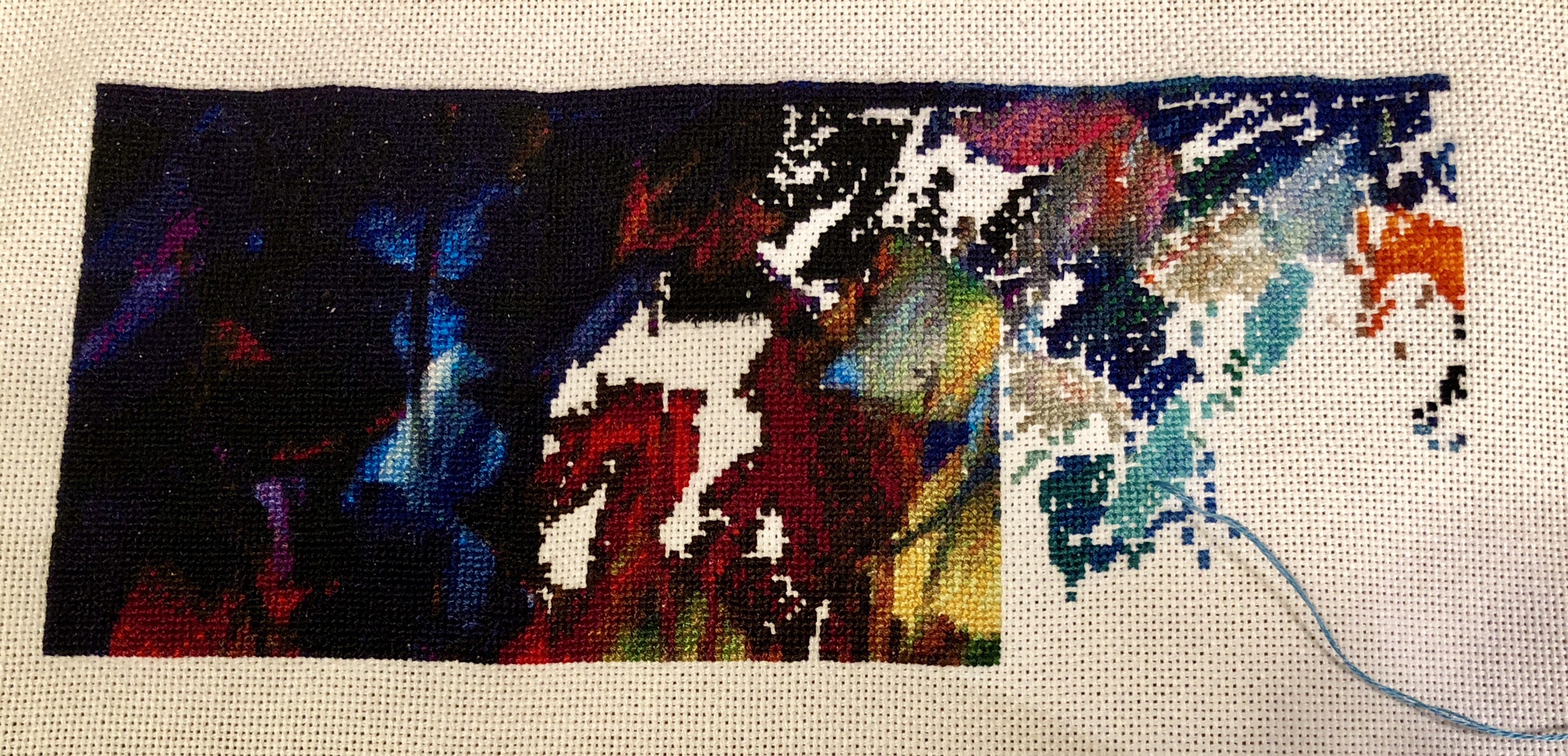
As I mentioned previously, I’m having another release surgery. All burn survivors need such surgeries periodically as the scar does not grow with the rest of the body. Burn scars actually contract over time. I’ll be getting a combination of z-plastys and laser treatment tomorrow. Right now I’m bummed I’ll have to stop work on my cross stitch project so I don’t leak all over it, but it helps to have gone through all this before. Here’s a shot of my work in progress:

I’m a little over halfway across the top. I still haven’t filled in the background on the chart’s second page because the post office lost my floss. Hopefully they’ll find it!

I plan to use some of my downtime to fulfill a childhood dream and learn Русская (Russian)! I think I was attracted to the Cyrillic alphabet. I’ve also always loved Russian fairytales. I’ve always wanted to learn all the languages in the world! It amuses me that once I learn Russian and Italian, I’ll know all the axis languages. (Totally unplanned!)

While I’m healing, I wish all of you tranquility and joy in abundance.

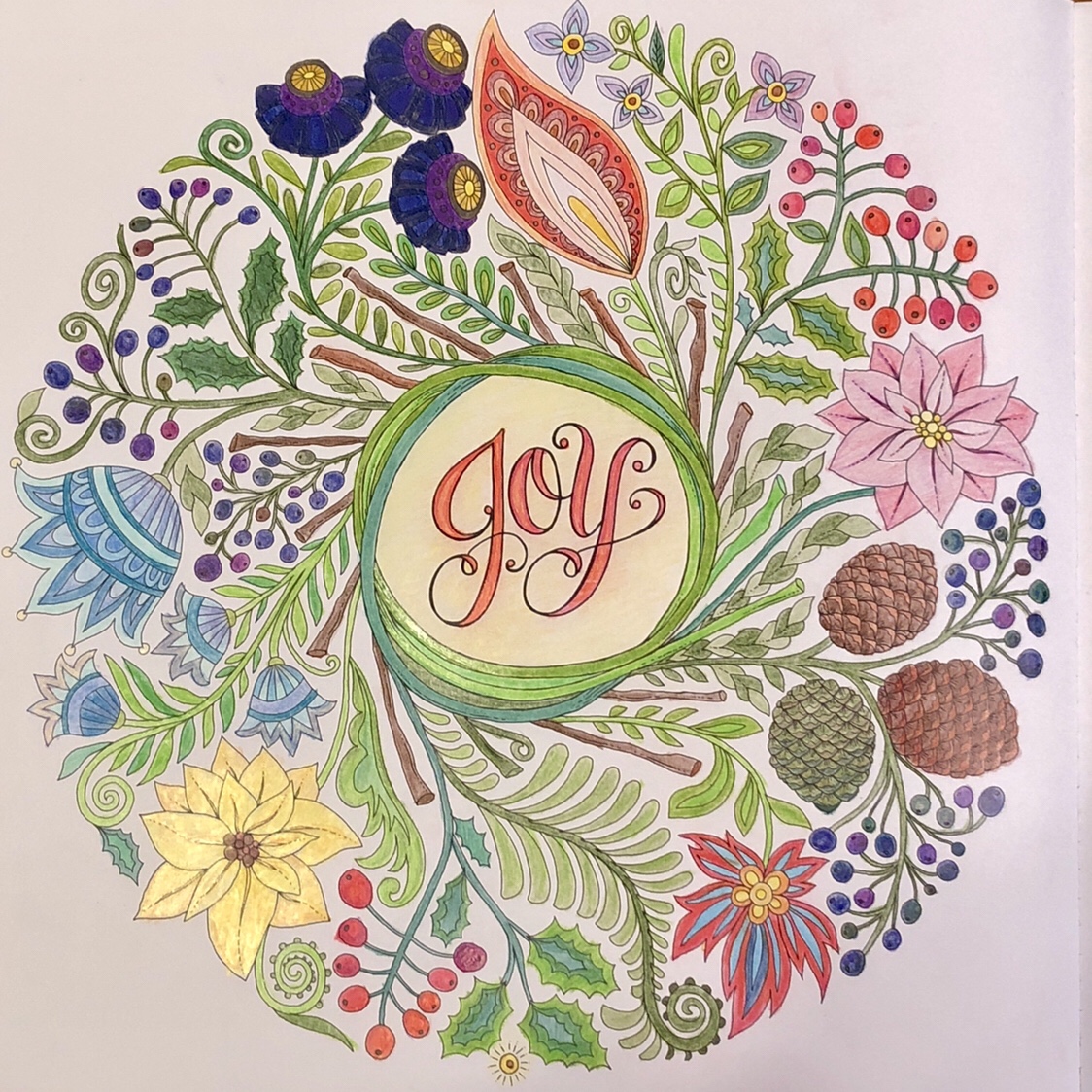
Joy wreath from Christmas to Color by Mary Tanana, colored by yours truly.

Please Spare the Air

Did you know that air pollution causes 1 in 6 deaths worldwide?

I don’t know what the study authors considered pollution, but it’s made up of more than car exhaust and aerosols. One reason I love this great PSA by Spare the Air is that it brings to mind two other major air pollutants:

Yes, wood smoke can be as harmful to your health as secondhand smoke! And many folks don’t just burn well-seasoned wood. Duraflame is a popular firewood brand that contains chemicals to help it start easier. A lot of folks use charcoal briquettes to start fires, which were originally a byproduct of making car tires. I had a babysitter who burned all her trash, including milk jugs. So it’s important to raise awareness about the health effects of fires at home.

When I say, “spare the air,” I think about two other big sources: scents and non-tobacco-smokables.

While here in California we’ve succeeded in making smoking tobacco less cool and keeping most indoor spaces tobacco-free, the same laws do not apply to non-tobacco products such as electric cigarettes and marijuana. As vaping has grown in popularity and weed has become legal, I’ve seen proponents using these products in non-smoking areas. There’s a large camp of vapers and marijuana smokers that contend these products are not harmful. But vaping has a litany of health risks for both vapers and bystanders, including “popcorn lung” and nanoparticles of metal. This article lists just 10 of the dangers. After researching the matter, the University of California banned e-cigarettes and vaping, citing health risks. As far as smoking marijuana goes, I am well aware of the health benefits and use the plant in edible and tincture form myself. I shouldn’t have to worry about secondhand marijuana smoke from my neighbor making me high and compromising my safety, though.

Exposure to scents is a huge, under-recognized problem. A recent study found that

fragrance sensitivity is not only a common issue, but can be quite severe. One-third of the study participants reported experiencing one or more health issues from scented products (whether they used the items themselves, or were exposed to them in public places).

I can testify to this myself, as other people’s fragrances have sent me to the emergency room multiple times. When I’m at my most sensitive, I’m confined in my home. Yet even becoming a hermit does not save me from scents’ pervasiveness. My neighbor uses scented laundry products, so every time they do the laundry I have to rush inside and batten down the windows. A simple trip to the drug store is a major challenge as it’s filled with fragrances from all the products they carry.

Even if you are not sensitive to scents or chemicals, you should be concerned about their inescapability. In 2011,

A survey of selected scented consumer goods showed the products emitted more than 100 volatile organic compounds (VOCs), including some that are classified as toxic or hazardous by federal laws.1 Even products advertised as “green,” “natural,” or “organic” emitted as many hazardous chemicals as standard ones.

The University of Washington, Seattle tested 25 different products, many of them leaders in their category.

A single fragrance in a product can contain a mixture of hundreds of chemicals, some of which (e.g., limonene, a citrus scent) react with ozone in ambient air to form dangerous secondary pollutants, including formaldehyde.2 The researchers detected 133 different VOCs. Most commonly detected were limonene, α- and β-pinene (pine scents), and ethanol and acetone (often used as carriers for fragrance chemicals).1

Who wants to breathe formaldehyde? Who wants their children and pets breathing in acetone? Strange, I don’t see any raised hands…

We as a society need to raise awareness about these health risks and take action to mitigate them. Yes, that would likely mean eliminating fragrances in millions of products and perhaps the end of the perfume industry. It would mean eliminating vaping and smoking of all kinds. It would mean converting homes which wish to have hearth fires from wood to natural gas, and perhaps also adding filters to chimneys.

Most of all, it requires thinking about consent. Air is a shared resource. I do not consent to breathe the scent, marijuana, wood smoke, or e-cigarette vapor others spread via the air. Yet I do not have a choice. No one should be forced to breathe harmful substances. So let’s spare the air, and each other.

On Alphas and Omegas

Yesterday I took a walk and ran into an older woman. She was also out walking and just seemed to need to talk. It sounds like she’s alone in her home most of the time. I can relate. It’s increasingly easy to become isolated in today’s world. When you’re not young, healthy, and able to be active in work, school, or social groups, the walls close in. Many people seem to think social media is an adequate substitute for real contact and communication. I think that’s because these folks have a vibrant support network and active life which social media merely supplements. For those who can’t fully participate in our able-body-oriented world, social media is something, but nothing can replace in person interaction. So I let the woman bend my ear for a while and validated the positive choices she was making.

The interaction made me think of a line in Patricia Briggs’ Alpha and Omega series (I’ll paraphrase since I listen to the audiobooks):

“I bet complete strangers come up to you and tell you their deepest secrets all the time.”

Charles says this to Anna, explaining that it’s a trait of omega wolves. In Briggs’ universe, omega wolves are a rare combination of dominant and submissive traits. Omega wolves share the dominant urge to protect, but don’t feel the need to fight for dominance or kill like submissive wolves. Omegas also are the only wolves that are not affected by a magical compulsion to obey a more dominant wolf’s orders. One character in the Alpha and Omega series calls omegas “dominants who are really, really zen.”

If I lived in Briggs’ universe, I’d be an omega. I’ve had total strangers come up to me and say, “I have this feeling I need to talk to you,” and proceed to spill their darkest troubles. The closer our association, the more people seem to feel compelled to tell me everything. This is a useful trait for an author, as I get to hear a lot of fascinating stories. I also enjoy helping people attain some measure of peace.

Being an omega is tricky, however. I’ve run into trouble because those with more…aggressive…natures sometimes suddenly realize they’ve told me highly sensitive information. Even though I’m good at keeping secrets, these people suddenly view me as a threat. Their fear then drives them to attack.

Another trait of omega wolves is that others feel the need to protect them. This is also a double-edged sword. Sometimes I have unconsciously relied on that protection and left myself vulnerable to harm.

I won’t list all the reasons I’d be an omega, but thinking about this topic in conjunction with world-building, I decided that the dominance angle comes from werewolves’ human creators and is not an essential part of werewolves.

From my participation in BDSM, I’ve seen extremes of dominance and submission. Werewolves as presented in Patricia Briggs’ novels offer a useful paradigm for categorizing kinky humans.

  • An Alpha is the most dominant person or wolf in a given area. They assume responsibility for others’ safety. Dominants feel compelled to jockey for position and will fight to attain and maintain the highest social rank possible. Kinky human dominants who pursue healthy relationships usually want to be alphas.
  • A Beast is an alpha who does not feel the need to protect others. In kink terms, this equates to the predators, abusers, bullies, and well-named Assholes in Leather among us. These people promulgate the disgusting trope that submissives are (or should be) doormats. This GoodReads thread has a great discussion on this topic re: the Alpha and Omega series.
  • Omegas may equate to switches. In the kink world, a switch has both dominant and submissive aspects which they switch between.
  • Submissives are those humans and wolves who aren’t preoccupied with fighting for position (at least not to the extent dominants are). In the context of a BDSM dynamic, a submissive obeys their dominant and does their best to please them within agreed bounds. Contrary to the belief of many human Beasts, submissives need not submit to anyone but their dominant partner(s) without prior consent. Briggs’ werewolves are different in that all wolves must submit to the most dominant wolf present. This and several quotes from the books perpetuate the “submissives are doormats, the lowest of the low” trope.

This paradigm can even be useful outside of kink circles. In my mind it runs into two problems, however:

  1. The aforementioned “submissives are doormats, the lowest of the low” trope. Submissives can be very powerful!
  2. Actual wolf pack dynamics.

I encourage you to read the full article I’ve linked above. Here’s the gist, though:

studies of wild wolves have found that wolves live in families: two parents along with their younger cubs. Wolves do not have an innate sense of rank; they are not born leaders or born followers. The “alphas” are simply what we would call in any other social group “parents.”

The whole alpha thing was a mistake born from observing captive wolves. Captive wolves are usually a group of unrelated specimens. They’re not family. This leads to the abnormal preoccupation with social dominance researchers observed. I also think researchers may have laid human preoccupation with dominance over their observations, distorting what they actually saw. This doesn’t mean wolves in the wild don’t care about dominance at all, just that it’s not behind a lot of pack behavior.

I’ve already noted that I like to remain as true to current science in my writing as possible. Therefore, the werewolves in my universe will not have any of that “alpha vs. omega” nonsense. Therianthropes of all kinds will behave according to a combination of their human nature and the way their animal nature behaves in the wild. That means my werewolf packs will be families. (And yes, I’m planning more than just werewolves!)