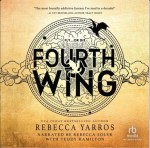
Fourth Wing by Rebecca Yarros keeps moving quickly, which is a good thing for an action-heavy novel. There are no slow spots. The world-building is solid without a lot of info-dumping. The dragons are wonderful, though I do wonder about their population health because each color seems to originate with a single dragon and that can’t be good genetically. The politics are present but not overwhelming and drive the plot and action forward instead of turning it into a boring slog. As someone with hypermobility, I appreciate that the heroine, Violet, copes with Ehlers-Danlos Syndrome. The enemies-to-lovers romance between Violet and Xaden is believable and the spicy scenes are well-written.
I’d categorize Fourth Wing as Coming of Age rather than YA because of the amount of sex and cursing, and that the protagonists are college age men and women — a fact it’s hard to remember sometimes. That’s partly because of the characters’ maturity level and partly because the narrators sound younger.
I gave four instead of five stars because there were several times I rolled my eyes at Violet. For such an intelligent girl she was sometimes rather slow on the uptake and really had a hard time adjusting her worldview to fit new facts. The narration emphasized her youth in these moments, adding to my impression that the characters were high schoolers instead of college age.
Speaking of the narration, overall it was good, but some words were terribly mispronounced. I also didn’t really like the male narrator, Teddy Hamilton. He didn’t seem like quite the right fit for Xander. I would have preferred if Rebecca Soler narrated the whole book. But then I’m not usually a fan of multiple narrators.
Overall I’d say Fourth Wing lives up to the hype and is worth a read. I plan to read the sequel, Iron Flame.
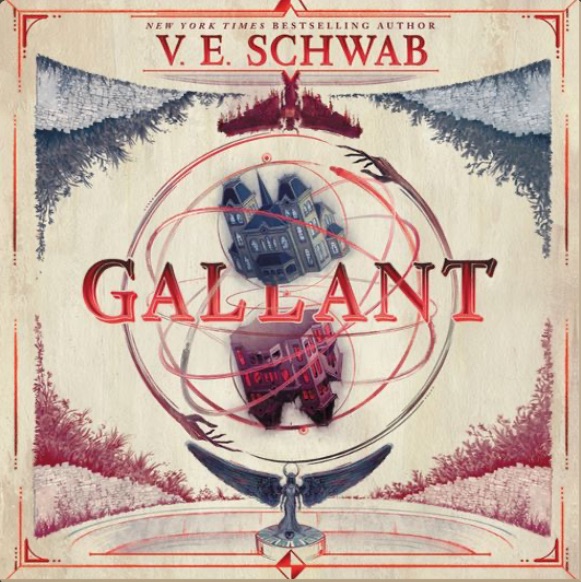
Gallant is the first book I’ve read by V. E. Schwab, but it will not be the last! After seeing Schwab’s latest novel on lots of TBRs and all over the BookWeb, I was curious and decided this standalone novel was a good chance to check out a new author—especially since I could get it from the library via Libby.
I’m a little surprised Gallant is marketed as horror. I can see why, but while I’d call it a dark fairytale, I wouldn’t call it horror. I was never truly frightened. The spooky and creepy gothic atmosphere was fabulous, but not horrific. I think that’s a good thing.
In Gallant we follow Olivia, a mute young woman who has grown up an orphan. She can also see ghouls and is a remarkable artist. One day she receives a summons from a long lost uncle to come home to the Prior family estate, named Gallant. We learn that gallant means bravery in the face of overwhelming odds. Gallant the house is well named because it and the Prior family stand against a mirror realm of death.
Schwab does a great job with Olivia’s mutism. It adds layers to the character without defining her and the reader is asked to empathize with but not pity Olivia. Her struggles are not played as a maudlin means to tug heart strings, they just are. She also doesn’t dwell overly long on Olivia’s circumstances in the orphanage. We get enough to understand it was awful even though the matrons did the best they could. Schwab doesn’t resort to child abuse to get the point across.
Similarly, Schwab plays masterfully with the gothic atmosphere and creates two eerie but entirely believable worlds. Since Olivia is an artist, Schwab uses the vocabulary of line, color, and medium to juxtapose the two worlds. It’s very effective.
I loved and rooted for the characters. No one made foolish, irrational decisions. I didn’t find myself rolling my eyes. The plot was simple, but I was invested in how it played out.
I will definitely be reading more from this author. I’ve already placed A Darker Shade of Magic on hold at the library.
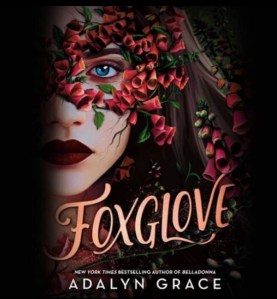
I enjoyed Foxglove much more than its predecessor, Belladonna. Foxglove pulled me in from the first with gorgeous, synesthesia-like descriptions of Fate creating and weaving the threads of life. From there it didn’t waste any time becoming a murder mystery. The characters were well fleshed out and their actions were believable. I enjoyed the plot and the ending.
I gave the narration 4 stars because Kristin Atherton speaks very quietly, almost whispering, to make Death and Fate’s voices. While the result is sexy, it’s hard to hear.
Foxglove is the first book I’ve used Book Roast’sCAWPILE system to rate. We’ll see if I stick with it. If you’re unfamiliar with CAWPILE, it’s a spreadsheet that calculates a star rating based on 7 attributes. I’ll explain further and how I’ve modified it in a later post once my friend Ryn finishes some illustrations for me. So far I feel like it calibrates with what I would have rated the book going off gut alone.
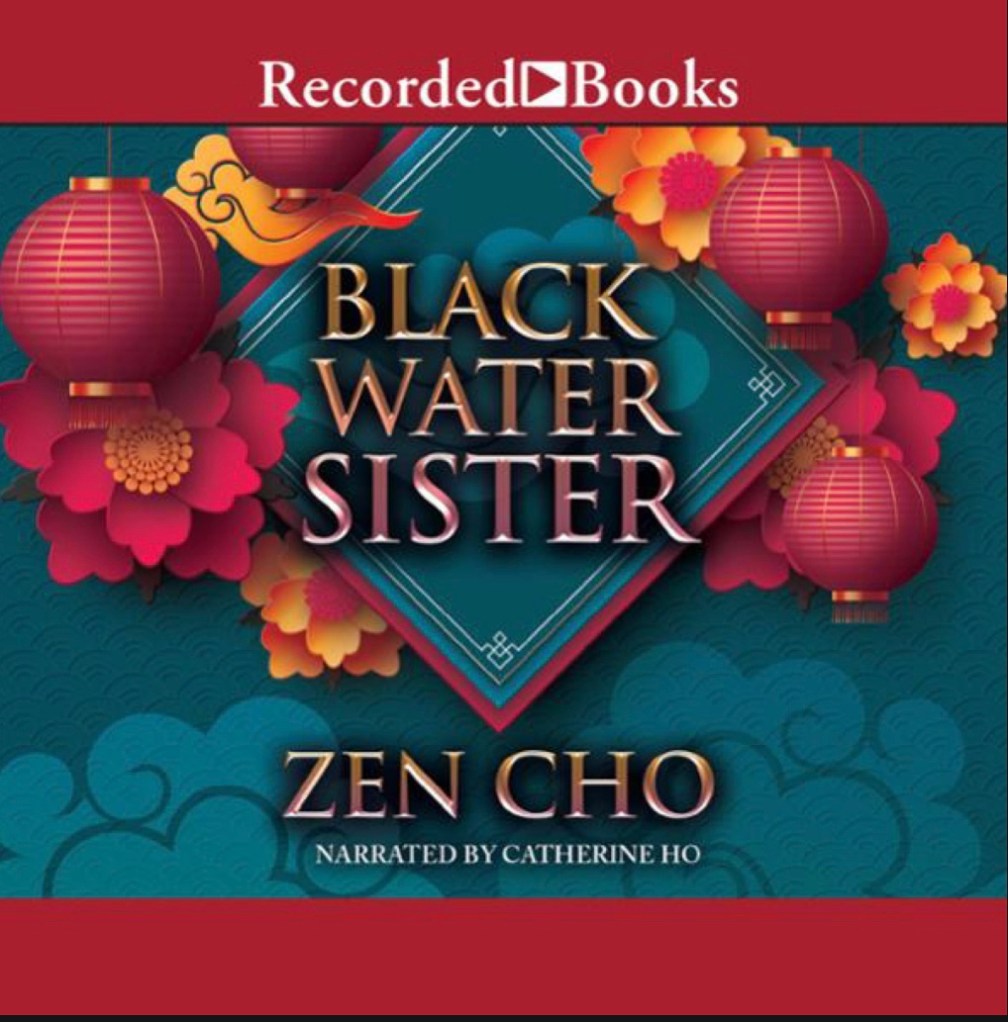
A reluctant medium discovers the ties that bind can unleash a dangerous power in this compelling Malaysian-set contemporary fantasy.
When Jessamyn Teoh starts hearing a voice in her head, she chalks it up to stress. Closeted, broke and jobless, she’s moving back to Malaysia with her parents – a country she last saw when she was a toddler.
She soon learns the new voice isn’t even hers, it’s the ghost of her estranged grandmother. In life, Ah Ma was a spirit medium, avatar of a mysterious deity called the Black Water Sister. Now she’s determined to settle a score against a business magnate who has offended the god–and she’s decided Jess is going to help her do it, whether Jess wants to or not.
Drawn into a world of gods, ghosts, and family secrets, Jess finds that making deals with capricious spirits is a dangerous business, but dealing with her grandmother is just as complicated. Especially when Ah Ma tries to spy on her personal life, threatens to spill her secrets to her family and uses her body to commit felonies. As Jess fights for retribution for Ah Ma, she’ll also need to regain control of her body and destiny – or the Black Water Sister may finish her off for good.
Why You Should Listen
~Because Book~
Couldn’t put this one down! If you’ve even thought in passing of checking this one out, DO IT! Jess moves to Malaysia with her parents, only to wind up possessed by her grandmother’s ghost. Ah Ma was the medium for the god Black Water Sister and is determined to have Jess become the god’s next medium so the god can take revenge on a developer who plans to redevelop her temple. Of course Jess, who spent most of her life in the US, has no idea what she’s agreeing to and quickly gets in over her head. To be fair, she does try to bargain with Ah Ma, but knowing the duplicitous nature of many spirits, we were anticipating betrayal. If only Jess had read the Dresden Files! 😂 Jess must figure out who to trust, while juggling complicated family dynamics, cultural expectations, and a secret lesbian romance. Zen Cho does an excellent job balancing insider and outsider cultural perspectives, making this story accessible to any reader. She keeps the twists coming and the ending is unforeseen, powerful, and satisfying.
~Because Narrator~
Catherine Ho does a brilliant job narrating. So brilliant we’re disappointed she’s not narrating Zen Cho’s upcoming short story collection Spirits Abroad. Emily Woo Zeller, who seems to be Audible’s go-to for female Asian narration, was tapped instead. And Zeller is great. But Catherine Ho really gets the potent combination of emotion, magic, and gritty reality in Black Water Sister and brings it all out for the listener. While she does use accents for some characters, it’s never difficult to understand and all the voices are distinct.
The very first sentence was confusing because it ends in a Hokien word. We weren’t expecting that and at first thought we had misheard. Keep going; the word will be explained. This was the only instance where the experience suffered from being audio, simply because we couldn’t tell it was a non-English word and not terrible narration or our hearing by looking at the text.
A Word to the Wise (Content Warnings)
Major: Sexual assault, homophobia, violence, manipulation/gaslighting, religious abuse.
Moderate: Heteronormativity.
Minor: Brief mention of drugs.
TL;DR
This audiobook was an amazing experience and we are looking forward to more from Zen Cho! Do yourself a favor and listen to or read this one!
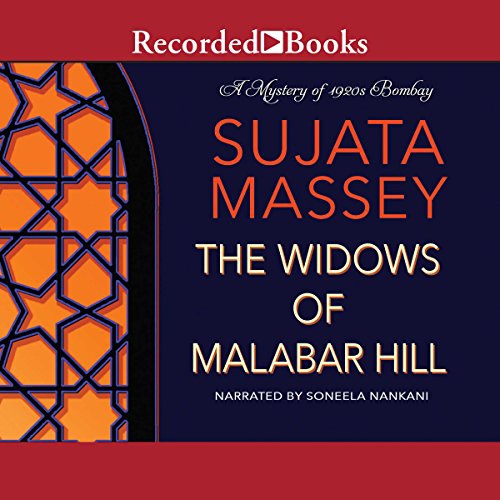
Bombay, 1921: Perveen Mistry, the daughter of a respected Zoroastrian family, has just joined her father’s law firm, becoming one of the first female lawyers in India. Armed with a legal education from Oxford, Perveen also has a tragic personal history that makes her especially devoted to championing and protecting women’s rights.
Mistry Law is handling the will of Mr. Omar Farid, a wealthy Muslim mill owner who has left three widows behind. But as Perveen goes through the papers, she notices something strange: all three have signed over their inheritance to a charity. What will they live on if they forefeit what their husband left them? Perveen is suspicious.
The Farid widows live in purdah: strict seclusion, never leaving the women’s quarters or speaking to any men. Are they being taken advantage of by an unscrupulous guardian? Perveen tries to investigate and realizes her instincts about the will were correct when tensions escalate to murder. It’s her responsibility to figure out what really happened on Malabar Hill, and to ensure that nobody is in further danger.
The main character, Perveen Mistry, is based on the first female lawyer in India. We really enjoyed watching her use the law to fight for justice where only she can: within a Muslim household’s zenana. We also enjoyed watching her grow as she becomes more competent, takes on new challenges, and learns to work around the constraints society places on her. The characters in the story kept us hooked – for the most part.
Sadly there were some sections where the book started to drag and it felt like we were slogging through the doldrums. We enjoyed the rest of the book so much that it thoroughly aggravates us that Massey chose to include the chapters set in 1917. At first we assumed that there would be a connection between Cyrus, the love interest featured in these chapters, and the murder in 1920. Spoiler: Cyrus is a Chekhov’s gun. We really have no idea why the author thought it was necessary to include him at all. It feels like the 1917 chapters are Massey preaching to the reader about how awful things were for women in Bombay. These chapters should’ve hit the cutting room floor, or at the least been massively condensed. Take our advice and skip the 1917 chapters. It will significantly improve your reading experience.
But we still loved the book enough to read it four out of five stars and buy the sequel. Perveen, her father Jamshadji, and her friend Alice are all characters we definitely want to spend more time with. We also love the vivid pictures Massey paints of life in Bombay with the wide variety of cultures and their clashes with British colonialism. She uses just the right salting of languages like Hindi to add authentic detail without confusing readers who don’t know these terms – especially important in an audiobook when we didn’t know how to spell the non-English words in order to look them up.
The Twitch VODs below are great resources if you’d like to learn more about the history of ancient Persia and Zoroastrianism. They aren’t necessary to enjoy the book, but definitely added to our experience. We had no knowledge of Zoroastrianism before reading this book and as Perveen is Parsi, Zoroastrian customs play a role throughout. We felt better having a basic understanding of the religion as a framework to help mentally organize what we read about in the book. Note that there will be plenty of irreverent nerd humor!
Soneela Nankani does an excellent job of narrating. She gives slightly different accents to characters from different cultures and has a pleasant voice. She never seems to stumble over non-English words. While some reviewers found it difficult to keep track of who is who, we had no trouble tracking who was speaking. While we appreciate the energy Nankani brings to the narration, after a while we noticed that she seems to give every sentence an astonished feeling, which does become annoying. We noticed that Audible switches narrators with the sequel. We usually hate it when they do this, but perhaps Sneha Mathan’s narration will not suffer from the constant astonishment problem.
A Word to the Wise (Content Warnings)
Major: Domestic violence; sexism, misogyny, and colonialism/racism appropriate to the period; toxic family dynamics; manipulation/gaslighting; religious abuse.
We already consider the Asian Readathon a success because we found a new series to love. The Widows of Malabar Hill by Sujata Massey is a book anyone who loves a good cozy legal mystery with a plucky heroine should try. we are already looking forward to book two!
Gitanjali is a collection of poems by Bengali poet Rabindranath Tagore. It was first published in 1913 and is one of his best known works, for which he earned the Nobel Prize in Literature. We read the English translation. We aren’t clear whether it was translated by W.B. Yeats, or Yeats had it translated, but it is clear from his introduction that Yeats greatly admired Tagore’s work. Since we have enjoyed Yeats, we were intrigued.
We had never heard of Rabindranath Tagore before. We discovered Gitanjali when we were looking for a book that would fulfill The StoryGraph’s 2021 Genre Challenge’s “Read a poetry collection under 100 pages” prompt. Happily, we could also use this book to fulfill prompts for The StoryGraph’s 2021 Translation Challenge and as a bonus read for ReadWithCindy’s 2021 Asian Readathon. (If you decide to participate in reading challenges, we suggest doubling up on prompts as much as possible.)
Since Gitanjali is now in the public domain, you can find it for free online. We happened to find the copy we read on spiritualbee.com. The website also has several of Rabindranath Tagore’s other works and they recommend you read his prose first so you can better appreciate his poetry. Good advice we cheerfully ignored.
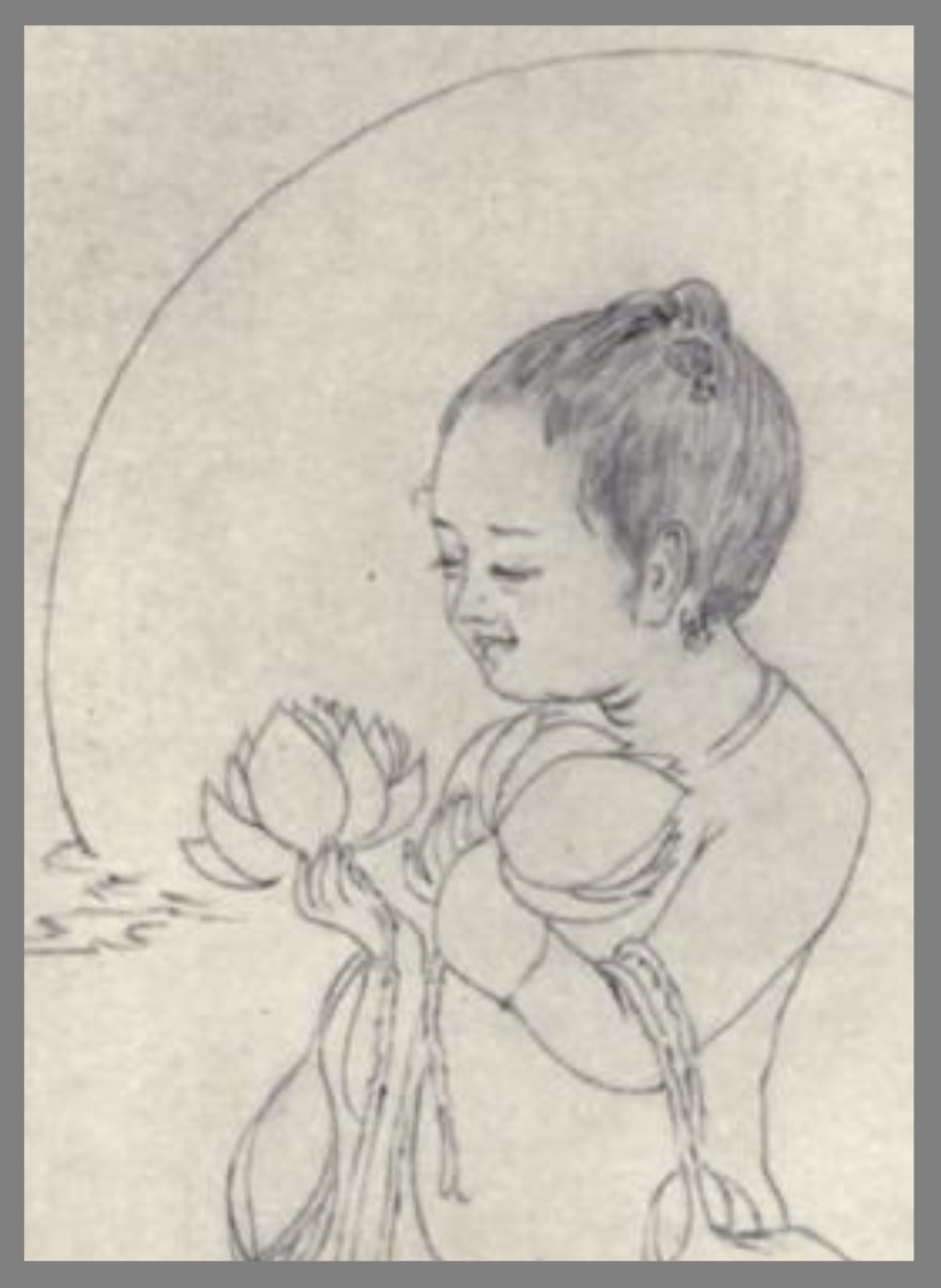
One of the things we enjoyed about this edition were the included illustrations, like this drawing by Asit Kumar Haldar, which accompanies one of our favorite poems in the collection, number 96 or “When I go from hence let this be my parting word”.
We ended up rating Gitanjali three out of five stars. Most of it is deeply spiritual poetry which addresses the author’s relationship with God, and as we do not share his faith, and perhaps also because we do not know the allusions to his prose work, it did not speak to us. The format also makes it difficult to tell whether each poem is supposed to stand alone or is a continuation of the previous poem. But there are still several gems in the collection that speak to universal themes of joy, oneness with the universe, and human nature.
Poem number 30 made us laugh:
I CAME out alone on my way to my tryst. But who is this that follows me in the silent dark?
I move aside to avoid his presence but I escape him not.
He makes the dust rise from the earth with his swagger; he adds his loud voice to every word that I utter.
He is my own little self, my lord, he knows no shame; but I am ashamed to come to thy door in his company.
Rabindranath Tagore, Gitanjali, poem no. 30
Who hasn’t experienced this? Perhaps last time we were in our friends company we were arrogant and boastful or couldn’t help lashing out in anger and despair.Now we come to our friend sheepishly, hoping they will still embrace us despite the dumbass things we did.
There were also poems that gave us goosebumps from sheer brilliance. One of these was poem number 74:
THE day is no more, the shadow is upon the earth. It is time that I go to the stream to fill my pitcher.
The evening air is eager with the sad music of the water. Ah, it calls me out into the dusk. In the lonely lane there is no passer by, the wind is up, the ripples are rampant in the river.
I know not if I shall come back home. I know not whom I shall chance to meet. There at the fording in the little boat the unknown man plays upon his lute.
Rabindranath Tagore, Gitanjali, poem no. 74
This poem gives a feeling of ineffable sadness, but also beauty, and makes us think of Swan Lake’s haunting refrain. We can easily envision the dusk closing in on this nearly deserted shore. Even the lute player has a sense of ghostly liminality. It is the sort of scene where worlds meet and tales begin.
So if you enjoy poetry, are looking to expand your knowledge of Bengali writers, or both we encourage you to read this small poetry collection for the few gems that might sparkle as brightly for you.
Deciding that true romantic heroes are a thing of the past, Eloise Kelly, an intelligent American who always manages to wear her Jimmy Choo suede boots on the day it rains, leaves Harvard’s Widener Library bound for England to finish her dissertation on the dashing pair of spies the Scarlet Pimpernel and the Purple Gentian. What she discovers is something the finest historians have missed: a secret history that begins with a letter dated 1803. Eloise has found the secret history of the Pink Carnation the most elusive spy of all time, the spy who single-handedly saved England from Napoleon’s invasion.
The Secret History of the Pink Carnation, a wildly imaginative and highly adventurous debut, opens with the story of a modern-day heroine but soon becomes a book within a book. Eloise Kelly settles in to read the secret history hoping to unmask the Pink Carnation’s identity, but before she can make this discovery, she uncovers a passionate romance within the pages of the secret history that almost threw off the course of world events. How did the Pink Carnation save England? What became of the Scarlet Pimpernel and the Purple Gentian? And will Eloise Kelly find a hero of her own?
Why You Should Listen
~Because Book~
This book has survived several relistens over the years. Eloise Kelly makes a very likable narrator and we find her thesis-researching travails easy to identify with. It’s through Eloise we’re introduced to Amy, our Regency heroine and would-be member of the League of the Purple Gentian. The author sets up nice parallels between the modern and historical romantic action. This device does tend to highlight the plot’s predictability—and formulaic plots are something the series suffers from as you read other installments—but we’re not here for an original plot.
We’re here for the characters and the humor that keeps us laughing out loud. The banter is spot-on in a dry, tongue in cheek flavor that hits our sweet spot. The characters may do absolutely stupid things, but they get roasted for it, often by themselves. Our favorite characters are actually the chaperone, Miss Gwen, and Amy’s sensible cousin, Jane. They provide balance and keep the book from veering into utterly ridiculous territory. If you love Amelia Peabody and Alexia Tarabotti, you’ll love Miss Gwen.
As far as we can tell, the historical accuracy is spot-on, too. Author Lauren Willig makes Napoleon’s France come to life. She uses a wealth of detail to make her characters seem as if they must have really existed—and who wouldn’t want such dashing spies to be real?
~Because Narrator~
Kate Reading narrates with a lovely contralto. Most of the time her performance allows you to forget the book is being read to you, which is great! She’s able to differentiate the characters’ voices and switch among genders and ages with ease. At times, her renditions, while true to character, get a bit stridently high-pitched for our taste, especially in Amy’s impassioned moments. So this audiobook is not really a good choice if you’re looking for a story to nod off to (though the content is often exciting enough to keep you awake on its own). We also found some of her French accents grating, but since she also performs some superbly (to our American ears, at least), we assume she exaggerated for comedic effect. Obviously, none of this has kept us from listening time and time again.
A Word to the Wise (Content Warnings)
Major: Detailed sex scenes
Moderate: Sexism and misogyny appropriate to the period (usually counterbalanced by feminine subversion), attempted sexual assault, violence, heteronormativity
Minor: Brief mention of blood and torture
TL;DR
The Secret History of the Pink Carnation is a great listen if you’re in the mood for a funny, lighthearted, adventure with dashing spies and girl power, as long as you don’t mind the predictable romance aspects. The characters’ witty repartee will keep you coming back for more. Good narration, but not for bedtime listening.
We recently discovered The StoryGraph thanks to ReadWithCindy’s 2021 Asian Readathon (check out our picks here). According to the website, “The StoryGraph helps you track your reading and choose your next book based on your mood and your favorite topics and themes.” Intrigued, we decided to take it for a test drive.
A Few Caveats
We’ve only checked out The StoryGraph on our iPhone, so keep in mind that the desktop version may have features we didn’t get to experience. But let’s be honest, all major features should work on all versions of a site, especially when users can’t opt to switch to desktop mode. If we can’t do it on our iPhone, it might as well not exist. 😆
It’s also important to note the site is still in beta mode and actively adding new features while troubleshooting existing ones. The StoryGraph seems very responsive to user demand and it’s fair to expect many of the limitations we experienced will be temporary.
The StoryGraph Difference: Things to Love
The StoryGraph’s UI is clean and minimalist. We appreciate the calming, uncluttered vibe. It does lack a dark mode, though, so photosensitive viewers may want to use a dark reader. Sign up is quick, easy, and doesn’t ask for sensitive information. We haven’t been spammed since we signed up, either! The StoryGraph can import your Goodreads library for you, but we decided to start with a fresh slate.
Let’s talk about how The StoryGraph stands out from the crowd. Two things are at the heart of the StoryGraph experience: moods and statistics.
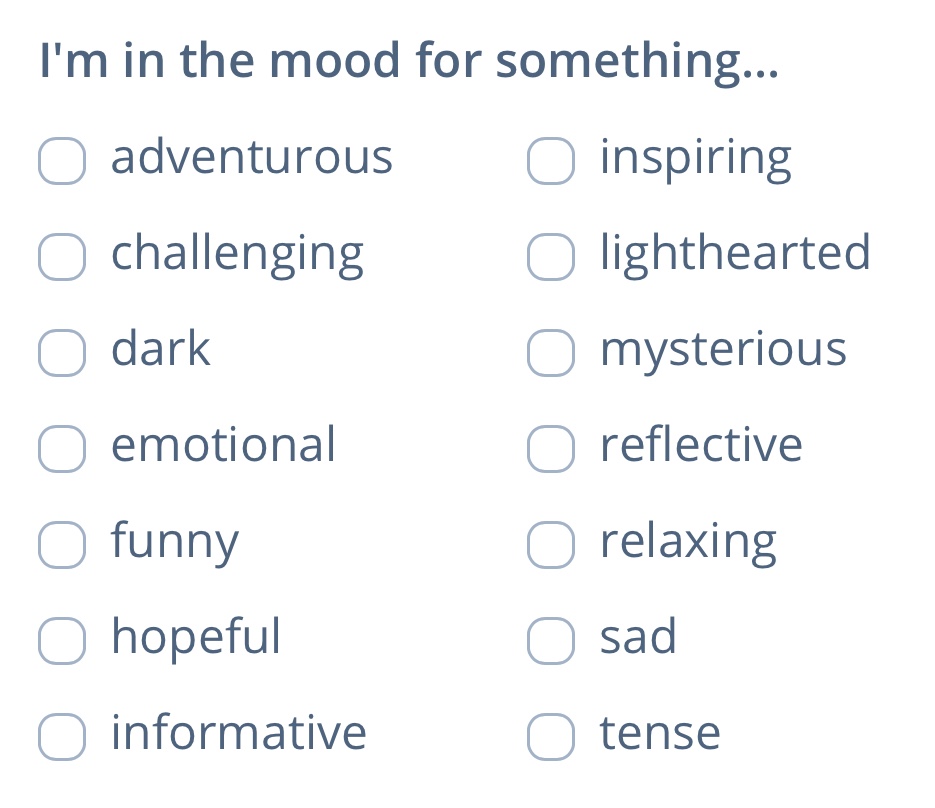
The StoryGraph’s tagline is “Because life’s too short to read a book you’re not in the mood for.” Thus, books are primarily judged on feels. In addition to the mood list to the right, readers can indicate a book’s pace, length, whether it’s plot- or character-driven, and even content warnings. These are great metrics for deciding whether a book is a good fit for you. We’d like a few more mood options, but the current set covers a lot of ground.
We’re especially excited about the ability to flag content warnings! This is extremely useful. You can note whether potentially triggering material is major, moderate, or mild. We would like the ability to do this if we haven’t finished a book, though. What if the material was so triggering we had to stop reading? That’s important information for others to know without having to check out the written review. It should be part of the aggregate data. It also needs to be easier to add content warnings to the menu. The StoryGraph figures this is covered by tags, but as far as we can tell, tags are useless. The tagging function might as well not exist.
Of course, you can rate books you’ve read out of 5 stars, but The StoryGraph lets you do so to a quarter-star level of granularity! You can also add a written review and include links.
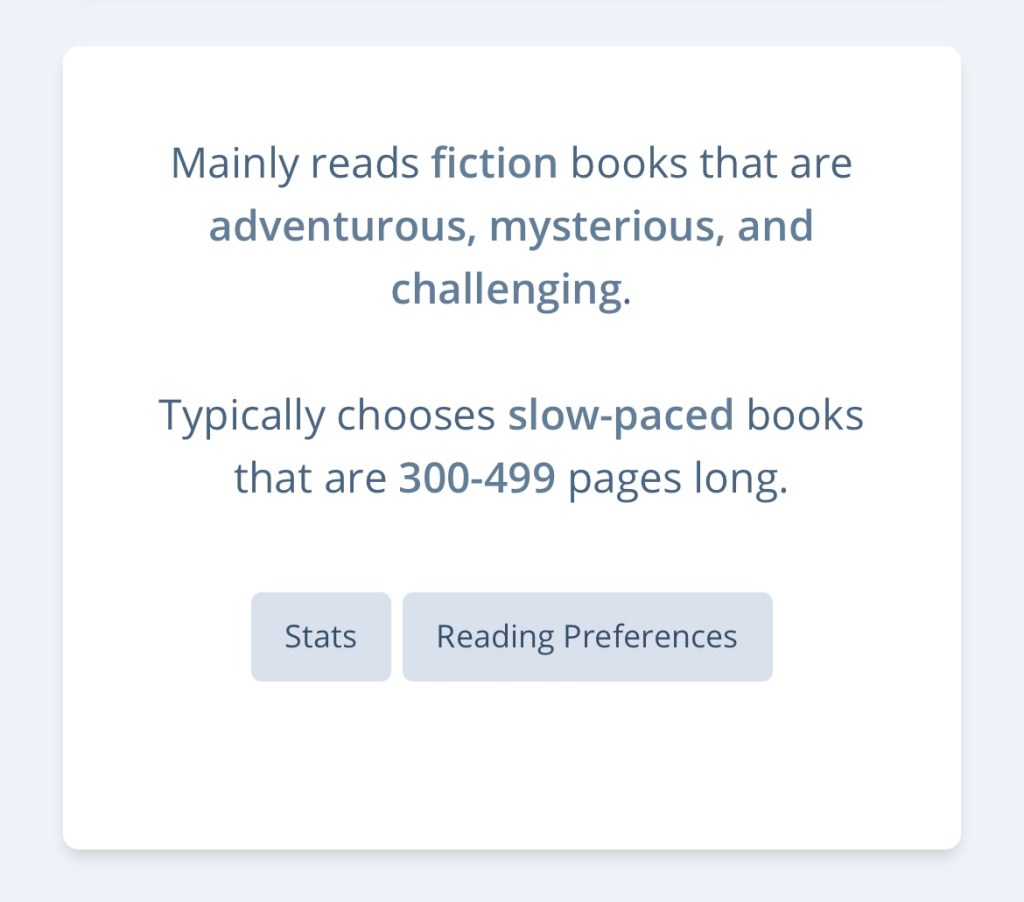
The StoryGraph takes all the data you’ve given it about what kind of books you enjoy and generates a reader profile. Even with little to go on, it had us pretty well pegged from the get-go.
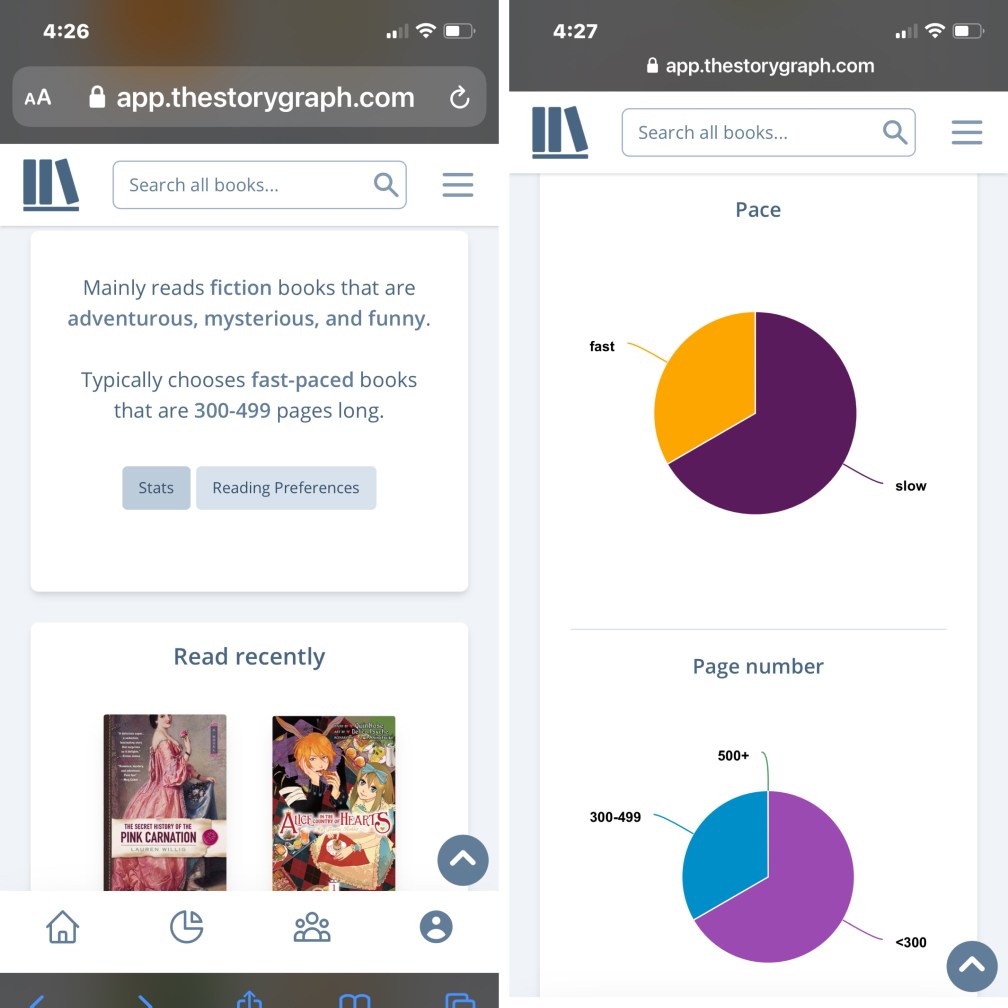
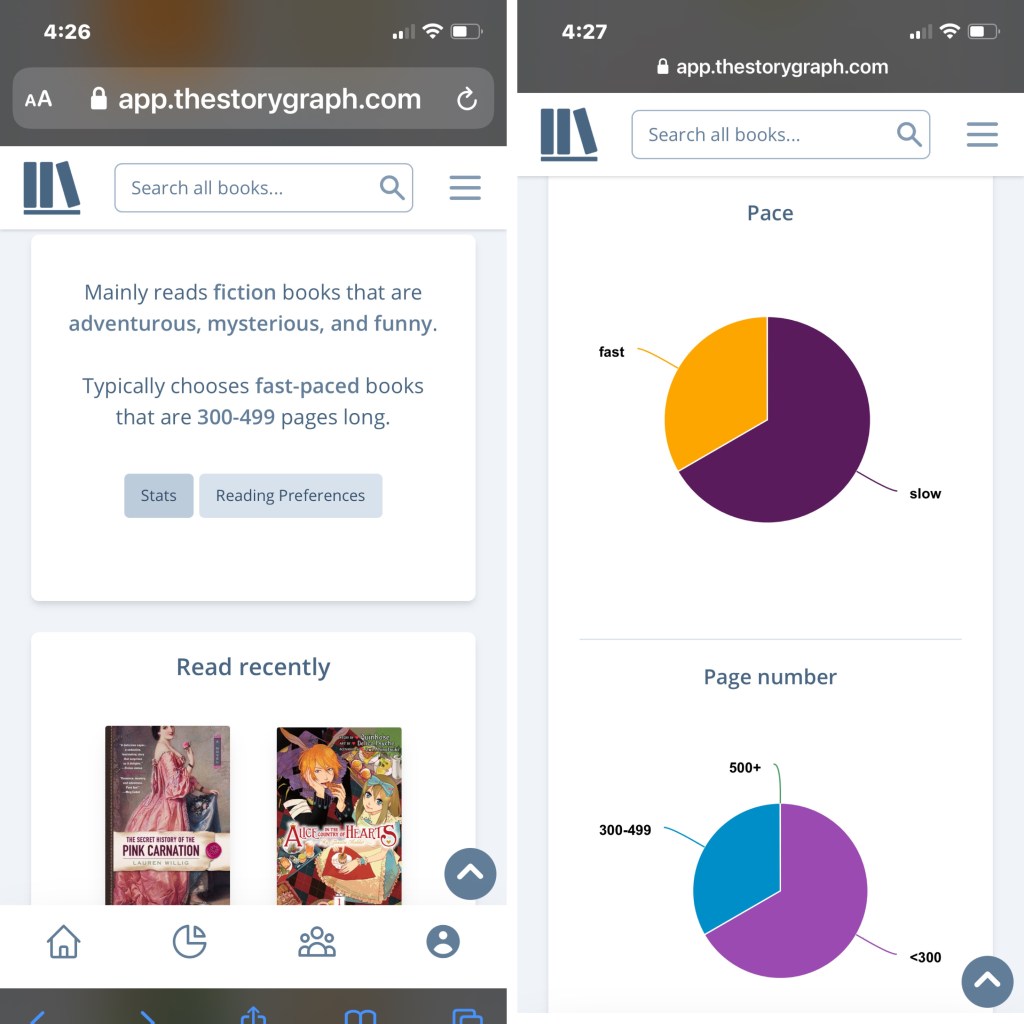
This assessment gets more accurate the more you fill out your The StoryGraph library. Ours changed from the initial, “Mainly Reads fiction books that are adventurous, mysterious, and challenging. Typically chooses slow-paced books that are 300-499 pages long,” to adventurous, mysterious, funny, and fast-paced. The StoryGraph uses this profile to generate recommendations—which are pretty good—and pretty graphs of your reading stats. Unfortunately, there is a lag between updating the profile and the graphs, which can result in confusing mismatches like the one shown below.
Which is correct? In these screenshots, taken just a few seconds apart, our reader profile says we typically choose fast-paced books that are 300-499 pages long, but our stats say we typically choose slow-paced books under 300 pages.
The graphs are fun, though, and the way they crunch the days really does make it easier to find books you’ll love. The StoryGraph also sidesteps the Goodreads toxicity simply by not having a social media aspect. The only way to interact with others on the site is to follow them or join a reading challenge. Even so, it’s at a remove. “This is what I read and what I thought. The end.” It’s rather refreshing and adds to the chill vibe.
We’ve found the biggest reason to stay active on The StoryGraph are the reading challenges. These are a fun way to stretch your reading horizons. When you challenge yourself to read books that fit theprompts, you’ll find yourself adding new authors and genres to your TBR pile! It’s also easy to create your own reading challenges and you can keep them to yourself, share privately with friends, or make them public so anyone can join.
What Needs Work
Navigation overall is clunky. For example, if you use the reading journal feature to jot down a note about your reading and then save it, there is no button to add another entry on the resulting screen. You have to go back to the book’s page and press “track progress” and then “add note”.
It’s easy to search for and add books by title or author using the main search bar. Key word: or. As of this writing, you can’t do both. You cannot filter those results or search for tags. You can only filter results from the “Browse all books” search. As power searchers, we hate this with the same passion we hated Google doing away with Boolean operators. You can’t use the main search bar to find other users or reading challenges, either. That has to be done in their respective sections. Searching by ISBN doesn’t work, unless you’re in the “add a book/edition” dialogs (which, while we’re on the subject, aren’t user-friendly—and we say this with librarian training). The StoryGraph’s selection is mostly English titles that are currently in print. The site also isn’t set up to track journals and periodicals. We want to be able to search for anything using the main search bar, or at least have an advanced search mode that does that. If we have a physical copy, we also want to be able to use our phone camera to “scan” the barcode.
What would’ve been really useful would’ve been a way to import our Audible library and listening history. Unfortunately, The StoryGraph, like all the other reading sites out there, doesn’t cater to audiobook lovers. Their form for manually adding other editions makes it look like they are planning to correct this, since you can manually add an audiobook edition and input length in hours and minutes. We have yet to see an audiobook edition on The StoryGraph “in the wild”, though, probably because you have to add it yourself—a pain in the ass most users won’t have time for.
Even if you do add an audiobook edition, you can only track your reading progress by percentage read. That means we have to look at the progress bar in our audio player and guesstimate. The site should be able to do the math for you; just put in the hours and minutes you’ve listened so far and—lo!—a progress bar appears! But no, they want you to do division in base 60. Hopefully addressing these issues is in the works. We think it would help The StoryGraph stand out as a welcoming site for neurodivergent and disabled readers.
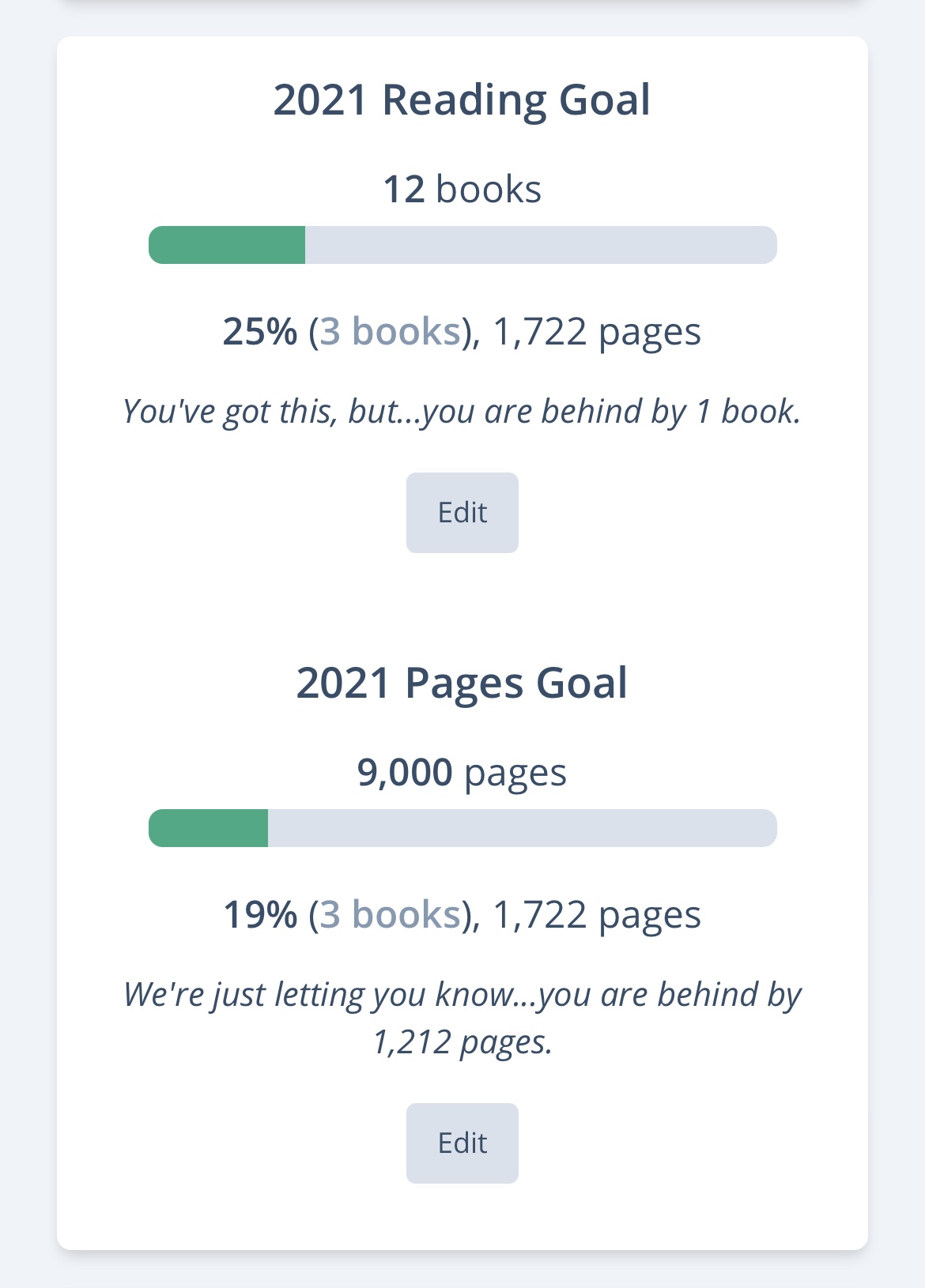
Our final complaint is that whoever designed the books and pages read goals is a sadistic bastard. We are here for fun. We really do not need the site to push our anxiety buttons by telling us we’re behind. Once we took a screenshot for this review, we deleted our goals for our mental health.
TL;DR:
Being able to find books based on what you’re in the mood for is fabulous!
Content Warnings! SO USEFUL! It needs to be easier to add CWs that aren’t on the list yet, though.
Reading challenges are what keep us coming back. They’re great fun!
Reader profiles, and thus recommendations, are very good with only limited data, which does the strength of their algorithms.
The site looks pretty and soothing, but needs a dark mode.
Love the lack of social media features! Makes it a chill, nontoxic environment.
Navigation is clunky and less-prominent features are hard to use.
Tags are pretty much useless. The function might as well not exist.
As much as we love ye olde paper books, The StoryGraph needs to get with the times and support audiobook and ebook readers.
Whoever designed the books and pages read progress reporting is a sadistic bastard. We do not recommend anyone with anxiety, perfectionism, or workaholism issues use this feature.
Most of the flaws are probably due to The StoryGraph being fairly new and primarily relying on librarian volunteers. Hopefully they’ll improve if the site continues to grow and gain traction.
Final Thoughts
We think we will be sticking with The StoryGraph for a while and encourage you to check it out for yourself if you haven’t yet! We look forward to the site growing into its shoes, so to speak, and are thrilled to have a site where we can share our love of books without getting overwhelmed by the social aspect.
Life with asthma, allergies, and multiple chemical sensitivities is rough and doctors often recommend air purifiers. This is a great idea, but finding an air purifier that doesn’t make you sick is a lot harder than it oughta be. We’ll make it a bit easier by telling you our pick as well as two models to avoid and why.
The good: the Coway Airmega AP-1512HH
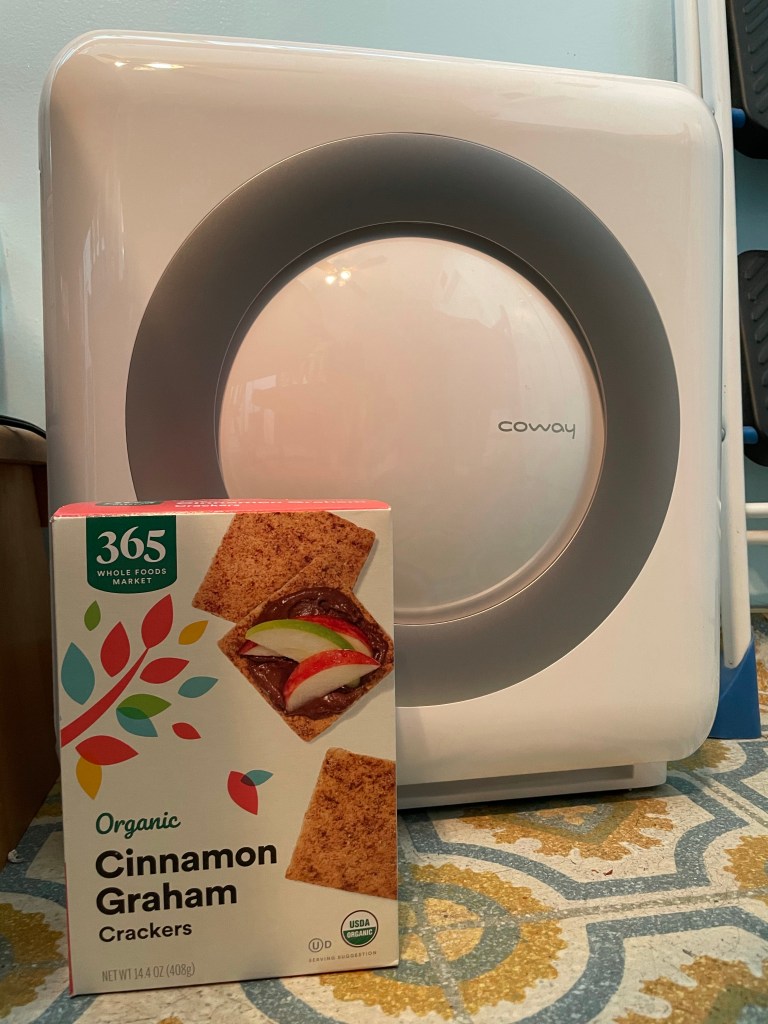
One of our Coway Airmega AP-1512HH air purifiers, shown with a box of graham crackers for size comparison.
The Coway Airmega AP-1512HH air purifier (hereafter simply “the Coway”) came to our attention via this NYT Wirecutter article. They arrive well-packed enough to withstand serious Amazon delivery abuse and get points for making most of the packaging recyclable. Their shape makes unboxing a bit unwieldy, but at just over 12 lbs, it was light enough for even our seriously deconditioned self to carry. Once you have it out of the box, there’s a nice handle that makes maneuvering easy.
We do recommend unboxing outdoors, wearing a mask if you’re having an extra sensitive day. The first Coway we bought did not have any perceptible off-gassing, but the second had a slight plastic smell. The smell went away after a minute in the fresh air with all the plastic packaging removed. Your mileage may vary, so it’s important to have good ventilation.
When you purchase your Coway, you will want to buy an aftermarket filter replacement set from Durabasics as well. Then when you initially set up your Coway, throw away the HEPA filter it comes with (the white one). Seriously. It will probably smell fine until you turn the air purifier on. Then the chemical stank is nasty! We tried turning the Coway on its highest setting and leaving it outside for an hour, and the smell didn’t lessen one bit. So do yourself a favor and immediately replace it with a Durabasics HEPA filter. Then turn the unit on blast for about 5 minutes. This should clear the initial chemical load.
Wirecutter also recommends Cabiclean replacement filters, but we do not because they have a slight chemical smell when unwrapped. The odor filter (the black one) the Coway comes with was fine in our experience.
You will also want a quarter to tape over the air quality indicator light like so:
Photo demonstrating quarter placement to block air quality indicator light.
This will keep that bright blue light from bothering you after dark. In a bedroom or other environment where minimizing light is important you can also cover the other indicator lights with electrical tape or a couple layers of opaque decorative tape. Don’t cover the filter change indicator lights, though. You’ll need them to bug you when it’s time to change the filters.
The Coway has significantly improved our quality of life. We were in the emergency room four times in one month before we got the first Coway. It turns out our home’s indoor air quality had gotten so bad it kept setting off anaphylaxis. This is partly because we had been so sick and our In-Home Support Services assistant was so terrible that it was easier to just let dust lie. Within an hour of bringing the Coway inside we felt palpable relief in our whole body as the timing and allergen load lightened. The Coway has also allowed our new assistant to work on eliminating the dust without making us sick. It’s a virtuous circle!
We were really impressed when our assistant checked the filters after a couple weeks of heavy duty dusting. He thought they might need cleaning or replacing even though the change filter lights had not turned on. The black filter looked like chinchilla fur, it was so covered in dust, and the unit was still going strong! Our assistant followed the directions for washing the screen and black filter. We recommend vacuuming the black filter to clean it instead as it quickly loses the correct shape when washed.
We love the Coway so much that we purchased a second unit and may invest in a third! We deducted a teapot for having to throw away the included HEPA filter. And sometimes we can’t tell why it’s kicked up to the highest setting. Just nebulizing sitting next to the unit seemed to trigger it. But these are minor quibbles. Excellent value for money and chemically sensitive-friendly!
We saw an ad for Molekule air purifiers on Instagram, got really excited about their purported ability to destroy pollutants, and bought one. We should’ve done more research first.
At first we were really impressed. The Air Mini+ did not bother our chemical sensitivities at all right out of the box. The only parts of the packaging that were not 100% recyclable were the activated charcoal packet and the plastic wrapper on the filter. It’s also very sleek and, well, looks effective.
The unit is on the heavy side and unwieldy to carry. We never tried using the handle because we didn’t trust it to support the weight, frankly. Opening it to install the filter required having our mom try to hold the base still while we used our whole body to get enough leverage to twist the dang thing open. It was easier after the first time, but still. And we needed to reopen it because we had to reseat the filter to get it to work.
It was nice to be able to control the Molekule from another room using the app, but the unit could not reliably connect to our home WiFi even when it was right next to the router.
More importantly, we needed to be able to control it remotely because it was so loud, even on the lowest setting. It also made us sick because its PECO technology actually creates volatile organic chemicals like formaldehyde. You can read more about the Molekule’s abysmal performance over at the NYT Wirecutter (scroll down and click on the section titled “Molekule Air and Air Mini: the worst air purifiers we’ve ever tested”), but we’d already had enough and returned it.
The ugly: Honeywell QuietClean Tower Air Purifier With Permanent Filters, HFD230BV1
Photoof Honeywell QuietClean Tower from their website.
The Honeywell QuietClean Tower was recommended by our ear, nose, and throat specialist. As soon as we unboxed it, we were sickened by all the chemicals off-gassing from it. We didn’t even try to use it. It went straight back to Amazon.
We’re not saying being woke is a bad thing, but it stinks when you suddenly can’t stand books or authors you used to enjoy. We read to escape, darn it, and here comes our sociopolitical awareness jolting us out of a nice fantasy. So rude!
This has been happening a lot with romance novels lately. Romance novels are the epitome of escapism. No other section in the book store offers quite the same level of pure fun—and we say that as card-carrying SFF and manga buffs. Sci-fi, fantasy, and comics—at least the kind we enjoy—all ask you to think on some level. Even fantasy romps like Piers Anthony’s Xanth series have a cleverly concealed commentary on society. So does Ranma 1/2. Marvel and DC’s comics do, too.
Romance novels, on the other hand, usually conform very closely to social norms. They uphold the “one true love” ideal and a whole bunch of other nonsense.
Case in point: we were listening to Selkies are a Girl’s Best Friend by Molly Harper. (No, that is not our typo. That’s the published title. Shame on whoever edited it!) Molly Harper is good with the snark and we were looking forward to another laugh out loud installment. And then the main character, Sophia, has an inner monologue in which she submits to societal pressure to settle down and have kids with a guy she has only known for a few days and initially hated. Cue our inner monologue saying, “This is ridiculous and unhealthy. We’re returning this book.”
We’ve also been listening to Ravenheart by Dannika Dark, the second novel in the Crossbreed series. This series is more action murder mystery in an urban fantasy setting than romance and it’s also full of snark. At one point our heroine Raven goes on a date with Detective Glass. Glass insists on ordering for her and overrules her saying she’d prefer a chicken salad. At which point we’re wondering why she doesn’t get up and leave. After the date Raven’s internal monologue is all about how she liked Glass being dominant (we’d call that being a domineering asshole). This is way out of character for Raven, who we expected was only dating Glass to get close to the investigation and piss off her work partner Sebastian. But it does support toxic social norms around masculinity and romance. We’re not sure yet if this is a blip in an otherwise enjoyable series.
We are wondering if outgrowing romance novels is a mark of emotional maturity, of being ready to set those toxic norms behind us.











 Honeycomb's Hive