Being woke is ruining reading

We’re not saying being woke is a bad thing, but it stinks when you suddenly can’t stand books or authors you used to enjoy. We read to escape, darn it, and here comes our sociopolitical awareness jolting us out of a nice fantasy. So rude!

This has been happening a lot with romance novels lately. Romance novels are the epitome of escapism. No other section in the book store offers quite the same level of pure fun—and we say that as card-carrying SFF and manga buffs. Sci-fi, fantasy, and comics—at least the kind we enjoy—all ask you to think on some level. Even fantasy romps like Piers Anthony’s Xanth series have a cleverly concealed commentary on society. So does Ranma 1/2. Marvel and DC’s comics do, too.

Romance novels, on the other hand, usually conform very closely to social norms. They uphold the “one true love” ideal and a whole bunch of other nonsense.

Case in point: we were listening to Selkies are a Girl’s Best Friend by Molly Harper. (No, that is not our typo. That’s the published title. Shame on whoever edited it!) Molly Harper is good with the snark and we were looking forward to another laugh out loud installment. And then the main character, Sophia, has an inner monologue in which she submits to societal pressure to settle down and have kids with a guy she has only known for a few days and initially hated. Cue our inner monologue saying, “This is ridiculous and unhealthy. We’re returning this book.”

We’ve also been listening to Ravenheart by Dannika Dark, the second novel in the Crossbreed series. This series is more action murder mystery in an urban fantasy setting than romance and it’s also full of snark. At one point our heroine Raven goes on a date with Detective Glass. Glass insists on ordering for her and overrules her saying she’d prefer a chicken salad. At which point we’re wondering why she doesn’t get up and leave. After the date Raven’s internal monologue is all about how she liked Glass being dominant (we’d call that being a domineering asshole). This is way out of character for Raven, who we expected was only dating Glass to get close to the investigation and piss off her work partner Sebastian. But it does support toxic social norms around masculinity and romance. We’re not sure yet if this is a blip in an otherwise enjoyable series.

We are wondering if outgrowing romance novels is a mark of emotional maturity, of being ready to set those toxic norms behind us.

Thoughts welcome.

Japanese Macaques Show They’re as Weird as We Are

Image from NPR article.

Trigger Warning: This post discusses in part non-human sexual assault and possible implications for humans.

Apparently female Japanese macaques are having “sexual interactions” with sika deer. Check out the NPR article. It’s not only a fascinating account of interspecies interaction, it makes some of the weird stuff we humans do look rather normal. 😄 It also fits neatly into my theory that we can’t point to any one behavior and say, “This sets humans apart from all other animals. Only humans do it.” (Yes, I drove my Psychology 101 prof nuts on this topic, challenging every example she tried. 😁)

Some parts of the article could also be read as showing non-humans sexually assaulting others. Some macaques certainly have a poor understanding of consent! I knew dolphins sometimes gang-rape, but I didn’t know any other examples. It’s important to note that in the macaques’ case the females are the aggressors. This further demolishes the belief that only males commit sexual assault. We can also take a lesson from the macaques’ motivation: sexual frustration. Perhaps teaching potential and/or convicted aggressors other ways of dealing with frustration would be an effective approach.

My Monster, the Vampire

It’s Friday, October the thirteenth today! (Pro tip: not the day to schedule your secret society meeting. 😉) That makes this the perfect day to blog about vampires.

Why vampires? For one thing, they’re at the core of the novel I’m writing, House Ibsen. There are lots of other classic monsters, too, like werewolves and witches and trolls (oh my! 😉), though the focus is on vampires.

But the real reason is that vampires are my monsters.

You see, every Fall I’d dread October’s arrival. The horror genre took over the airwaves. You couldn’t turn on the TV without seeing some sort of monster. I have always been prone to night terrors, the kind of nightmares where you thrash about and scream in your sleep. One time I backhanded my babysitter in the face mid-nightmare, but that’s another story.

Every October for years I’d have a nightmare that I was trapped in a treehouse and vampires were coming to get me. Every year like clockwork. It scared the bejeezus out of me. I can’t remember if it started before the The Simpsons’ “Treehouse of Horror” episode or not.

It finally stopped recurring sometime in junior high when I realized why I was particularly terrified of vampires; vampires are real and I was surrounded by them in my daily life.

I don’t mean that I was literally surrounded by the bloodsucking undead. I mean that many of the people in my life were like vampires. These people drained their victims of energy, money, and power. In psychology terms, they were toxic people high on the malignant narcissism scale. I believe that vampires function as a metaphor for humans who abuse power and prey on others.

I’ve read a lot of scholarly twaffle about vampires representing fears of blood borne disease and promiscuity. I don’t buy it. It makes much more sense to me that werewolves represent fears of infection (and being preyed upon by animals). The promiscuity angle comes from vampires and toxic people both using seduction to lure prey.

I have come to have a greater appreciation for vampires and worked on desensitizing myself. My best friend Matt helped. We’d rent vampire films and mock them mercilessly.

But I’m still afraid of vampires. They’re my monster because they continue to pop up in real life. They also continue to be the number one boogie man in my dreams. In fact, I was inspired to start writing HouseIbsen by a terrible nightmare involving vampires.

Which monster is your monster?


Bonus tidbit: one of my grandfathers believed Friday the 13th was his lucky day because good things always happened to him on that date. Specifically, he disembarked safely in Europe in World War II, returned home from the war, and died having a great day on the golf course, all on Friday the 13th.

What is Addiction?

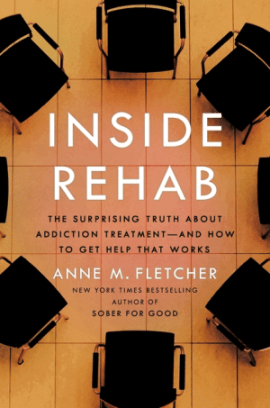
Inside Rehab Fletcher

I started reading Inside Rehab by Anne M. Fletcher and was surprised to learn that “the word ‘addiction’ comes from a Roman law having to do with ‘surrender to a master'” (11). I checked the OED and learned it’s derived from the Latin a dicere, which means one who is dictated to.

There’s debate in psychology circles about whether someone can be addicted to a person. I’ve always held that the answer is yes from personal experience. It looks like this was an original sense of the word.

Another sense of the original Latin tells us that one can be addicted to anyone or anything which dictates one’s actions. This supports the experience of many people from abusive relationship or cult survivors to Internet porn or social media addicts.

I call this debate settled.


Fletcher, Anne M. Inside rehab: the surprising truth about addiction treatment: and how to get help that works. NY, NY: Viking, 2013.