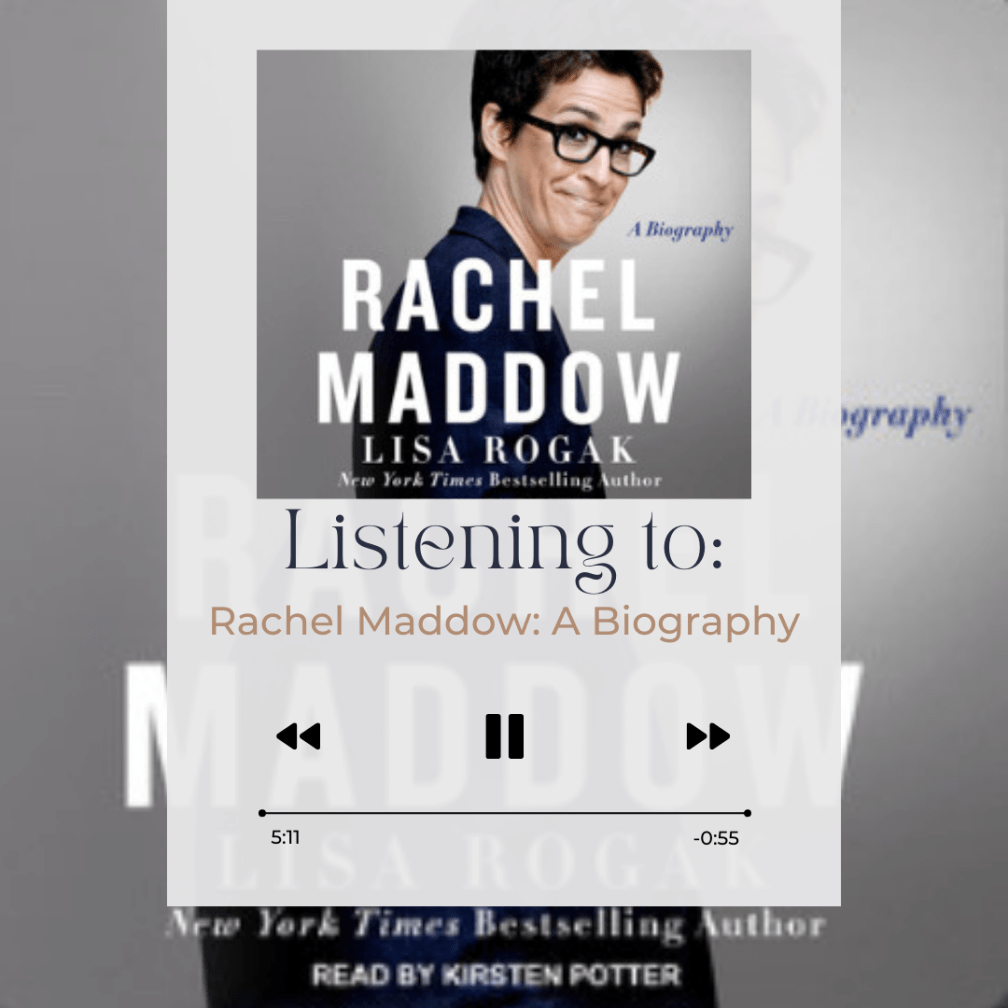
Audiobook review: Rachel Maddow: A Biography

⭐️⭐️⭐️⭐️

Rachel Maddow by Lisa Rogak is a great look at the AIDS activist and MSNBC news anchor. While I knew she went to Stanford, I didn’t know that she didn’t have a very good time there, or that she comes from a town near mine. I learned that she was an AIDS activist before many people knew what AIDS was. I also learned about the tremendous amount of work that goes into her show, her past in radio, and that while I respect her, we probably wouldn’t be besties. Rachel does not read this biography, but the producers found a narrator with a voice very close to Rachel’s, which makes for a pleasant listening experience. Recommended for fans.

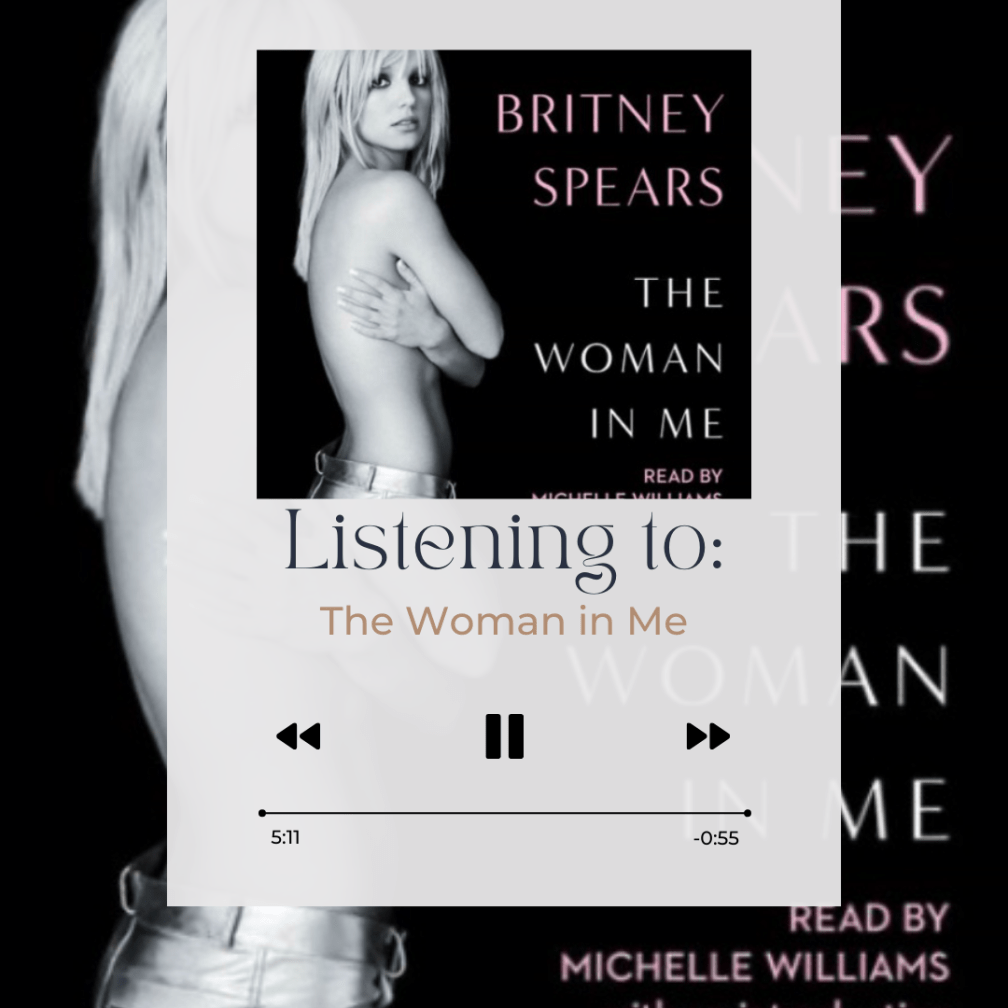
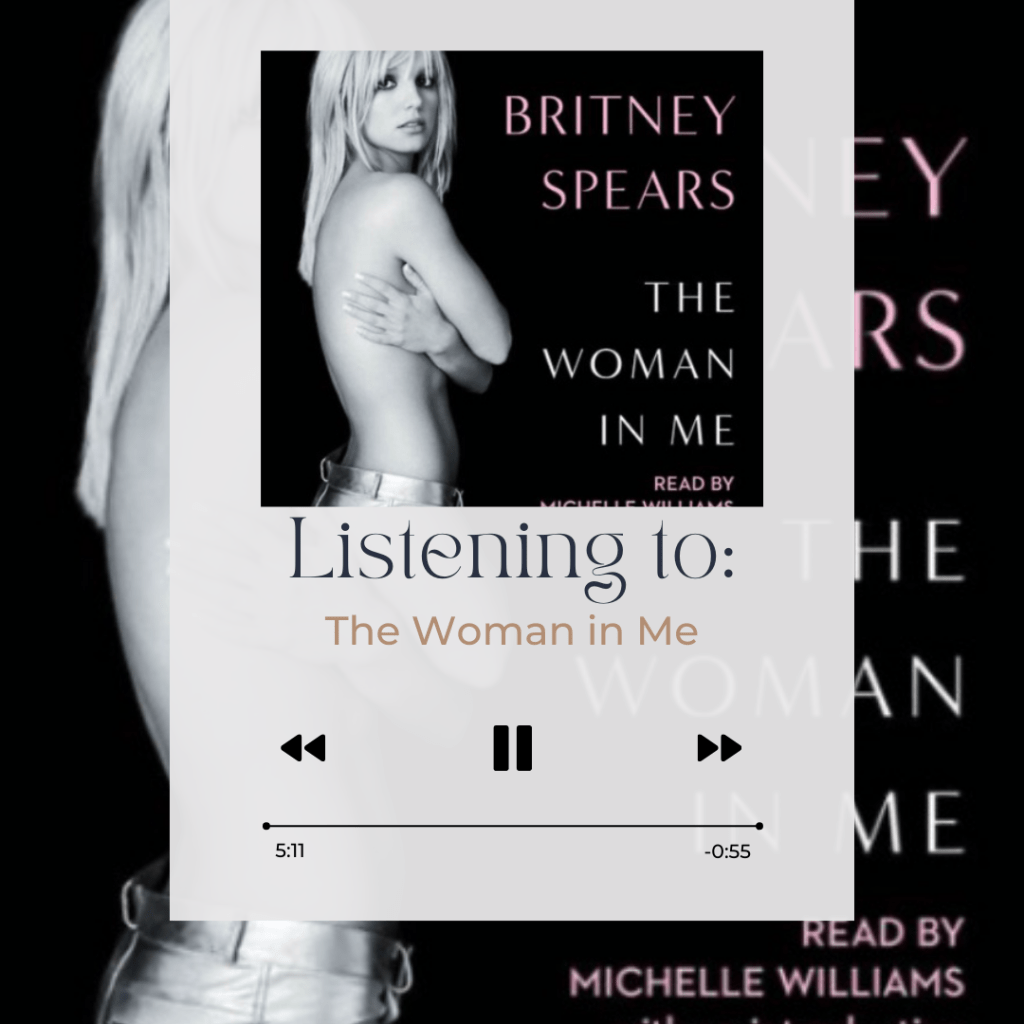
Audiobook review: The Woman in Me by Britney Spears

⭐️⭐️⭐️

The Woman in Me by Britney Spears starts out slow, but around a third of the way in it picks up with Justin Timberlake’s betrayal. Life falls apart for Britney after that as she is used and abused by those who saw dollar signs instead of a person when they looked at her. I cried when Britney thanked her fans for helping free her from the conservatorship. I hope now she gets to have peace surrounded by those who truly love her.

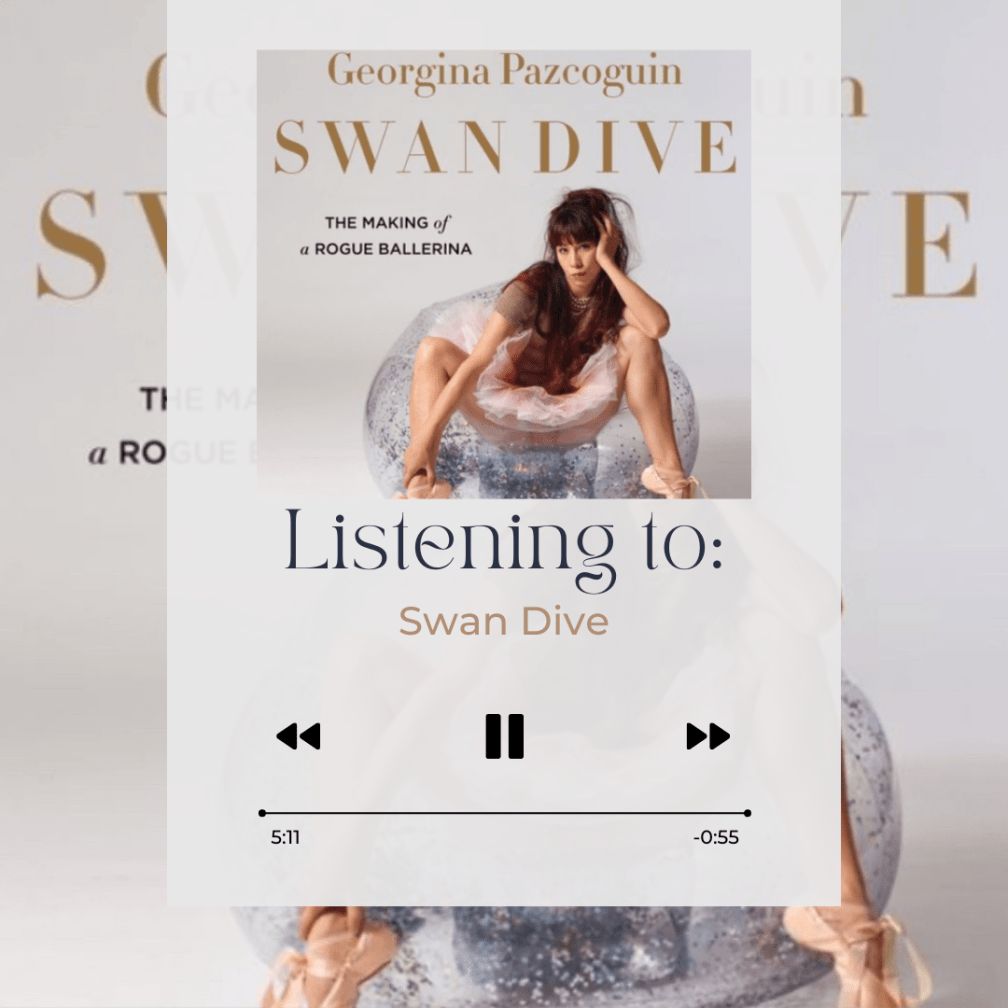
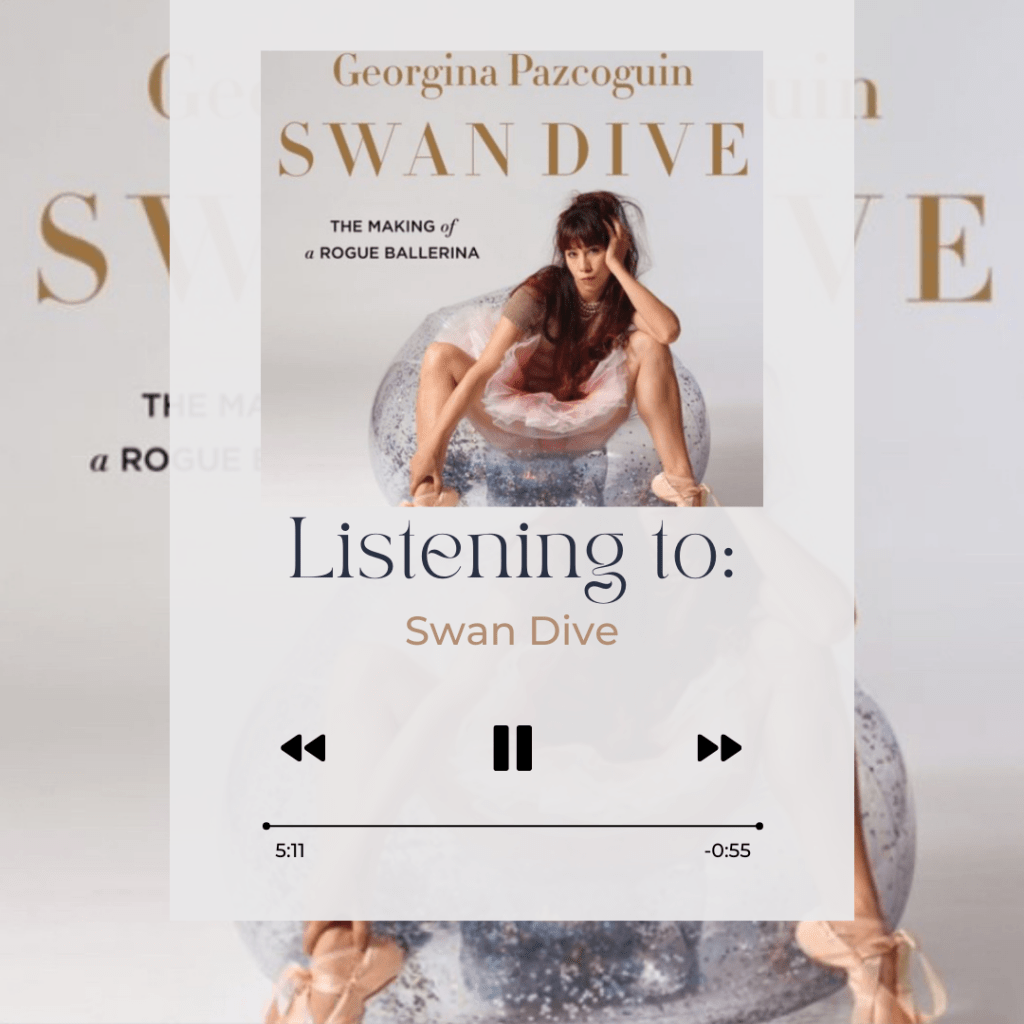
Audiobook review: Swan Dive by Georgina Pazcoguin

Swan Dive by Georgina Pazcoguin is a rollicking behind the scenes look at the world of ballet, including one of the top ballet companies in the world, and what it takes to become a soloist there. Georgina includes all the messy details from the injuries to the pranks to the shouting matches, making this autobiography difficult to put down. I came away from this book with massive respect for Georgina’s grit, spunk, and ability to set boundaries. Read by the author, who does an excellent job narrating. A four star read. ⭐️⭐️⭐️⭐️

Japanese Macaques Show They’re as Weird as We Are

Image from NPR article.

Trigger Warning: This post discusses in part non-human sexual assault and possible implications for humans.

Apparently female Japanese macaques are having “sexual interactions” with sika deer. Check out the NPR article. It’s not only a fascinating account of interspecies interaction, it makes some of the weird stuff we humans do look rather normal. 😄 It also fits neatly into my theory that we can’t point to any one behavior and say, “This sets humans apart from all other animals. Only humans do it.” (Yes, I drove my Psychology 101 prof nuts on this topic, challenging every example she tried. 😁)

Some parts of the article could also be read as showing non-humans sexually assaulting others. Some macaques certainly have a poor understanding of consent! I knew dolphins sometimes gang-rape, but I didn’t know any other examples. It’s important to note that in the macaques’ case the females are the aggressors. This further demolishes the belief that only males commit sexual assault. We can also take a lesson from the macaques’ motivation: sexual frustration. Perhaps teaching potential and/or convicted aggressors other ways of dealing with frustration would be an effective approach.

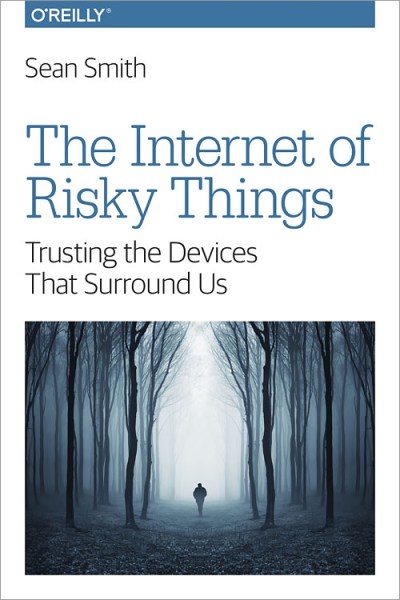
The Internet of Risky Things

The Internet of Risky Things: Trusting the Devices that Surround Us by Sean Smith

The Internet of Risky Things: Trusting the Devices that Surround Us by Sean Smith

I’ve been trying to beef up my IT knowledge so I can make sure all the nifty things I want to do in my novel in progress, House Ibsen, are grounded in reality. So when I saw The Internet of Risky Things at the library, I pounced.

The book is very well-written and does an amazing job of striking the balance between detailed technical information and sufficient background material. My big overall takeaway: if you care about privacy, don’t use the Internet of Things. The amount of things that can—and probably will—go wrong is staggering! Author Sean Smith describes the issues with legacy components, the current “program now, patch later” paradigm, and security. For example, many Internet of Things devices use out-of-date components because they’re cheaper. Many of these components have bugs, but can’t be patched. Even if they can be patched, eventually they become so “old” that they’re no longer supported. This leaves millions upon millions of devices wide open to hackers. Especially when these devices are used for mission critical applications, like the power grid or pacemakers, that risk is unacceptable. Yet it runs rampant throughout the Internet of Things. Gives me the heebie-jeebies, I tell you.

On the other hand, as a writer this gives me lots of ways for both my bad- and good-guy characters to exploit Internet of Things weaknesses and make things…interesting. 🙂

THE BOTTOM LINE:

teacup1teacup5teacup4teacup3teacup2

If you’re interested in this field, I highly recommend reading The Internet of Risky Things.


Smith, Sean W. The internet of risky things trusting the devices that surround us. S.l.: OReilly UK Ltd, 2017.

To Grid or Not to Grid

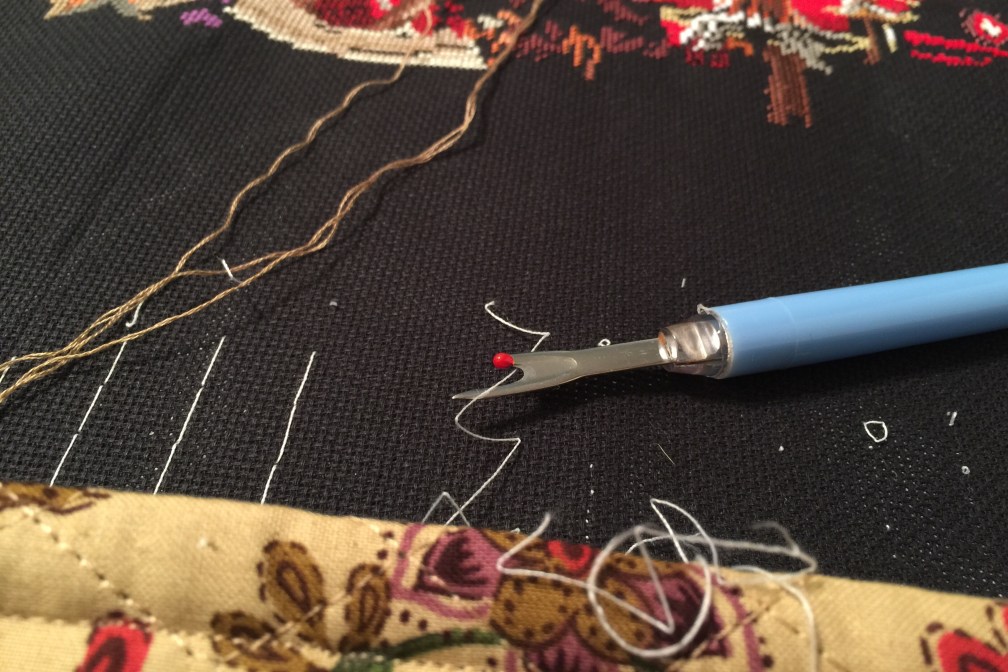
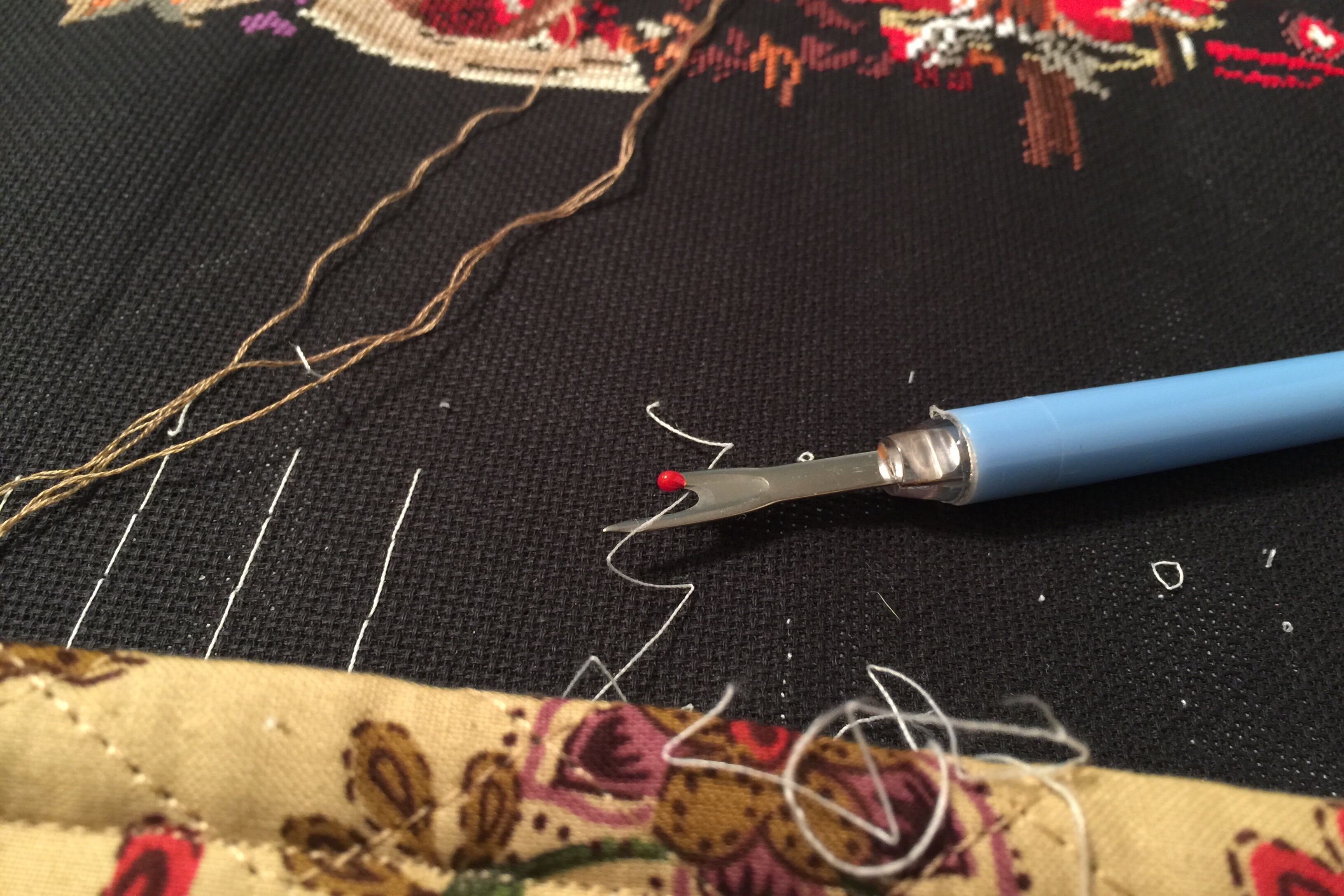
When I embarked on my current counted cross stitch project, I decided to try out a tip. I used white thread to stitch a 10 x 10 grid on my aida cloth. This reference did make it much easier and faster to stitch as it reduced the need to carefully count. I could determine the location of any stitch primarily spatially and never had to count higher than five to find my place.

But once I’d completed the top of the piece, I decided to test the tipster’s assertion that the grid stitches would be easy to remove. Turns out it’s a very finicky process. I wound up accidentally cutting a couple of cross stitches and having to leave some grid thread pieces where they were inconspicuous so I didn’t cut more of my project. I removed the grid threads from the rest of my fabric and don’t think I’ll use this method again.
My troubles with gridding my cross stitch project made me think about my struggles with outlining. I’m what’s often referred to as a “pantser” because I write by the seat of my pants instead of relying on an outline. I usually have a general idea of where I’m headed and even have some detailed scenes I know I want to get to along the way, like taking a road trip and penciling in a few must-see destinations and an end point, but leaving the rest up to serendipity. I’m one of those authors to whom her characters are very real, separate beings who tell me their story. My job is to listen and record, sometimes running along after shouting, “Wait! I can hardly keep up!”

Writing with an outline feels very restrictive to me, rather like rally driving. When I was required to turn in outlines for school papers, I almost always wrote the paper first and then the outline. My sophomore year of high school I finally figured out a nonfiction outlining style that worked for me. Using 3″ x 5″ cards I wrote down the points I wanted to make and supporting information. Then I sat down and rearranged the cards until I had a stack that led me almost from sentence to sentence. But I’ve only done this for thesis-length research papers. And for fiction, it feels too regimented and constricting.

I’ve heard a lot of great things about different styles of outlining, like the grid or post-it notes, and I keep trying because it seems like such a good idea. I have yet to find my match, though.

How do you feel about outlining first? What works best for you? I’d love to hear about it in the comments.
Contemplating Death: a connection between Buddhism and Christianity

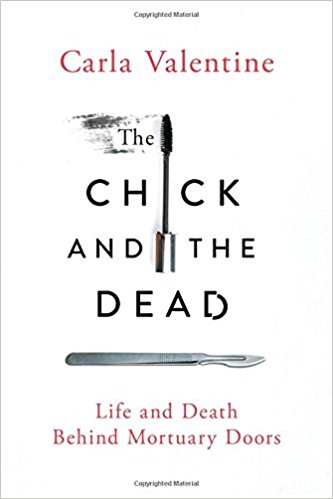
I recently read Carla Valentine’s fascinating account The Chick and the Dead: Life and Death Behind Mortuary Doors.¹ Engagingly, wittily written and full of detail (for most readers this is probably not a good book to read while eating), I was entertained and informed.

This book unexpectedly connected to a conversation I’d had with a Christian friend. The friend had asked me to watch the Darren Wilson film Furious Love.² George Otis, Jr., founder and president of the Sentinel Group, “a Seattle-based Christian research, media, and training agency dedicated to helping revival-hungry communities discover the pathway to societal transformation,” speaks about demons in the film.³ To make his point about how real and dangerous demons are he brings up a Buddhist practice in which the practitioner visualizes the detailed dissection and decomposition of their body and offers their flesh in a feast for demons. This meditation practice is actually not intended to summon or feed demons. It is simply a vivid visual means of helping the practitioner internalize Buddhist principles.

The Chick and the Dead discusses similar thirteenth-century Buddhist meditations called the Cemetery Contemplations or Maranasati meditations. These meditations use art showing all the stages of human decomposition to assist in reflecting on death, impermanence, and transience. Carla Valentine connected this practice to medieval art called transis. Transis focus on humans in transition between death and complete decay. They were intended to help Christians cope with events like the plague and reflect on the Biblical teaching “for dust you are and to dust you will return” (Genesis 3:19). Thus Christian practice historically has not been far removed from Buddhist practice, and in effect George Otis, Jr. was calling a Christian practice demonic.

Juicy irony.

THE BOTTOM LINE:

teacup1teacup5teacup4teacup2teacup3

Rated 5 teacups for a truly enjoyable nonfiction read from which I learned cool new facts. Read it yourself.


¹ Valentine, Carla. The chick and the dead: life and death behind mortuary doors. New York: St. Martins Press, 2017.

² Wilson, Darren. Furious Love. Accessed September 03, 2017. http://furiouslove.wpfilm.com/.

³ Otis, George, Jr. “George Otis, Jr.” Sentinel Group. Accessed September 03, 2017. http://www.sentinelgroup.org/gko-center.html.