The Best Air Purifier for Chemical Sensitivities (and 2 to avoid)

Life with asthma, allergies, and multiple chemical sensitivities is rough and doctors often recommend air purifiers. This is a great idea, but finding an air purifier that doesn’t make you sick is a lot harder than it oughta be. We’ll make it a bit easier by telling you our pick as well as two models to avoid and why.

The good: the Coway Airmega AP-1512HH
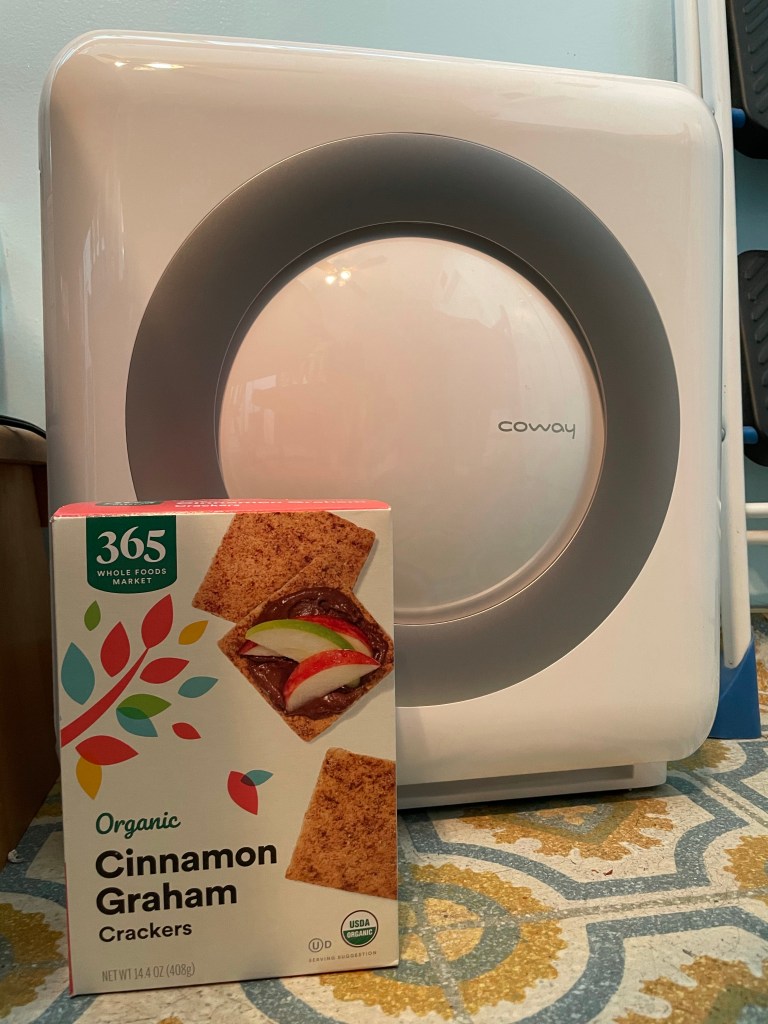
One of our Coway Airmega AP-1512HH air purifiers, shown with a box of graham crackers for size comparison.

The Coway Airmega AP-1512HH air purifier (hereafter simply “the Coway”) came to our attention via this NYT Wirecutter article. They arrive well-packed enough to withstand serious Amazon delivery abuse and get points for making most of the packaging recyclable. Their shape makes unboxing a bit unwieldy, but at just over 12 lbs, it was light enough for even our seriously deconditioned self to carry. Once you have it out of the box, there’s a nice handle that makes maneuvering easy.

We do recommend unboxing outdoors, wearing a mask if you’re having an extra sensitive day. The first Coway we bought did not have any perceptible off-gassing, but the second had a slight plastic smell. The smell went away after a minute in the fresh air with all the plastic packaging removed. Your mileage may vary, so it’s important to have good ventilation.

When you purchase your Coway, you will want to buy an aftermarket filter replacement set from Durabasics as well. Then when you initially set up your Coway, throw away the HEPA filter it comes with (the white one). Seriously. It will probably smell fine until you turn the air purifier on. Then the chemical stank is nasty! We tried turning the Coway on its highest setting and leaving it outside for an hour, and the smell didn’t lessen one bit. So do yourself a favor and immediately replace it with a Durabasics HEPA filter. Then turn the unit on blast for about 5 minutes. This should clear the initial chemical load.

Wirecutter also recommends Cabiclean replacement filters, but we do not because they have a slight chemical smell when unwrapped. The odor filter (the black one) the Coway comes with was fine in our experience.

You will also want a quarter to tape over the air quality indicator light like so:
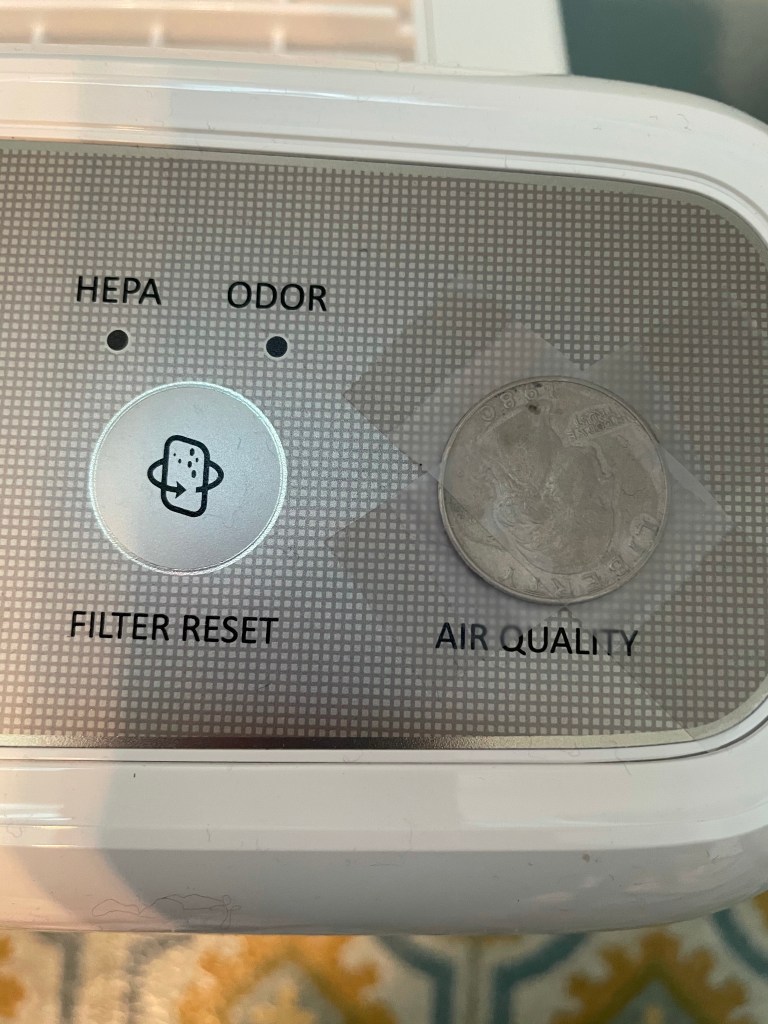
Photo demonstrating quarter placement to block air quality indicator light.

This will keep that bright blue light from bothering you after dark. In a bedroom or other environment where minimizing light is important you can also cover the other indicator lights with electrical tape or a couple layers of opaque decorative tape. Don’t cover the filter change indicator lights, though. You’ll need them to bug you when it’s time to change the filters.

The Coway has significantly improved our quality of life. We were in the emergency room four times in one month before we got the first Coway. It turns out our home’s indoor air quality had gotten so bad it kept setting off anaphylaxis. This is partly because we had been so sick and our In-Home Support Services assistant was so terrible that it was easier to just let dust lie. Within an hour of bringing the Coway inside we felt palpable relief in our whole body as the timing and allergen load lightened. The Coway has also allowed our new assistant to work on eliminating the dust without making us sick. It’s a virtuous circle!

We were really impressed when our assistant checked the filters after a couple weeks of heavy duty dusting. He thought they might need cleaning or replacing even though the change filter lights had not turned on. The black filter looked like chinchilla fur, it was so covered in dust, and the unit was still going strong! Our assistant followed the directions for washing the screen and black filter. We recommend vacuuming the black filter to clean it instead as it quickly loses the correct shape when washed.

We love the Coway so much that we purchased a second unit and may invest in a third! We deducted a teapot for having to throw away the included HEPA filter. And sometimes we can’t tell why it’s kicked up to the highest setting. Just nebulizing sitting next to the unit seemed to trigger it. But these are minor quibbles. Excellent value for money and chemically sensitive-friendly!

Our Rating: 🫖🫖🫖🫖 (4 out of 5 teapots)

The bad: Molekule Air Mini+
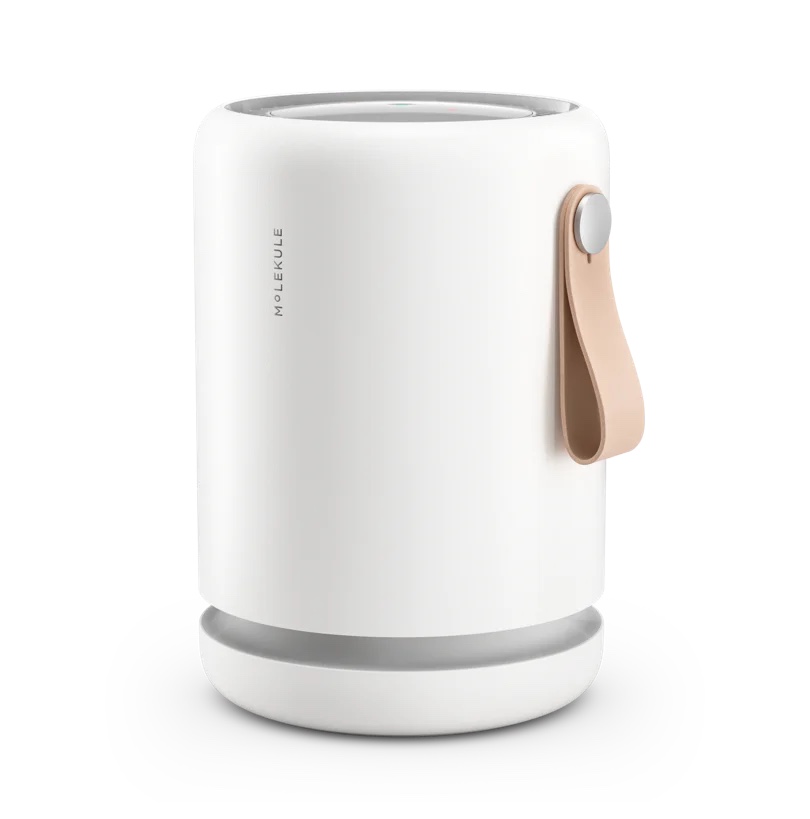
Photo from Molekule’s website of their Air Mini+.

We saw an ad for Molekule air purifiers on Instagram, got really excited about their purported ability to destroy pollutants, and bought one. We should’ve done more research first.

At first we were really impressed. The Air Mini+ did not bother our chemical sensitivities at all right out of the box. The only parts of the packaging that were not 100% recyclable were the activated charcoal packet and the plastic wrapper on the filter. It’s also very sleek and, well, looks effective.

The unit is on the heavy side and unwieldy to carry. We never tried using the handle because we didn’t trust it to support the weight, frankly. Opening it to install the filter required having our mom try to hold the base still while we used our whole body to get enough leverage to twist the dang thing open. It was easier after the first time, but still. And we needed to reopen it because we had to reseat the filter to get it to work.

It was nice to be able to control the Molekule from another room using the app, but the unit could not reliably connect to our home WiFi even when it was right next to the router.

More importantly, we needed to be able to control it remotely because it was so loud, even on the lowest setting. It also made us sick because its PECO technology actually creates volatile organic chemicals like formaldehyde. You can read more about the Molekule’s abysmal performance over at the NYT Wirecutter (scroll down and click on the section titled “Molekule Air and Air Mini: the worst air purifiers we’ve ever tested”), but we’d already had enough and returned it.

The ugly: Honeywell QuietClean Tower Air Purifier With Permanent Filters, HFD230BV1
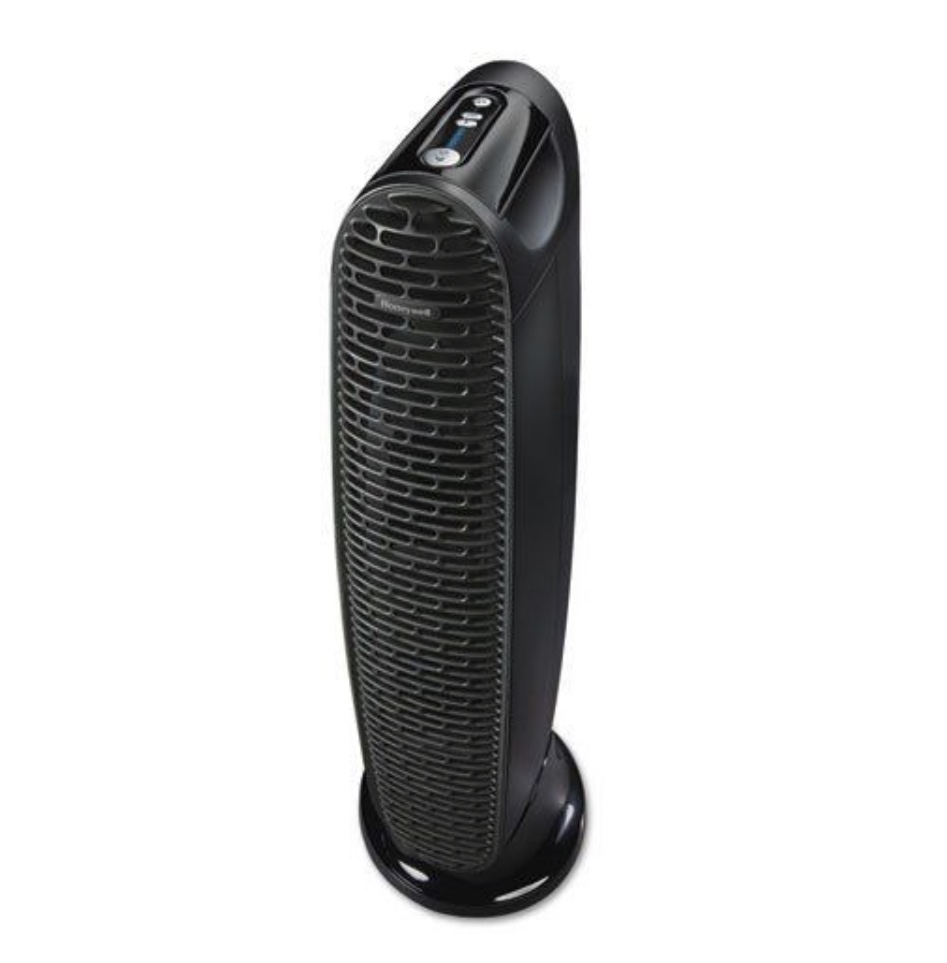
Photo of Honeywell QuietClean Tower from their website.

The Honeywell QuietClean Tower was recommended by our ear, nose, and throat specialist. As soon as we unboxed it, we were sickened by all the chemicals off-gassing from it. We didn’t even try to use it. It went straight back to Amazon.

It’s worth noting that “ionic air purifiers have undeniable appeal, but there’s a problem: They don’t really improve air quality.” So even if it hadn’t been toxic to the chemically sensitive, the Honeywell wouldn’t have done what we needed.

The moral of this story is clearly Do Your Research, even if a doctor recommends it.

Free Virtual Panel – Navigating Neurodiversity in the Workplace – Hosted by Different Brains

FREE PANEL: Autism on the Job: Navigating Neurodiversity in the Workplace Thursday, April 22nd at 7:00pm ET/6pm CST

Free Virtual Panel – Navigating Neurodiversity in the Workplace – Hosted by Different Brains

The Fresh Air Hypothesis

We just watched this excellent video by Rebecca Watson which discusses, among other things, the hygiene hypothesis. The hygiene hypothesis is the theory that early life exposure to a variety of allergens and benign microbes trains your immune system not to go apeshit over every little thing. If you’ve seen Cells at Work Season 1 Episode 5, you know all about this. Cedar pollen shows up. It’s big and bumbles about, but is essentially harmless. Until the immune system decides it’s an enemy invasion and causes harm (i.e. an allergy attack) trying to eradicate the pollen.

Group of white blood cells anthropromorphized as assassins going after a harmless cedar pollen, represented as a large yellow blob creature.
White blood cells ganging up on an innocent cedar pollen, causing havoc. Screenshot from Cells at Work S1 E5.

According to the hygiene hypothesis, if the body had enough exposure to harmless visitors early on, the immune system would chill and ignore the cedar pollen. No allergy apocalypse.

But the hygiene hypothesis is far from settled science. Or, as this journal article puts it:

Recent evidence does not provide unequivocal support for the hygiene hypothesis: […] asthma prevalence has begun to decline in some western countries, but there is little evidence that they have become less clean[.…] It is possible that a more general version of the hygiene hypothesis is still valid, but the aetiologic mechanisms involved are currently unclear.

Brooks, Collin; Pearce, Neil; Douwes, Jeroen The hygiene hypothesis in allergy and asthma, Current Opinion in Allergy and Clinical Immunology: February 2013 – Volume 13 – Issue 1 – p 70-77
doi: 10.1097/ACI.0b013e32835ad0d2

In other words, it’s possible that the hygiene hypothesis partly explains why some people get allergies and asthma while others don’t. It’s certainly not the whole picture. And if it is a thing, we don’t really know how it works.

In her video, Rebecca Watson mentions that the hygiene hypothesis goes back to at least the early 1800s, when doctors noted allergies and asthma were almost exclusively upper class diseases.

Hay-fever is said to be an aristocratic disease, and there can be no doubt that, if it is not almost wholly con- fined to the upper classes of society, it is rarely, if ever, met with but among the educated.

Blackley, Charles H. Experimental researches on the causes and nature of catarrhus æstivus (hay-fever or hay-asthma). (London : Bailliere, Tindall & Cox, 1873), 6, section 20, Wellcome Library, https://archive.org/details/b20418620/page/6/mode/2up, accessed April 18, 2021.

This piqued our interest. The strongest, most consistent evidence for the hygiene hypothesis is that farmer’s children get allergies and asthma far less than other children. Something about the rural lifestyle seems to be protective. Brooks, Pearce, and Douwes note while it “remains unclear which specific factors are most important, […] microbial exposures may play a role” (Brooks, Pearce, and Douwes, “The hygiene hypothesis”).

There are many pieces to this puzzle, but what if major contributors are being overlooked? We spent plenty of time in dirty outdoor pursuits as a kid, and we still wound up with allergies and asthma up the wazoo. Sure, there’s a genetic predisposition in our family, but what else could be going on?

What is a major difference between 1800s aristocrats and farmers? Time spent outdoors engaged in physical labor. This means there are two major contributors that appear to be overlooked in the literature: physical fitness and access to fresh air.

The available evidence indicates that physical activity is a possible protective factor against asthma development.

Eijkemans M, Mommers M, Draaisma JM, Thijs C, Prins MH. Physical activity and asthma: a systematic review and meta-analysis. PLoS One. 2012;7(12):e50775. doi: 10.1371/journal.pone.0050775. Epub 2012 Dec 20. PMID: 23284646; PMCID: PMC3527462.

In addition, asthmatics can improve their heart and lung function via exercise, leading to reduced symptoms and increased quality of life. We’ve seen this in our own life. When we were on a water polo team, we were in amazing shape and could actually enjoy running a mile in P.E.! The jury is still out on whether exercise protects against allergies, but studies seem to indicate moderate exercise lowers inflammation. In other words, it helps your immune system chill out, which means less “ERMAHGAWD, CEDAR POLLEN!!! KILL IT! KILL IT! KIIIILLLL IIIIIT!!!” episodes.

Access to good air quality with plenty of ventilation is also an important factor, and it’s in increasingly short supply.

In the last several years, a growing body of scientific evidence has indicated that the air within homes and other buildings can be more seriously polluted than the outdoor air in even the largest and most industrialized cities. Other research indicates that people spend approximately 90% of their time indoors. Thus, for many people, the risks to health from exposure to indoor air pollution may be greater than risks from outdoor pollution.

Centers for Disease Control and Prevention and U.S. Department of Housing and Urban Development. Healthy housing reference manual. Atlanta: US Department of Health and Human Services; 2006, Chapter 5, https://www.cdc.gov/nceh/publications/books/housing/cha05.htm, accessed April 18, 2021.

Or to put it more succinctly:

Walking into a modern building can sometimes be compared to placing your head inside a plastic bag that is filled with toxic fumes.

John Bower, founder Healthy House Institute, quoted in Centers for Disease Control and Prevention and U.S. Department of Housing and Urban Development. Healthy housing reference manual. Atlanta: US Department of Health and Human Services; 2006, Chapter 5, https://www.cdc.gov/nceh/publications/books/housing/cha05.htm, accessed April 18, 2021.

And you’re probably spending 90% of your time with your head stuck in that plastic bag. Unless you have a job like farming, which requires you to be outside most of the time. Even though we spent many hours gardening, hiking, and animal canoodling as a kid, we still spent the vast majority of our life indoors. Maybe if we’d grown up on a working farm our immune system wouldn’t have had as much exposure to toxins. See how it all comes together?

We hope that scientists will start investigating the indoor toxicity angle in particular. If the evidence backs our hypothesis, we hope it will drive policy changes that help make the great indoors a healthier place to be.

Other people’s scents are like other people’s pussies.

Seriously. Even if you adore pussies, do you want a random stranger’s pussy all up in your face? (If you answered yes, imagine it has mange. Want it in your face now?)

Black and white stencil on pink background of Holly Golightly’s face being attacked by a tabby cat
Cat Attack stencil by Dr. Case

This is what dealing with the general public is like for us. We went to the optometrist today to pick up new glasses for the first time in over five years. We’ve been avoiding getting new specs for exactly this reason.

Pause to admire the new specs.

The author wearing their new glasses.
Us in our beautiful new glasses. That we could only wear for this photo op because they are so scented.

Okay, back to rant.

As soon as we walked into the office, other people’s pussies were all up in our face without our consent. Ew.

When we left, we were still covered in it. To extend the analogy, it’s like visiting someone with a pussy and leaving covered in fur. Even lint rollers rarely get it all. It takes time and effort to remove, and six months later you still find stray hairs.

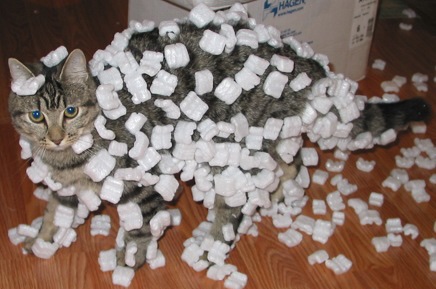
Gray tabby cat covered in styrofoam
Cat covered in styrofoam by Sean McGrath

If you aren’t allergic to other people’s pussies, this is merely annoying. If your immune system freaks out at the mere thought of pussies, it makes everyday life extremely hazardous.

Our immune system must be misogynist because it sure hates pussy. (Ba-dum ching!)

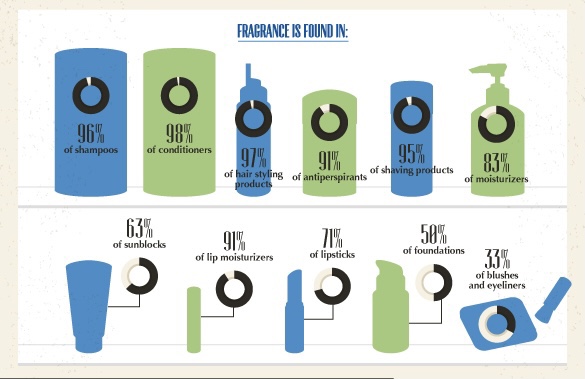
Think you’re unscented? Probably not. Fragrance is found in most personal care products, just for starters. They are also probably affecting your health whether you realize it or not. According to the Environmental Working Group, 66% of the chemicals lumped in under “fragrance” or “parfum” on ingredient labels have not been assessed for safety by the FDA. That’s a whopping two-thirds!

Infographic showing fragrance is found in 96% of shampoos, 98% of conditioners, 97% of hair styling products, 91% of antiperspirants, 95% of shaving products, 83% of moisturizers, 63% of sunblocks, 91% of lip moisturizers, 71% of lipsticks, 50% of foundations, and 33% of blushes and eyeliners.
Just some of the places scents may be hiding in your home. Please see WomensVoices.org for the full “Secret Scents” infographic.

This study from Vanderbilt University analyzed the chemical makeup of twelve popular scents using gas chromatography-mass spectrometry and then tallied their health hazards. 109 out of 130 chemicals identified are health hazards according to the United Nations Globally Harmonized System of Classification and Labeling of Chemicals. Love Bath and Body Works’ sweet pea scent? 87% of its ingredients are toxic. And it’s not the worst offender in the study.

So if scents are pussies, you probably don’t want to smell your own pussy, let alone other people’s. Remember that next time you go shopping. Kthxbai.

Woman holding grumpy fluffy cat against face
This is a predator just waiting to attack. Look at that face. You really want that pussy in your face, ma’am?

Author’s note: Yes, we’re old enough to remember “O.P.P.” by Naughty by Nature and we had a lot of fun with the double entendres in this.

Where we’ve been since 2018

It’s been a while and there’s been a lot happening behind the scenes! A lot of healing and growth has taken place, and it took us a good while to recover from surgeries to release our burn scars. We’ll focus on the positive in this post.

  • We are no longer on opiates for our chronic pain!
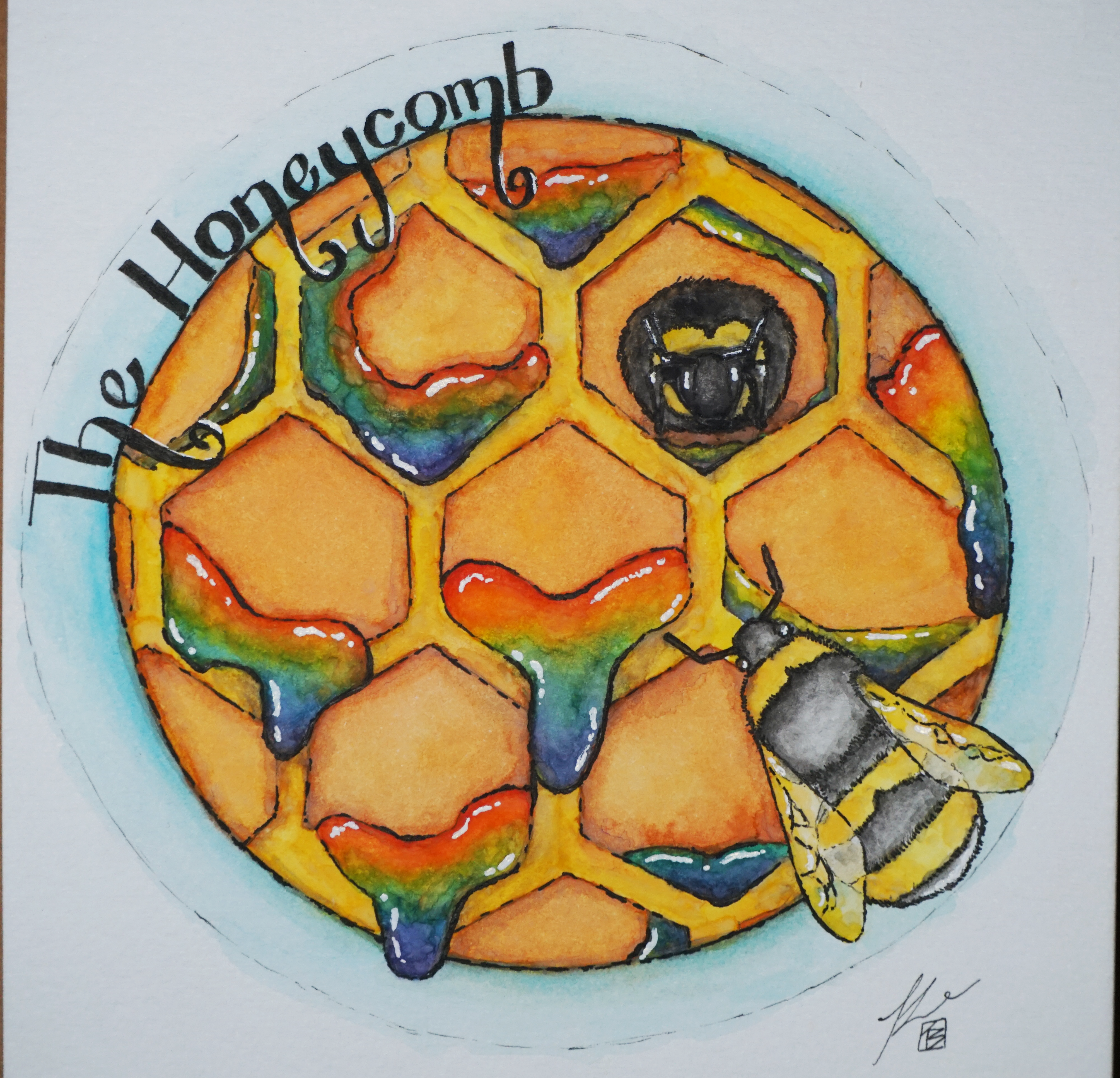
  • We were ready to cope with our DID diagnosis and have learned a lot about our system. So much makes sense now! We now use plural pronouns (they/them) and call our system the Honeycomb. We are also still Rosemerry. 😊
The Honeycomb’s system logo. Art by Ryn.
Our system logo, by the amazing Ryn!
  • Speaking of diagnoses, finding out we have EDS hypermobility type and Mast Cell Activation Syndrome has been life-changing in the best way! Now that we finally know what the heck is going on with our body, we’re getting the right treatment and it’s making a huge difference!
  • We’ve been leading a DID Amino, started modding for our friend AdventuRyn on Twitch, dipped our toes back into writing, and been more social!

While we plan to be more active again, we are still prioritizing self care and likely have another surgery coming up soon, so our official blogging schedule for now is whenever the fuck we feel like it. 😎

Ch-ch-ch-changes!

A belated Happy New Year to all! 2018 has brought changes in several areas.

I discussed kindred (vampire) biology with my bestie and science editor, Mad Doktor Matt, and realized I need to make the following changes:

  • The faction of kindred my characters deal with has a worldwide system of government, but is just one example of kindred culture and government. As kindred spread across the earth along with humans, they would have developed different cultures and governments.
  • I got a bit too enthusiastic about borrowing from camels’ water and heat management techniques. It didn’t occur to me, for example, that 30 gal of water weighs 250 lbs! So being able to drink 30 gal in 10 min would be impossible for a human-sized being. I’ll also have to lower the hydration requirements.
  • We came up with a 12 hour time limit between blood feedings in a late night brainstorming session, imagining a dramatic death scene. On further examination, if kindred evolved in parallel with humans from shortly after the evolution of humans, this wouldn’t work. In order to get enough blood to sustain themselves and avoid detection, kindred would have to be able to travel between settlements. Since they primarily require white blood cells, I’ll change the time limit to 13-20 days + a week. So I’ll also have to recalculate their carrying capacity accordingly.
  • Matt mentioned the feeding allergy part sounded like a game mechanic. It makes more sense to have the sensitization occur over a series of feedings. So one way to tell there’s a vampire around is if a lot of people start getting anaphylaxis.
  • We discussed what happens if a kindred turns into a flock of bats or mist and some of the bats get killed or someone sucks up the mist with a towel. We decided that the kindred would transform back, but be more emaciated, having lost an equivalent amount of mass. For example, a kindred turns into a flock of 10 bats and an enemy kills 1. When the kindred changes back they will have lost 10% of their mass.

I’m glad we had the discussion. These all serve as great examples of how every writer has blind spots.

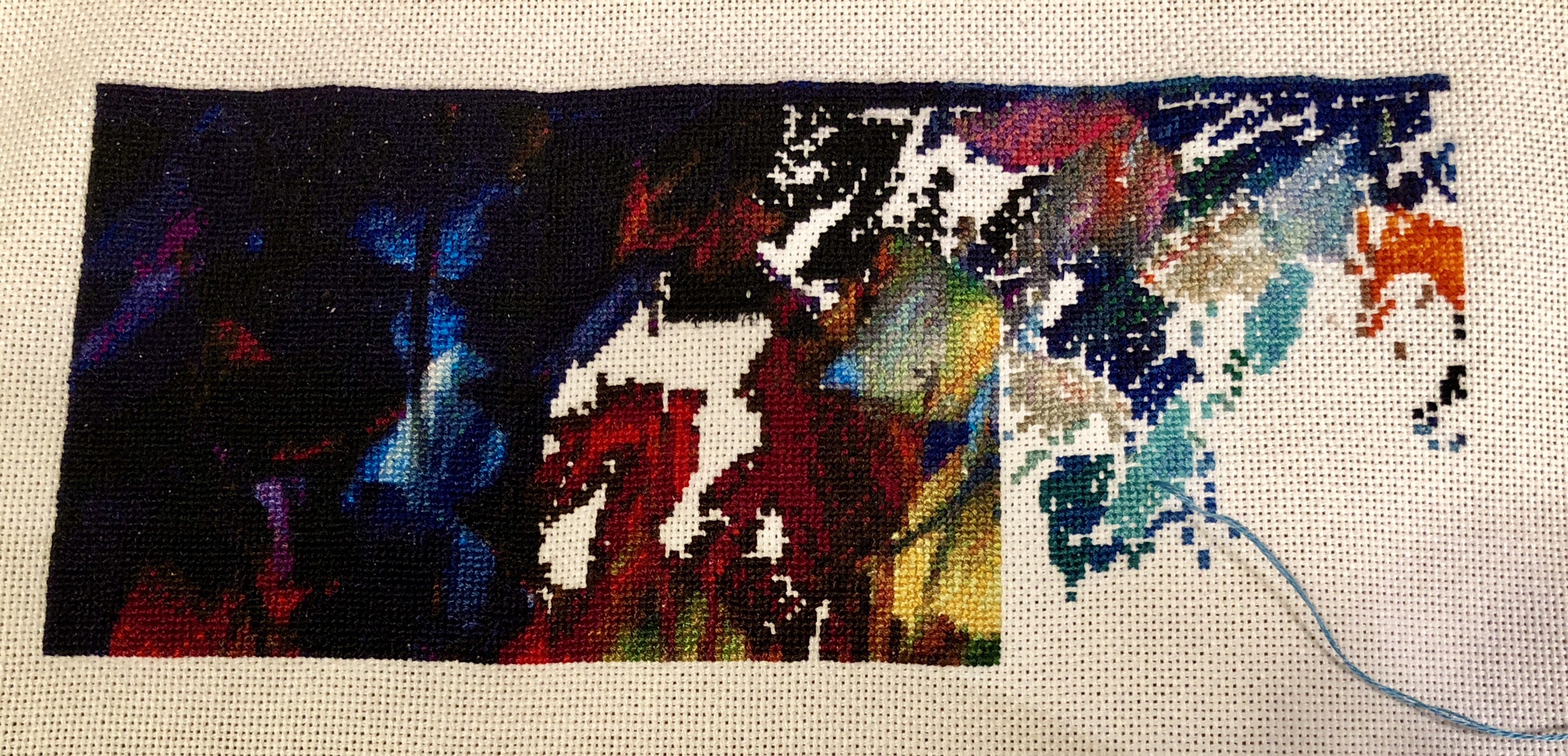
As I mentioned previously, I’m having another release surgery. All burn survivors need such surgeries periodically as the scar does not grow with the rest of the body. Burn scars actually contract over time. I’ll be getting a combination of z-plastys and laser treatment tomorrow. Right now I’m bummed I’ll have to stop work on my cross stitch project so I don’t leak all over it, but it helps to have gone through all this before. Here’s a shot of my work in progress:

I’m a little over halfway across the top. I still haven’t filled in the background on the chart’s second page because the post office lost my floss. Hopefully they’ll find it!

I plan to use some of my downtime to fulfill a childhood dream and learn Русская (Russian)! I think I was attracted to the Cyrillic alphabet. I’ve also always loved Russian fairytales. I’ve always wanted to learn all the languages in the world! It amuses me that once I learn Russian and Italian, I’ll know all the axis languages. (Totally unplanned!)

While I’m healing, I wish all of you tranquility and joy in abundance.

Joy wreath from Christmas to Color by Mary Tanana, colored by yours truly.

Milestones

Hello, dear readers. This month’s been a bit rough energy-wise and kept me from posting on schedule. I’m working on putting self-care first. I did manage to walk all the way around Lake Elizabeth on Monday! This was huge! I took the following pictures during my walk.

This little pine has the holiday spirit!This winter tree felt so serene. A gorgeous Japanese garden area. Tranquility. A fellow walker hangs an ornament on this impromptu community Christmas tree.

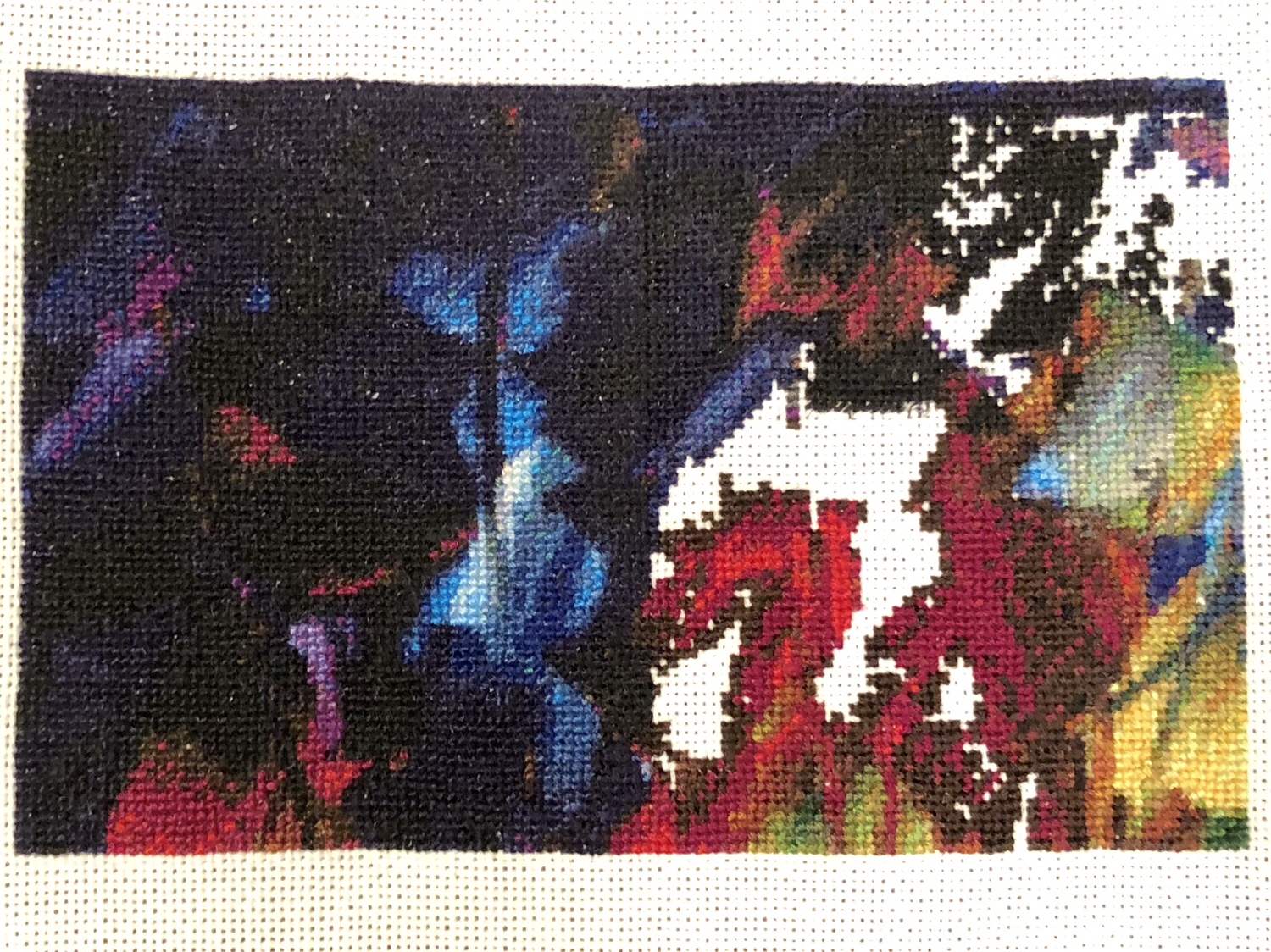
Then I tripped over my own shoes and sprained both my left wrist and ankle. Ouch! They’re healing well, but I’ll be unable to post as much. I’ll also be unable to cross stitch for a while. Happily, I finished most of page 2 and started on page 3. My favorite needlework store, Needle in a Haystack, is sending me two background colors I didn’t have enough of and I’m waiting for the package to make it through the holiday mail rush. I took a picture before I started page 3:

Chart page 2 (mostly) complete!

I think the sinuous red bit looks like a dragon. 🙂 When I’m finished I want to make a time- lapse “making of” video.

I also have a big milestone coming up. Last March I had a release done on my burn scars. I will have a second release surgery this coming year to give me more movement and less pain in my shoulder and elbow. I’ll post again when I know more. Naturally, this blog will be on hiatus while I heal.

Food Labels are Crackers

Today my dog Panda Bear is twelve! She might not have made it, though. Yesterday my father left an open package of chocolate chip cookies on the floor by his recliner. Naturally, Panda got into them. Luckily, my mom came running when she heard the noise and stopped her.
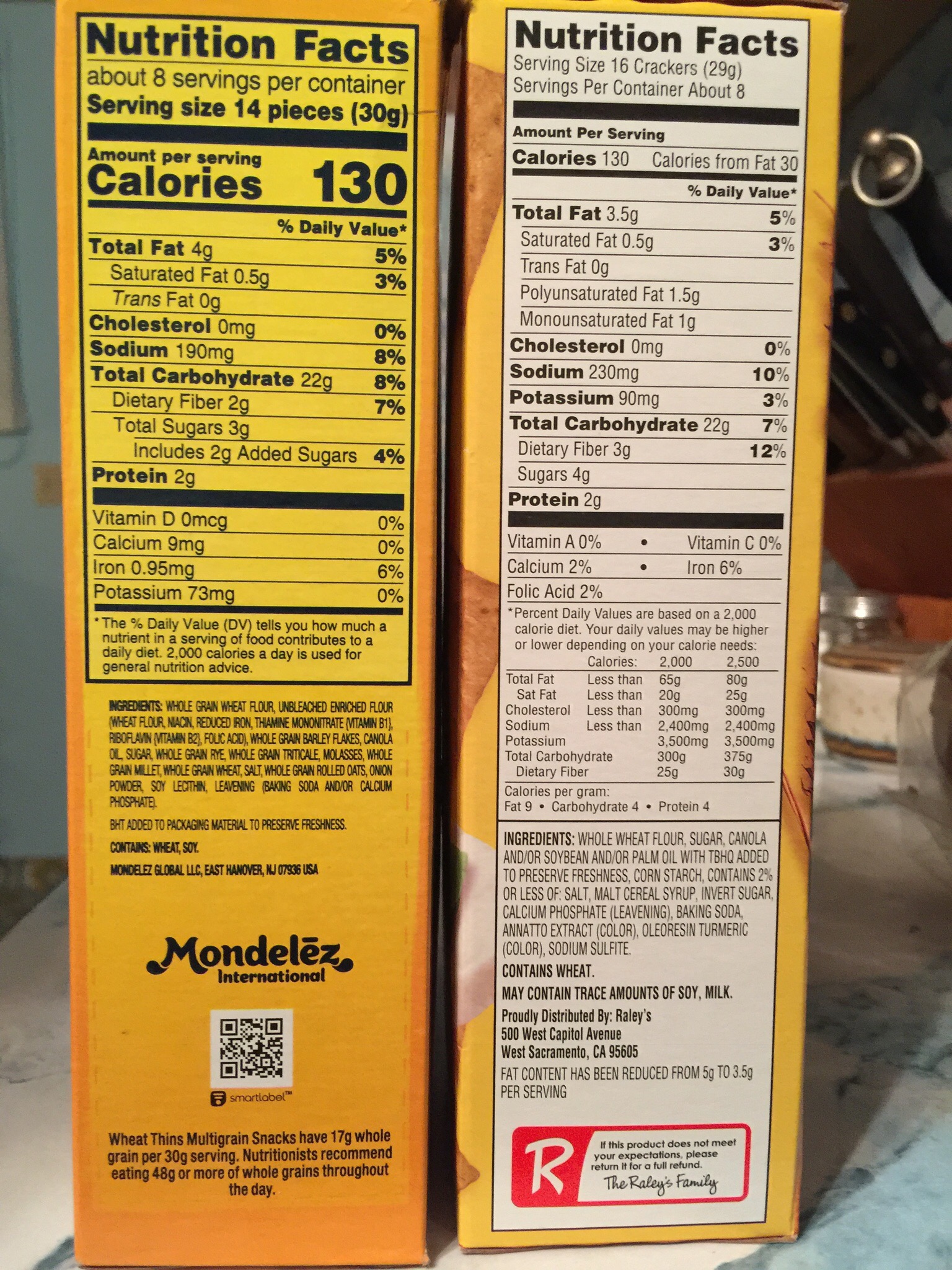

If you have a dog in your life, you’re probably aware that chocolate is poisonous to dogs. You may not know (I didn’t) that the toxicity depends on the type of chocolate as well as the amount ingested. As far as we could tell, Panda had eaten a maximum of 1 oz, but what kind? We used PetMD’s Chocolate Toxicity Meter to determine the possible danger. 1 oz of milk chocolate would be subtoxic for her, while the same amount of baker’s chocolate would be deadly.

We examined the nutrition panel for clues. It was hard to read, especially in a panic. It was difficult to tell the difference between brackets and parentheses, and where they began and ended. Nor does the ingredients list simply state the type of chocolate. We had to figure it out from what was in the chips. Close inspection determined they were semisweet, cause for concern.

We called the Pet Poison Helpline (855-213-6680) (there is a fee for this service. We paid almost $60). They asked us her breed, weight, symptoms, and about any other health issues. They researched the cookies and determined she would probably be okay, though we should watch her.

Luckily, Panda Bear is fine and enjoying a very happy twelfth birthday. But this incident is just one example of a big problem with food labeling.

Take a look at the nutrition information on the two boxes to the right. Pay attention to the formatting and design rather than content. What do you notice?

The most important information, the ingredients, is the hardest to read! The ingredients list is typed in one of the smallest fonts on the package. It’s also in narrow ALL CAPS, making it more difficult to read than the even tinier QR label branding on the left-hand box.

Why is the ingredient list the most important information on the box? Many people have medical issues that are caused or exacerbated by certain ingredients. To use an extreme example, trace amounts can cause anaphylaxis, a life-threatening condition. Pets can also be at risk, as shown above. Knowing what’s in your food is thus much more immediately important than calorie counts or vitamin percentages.

Food companies have responded to the prevalence of food allergies by alerting consumers to the presence of a few commonly problematic ingredients. They call wheat, milk, soy, and nuts out separately in bold type. But this is not good enough. They use the same tiny ALL CAPS typeface as in the full ingredient list. Furthermore, there are many other foods that can cause medical emergencies. I used to get anaphylaxis if I ate or drank anything containing gums or resins commonly used as thickeners and preservatives.

When I saw an allergist earlier this Fall, he shared that another patient had anaphylaxis after eating a candy bar. The vital information was concealed underneath a fold in the wrapper, written in type so tiny he needed a magnifying glass to read it.

Ingredients need to be listed in large, clear type in an easily visible location on the package. Not in ALL CAPS. This information, or a QR code leading to it, needs to appear on individually wrapped items. Food purveyors must make it easy to find a complete and accurate ingredient list online. Currently many restaurants make it really hard to find their nutrition information and only include a list of common allergens, not a complete ingredient list. This is a dangerous and unacceptable practice which must change.

In addition, consumers need to be able to easily and quickly identify the date a recipe was last revised. This will alert consumers when they need to carefully review the ingredients again. This is important because when the recipe changes without notice, consumers are at higher risk of injury or death from new, unexpected ingredients.

感謝の日

みんな,ごめんなさい!先々週疲れていて、訂正するのを忘れていました。そして先週父はいくつかの心臓発作、病院へ行きました。医者はブロックされた動脈を取り除き、ステント11番を挿入した。彼はよく癒しています、でも非常に過敏です。
アメリカで今日は感謝の日です。感謝の日は収穫祭です。伝統的に人々は、彼らが何に感謝しているかを言います。あなたの助けにLang-8の友達に感謝します。あなたたは今日私が感謝していることのひとつです。私の犬パンダベアーにも感謝し、健康は徐々に改善しています。
母は、ポケモンが感謝の日のために特別なピカチュをリリースするかどうか尋ねました。私は巡礼者ピカチュウを想像した。 可愛いじゃない?


Sorry everyone! The week before last I was tired and forgot to make corrections. Then last week my father had several heart attacks and went to the hospital. The doctors cleared a blocked artery and inserted stent #11. He is healing well, but is very irritable.
Today in the U.S. it’s Thanksgiving. Thanksgiving is a harvest festival. Traditionally people say what they’re thankful for. Thank you Lang-8 friends for your help. You are one of the things I’m grateful for today. I am also thankful for my dog Panda Bear and that my health is slowly improving.
My mom asked if Pokemon Go would release a special Pikachu for Thanksgiving. I imagined a pilgrim Pikachu. Wouldn’t that be cute?

Please Spare the Air

Did you know that air pollution causes 1 in 6 deaths worldwide?

I don’t know what the study authors considered pollution, but it’s made up of more than car exhaust and aerosols. One reason I love this great PSA by Spare the Air is that it brings to mind two other major air pollutants:

Yes, wood smoke can be as harmful to your health as secondhand smoke! And many folks don’t just burn well-seasoned wood. Duraflame is a popular firewood brand that contains chemicals to help it start easier. A lot of folks use charcoal briquettes to start fires, which were originally a byproduct of making car tires. I had a babysitter who burned all her trash, including milk jugs. So it’s important to raise awareness about the health effects of fires at home.

When I say, “spare the air,” I think about two other big sources: scents and non-tobacco-smokables.

While here in California we’ve succeeded in making smoking tobacco less cool and keeping most indoor spaces tobacco-free, the same laws do not apply to non-tobacco products such as electric cigarettes and marijuana. As vaping has grown in popularity and weed has become legal, I’ve seen proponents using these products in non-smoking areas. There’s a large camp of vapers and marijuana smokers that contend these products are not harmful. But vaping has a litany of health risks for both vapers and bystanders, including “popcorn lung” and nanoparticles of metal. This article lists just 10 of the dangers. After researching the matter, the University of California banned e-cigarettes and vaping, citing health risks. As far as smoking marijuana goes, I am well aware of the health benefits and use the plant in edible and tincture form myself. I shouldn’t have to worry about secondhand marijuana smoke from my neighbor making me high and compromising my safety, though.

Exposure to scents is a huge, under-recognized problem. A recent study found that

fragrance sensitivity is not only a common issue, but can be quite severe. One-third of the study participants reported experiencing one or more health issues from scented products (whether they used the items themselves, or were exposed to them in public places).

I can testify to this myself, as other people’s fragrances have sent me to the emergency room multiple times. When I’m at my most sensitive, I’m confined in my home. Yet even becoming a hermit does not save me from scents’ pervasiveness. My neighbor uses scented laundry products, so every time they do the laundry I have to rush inside and batten down the windows. A simple trip to the drug store is a major challenge as it’s filled with fragrances from all the products they carry.

Even if you are not sensitive to scents or chemicals, you should be concerned about their inescapability. In 2011,

A survey of selected scented consumer goods showed the products emitted more than 100 volatile organic compounds (VOCs), including some that are classified as toxic or hazardous by federal laws.1 Even products advertised as “green,” “natural,” or “organic” emitted as many hazardous chemicals as standard ones.

The University of Washington, Seattle tested 25 different products, many of them leaders in their category.

A single fragrance in a product can contain a mixture of hundreds of chemicals, some of which (e.g., limonene, a citrus scent) react with ozone in ambient air to form dangerous secondary pollutants, including formaldehyde.2 The researchers detected 133 different VOCs. Most commonly detected were limonene, α- and β-pinene (pine scents), and ethanol and acetone (often used as carriers for fragrance chemicals).1

Who wants to breathe formaldehyde? Who wants their children and pets breathing in acetone? Strange, I don’t see any raised hands…

We as a society need to raise awareness about these health risks and take action to mitigate them. Yes, that would likely mean eliminating fragrances in millions of products and perhaps the end of the perfume industry. It would mean eliminating vaping and smoking of all kinds. It would mean converting homes which wish to have hearth fires from wood to natural gas, and perhaps also adding filters to chimneys.

Most of all, it requires thinking about consent. Air is a shared resource. I do not consent to breathe the scent, marijuana, wood smoke, or e-cigarette vapor others spread via the air. Yet I do not have a choice. No one should be forced to breathe harmful substances. So let’s spare the air, and each other.