If you enjoyed Legends and Lattes but prefer a good cocktail to fancy coffee, Cursed Cocktails is for you! This cozy fantasy explores what happens when a blood mage retires to open a cocktail bar. It includes several delicious sounding drink recipes (and you can download a PDF that translates the magical ingredients to ones available in this realm) and slow burn, friends to lovers gay romance. Not exciting, but hey, that’s the point of the cozy genre. A solid three stars.
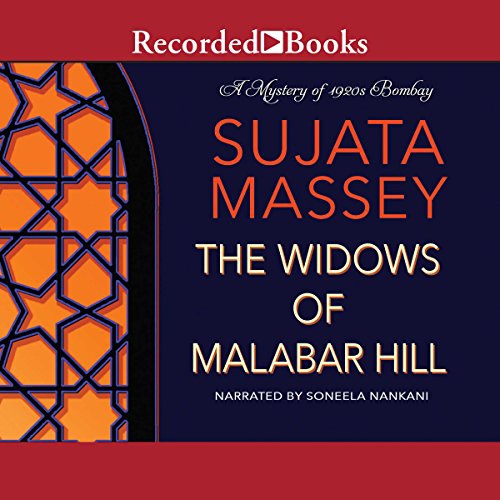
Bombay, 1921: Perveen Mistry, the daughter of a respected Zoroastrian family, has just joined her father’s law firm, becoming one of the first female lawyers in India. Armed with a legal education from Oxford, Perveen also has a tragic personal history that makes her especially devoted to championing and protecting women’s rights.
Mistry Law is handling the will of Mr. Omar Farid, a wealthy Muslim mill owner who has left three widows behind. But as Perveen goes through the papers, she notices something strange: all three have signed over their inheritance to a charity. What will they live on if they forefeit what their husband left them? Perveen is suspicious.
The Farid widows live in purdah: strict seclusion, never leaving the women’s quarters or speaking to any men. Are they being taken advantage of by an unscrupulous guardian? Perveen tries to investigate and realizes her instincts about the will were correct when tensions escalate to murder. It’s her responsibility to figure out what really happened on Malabar Hill, and to ensure that nobody is in further danger.
The main character, Perveen Mistry, is based on the first female lawyer in India. We really enjoyed watching her use the law to fight for justice where only she can: within a Muslim household’s zenana. We also enjoyed watching her grow as she becomes more competent, takes on new challenges, and learns to work around the constraints society places on her. The characters in the story kept us hooked – for the most part.
Sadly there were some sections where the book started to drag and it felt like we were slogging through the doldrums. We enjoyed the rest of the book so much that it thoroughly aggravates us that Massey chose to include the chapters set in 1917. At first we assumed that there would be a connection between Cyrus, the love interest featured in these chapters, and the murder in 1920. Spoiler: Cyrus is a Chekhov’s gun. We really have no idea why the author thought it was necessary to include him at all. It feels like the 1917 chapters are Massey preaching to the reader about how awful things were for women in Bombay. These chapters should’ve hit the cutting room floor, or at the least been massively condensed. Take our advice and skip the 1917 chapters. It will significantly improve your reading experience.
But we still loved the book enough to read it four out of five stars and buy the sequel. Perveen, her father Jamshadji, and her friend Alice are all characters we definitely want to spend more time with. We also love the vivid pictures Massey paints of life in Bombay with the wide variety of cultures and their clashes with British colonialism. She uses just the right salting of languages like Hindi to add authentic detail without confusing readers who don’t know these terms – especially important in an audiobook when we didn’t know how to spell the non-English words in order to look them up.
The Twitch VODs below are great resources if you’d like to learn more about the history of ancient Persia and Zoroastrianism. They aren’t necessary to enjoy the book, but definitely added to our experience. We had no knowledge of Zoroastrianism before reading this book and as Perveen is Parsi, Zoroastrian customs play a role throughout. We felt better having a basic understanding of the religion as a framework to help mentally organize what we read about in the book. Note that there will be plenty of irreverent nerd humor!
Soneela Nankani does an excellent job of narrating. She gives slightly different accents to characters from different cultures and has a pleasant voice. She never seems to stumble over non-English words. While some reviewers found it difficult to keep track of who is who, we had no trouble tracking who was speaking. While we appreciate the energy Nankani brings to the narration, after a while we noticed that she seems to give every sentence an astonished feeling, which does become annoying. We noticed that Audible switches narrators with the sequel. We usually hate it when they do this, but perhaps Sneha Mathan’s narration will not suffer from the constant astonishment problem.
A Word to the Wise (Content Warnings)
Major: Domestic violence; sexism, misogyny, and colonialism/racism appropriate to the period; toxic family dynamics; manipulation/gaslighting; religious abuse.
We already consider the Asian Readathon a success because we found a new series to love. The Widows of Malabar Hill by Sujata Massey is a book anyone who loves a good cozy legal mystery with a plucky heroine should try. we are already looking forward to book two!


 Honeycomb's Hive