Gitanjali is a collection of poems by Bengali poet Rabindranath Tagore. It was first published in 1913 and is one of his best known works, for which he earned the Nobel Prize in Literature. We read the English translation. We aren’t clear whether it was translated by W.B. Yeats, or Yeats had it translated, but it is clear from his introduction that Yeats greatly admired Tagore’s work. Since we have enjoyed Yeats, we were intrigued.
We had never heard of Rabindranath Tagore before. We discovered Gitanjali when we were looking for a book that would fulfill The StoryGraph’s 2021 Genre Challenge’s “Read a poetry collection under 100 pages” prompt. Happily, we could also use this book to fulfill prompts for The StoryGraph’s 2021 Translation Challenge and as a bonus read for ReadWithCindy’s 2021 Asian Readathon. (If you decide to participate in reading challenges, we suggest doubling up on prompts as much as possible.)
Since Gitanjali is now in the public domain, you can find it for free online. We happened to find the copy we read on spiritualbee.com. The website also has several of Rabindranath Tagore’s other works and they recommend you read his prose first so you can better appreciate his poetry. Good advice we cheerfully ignored.
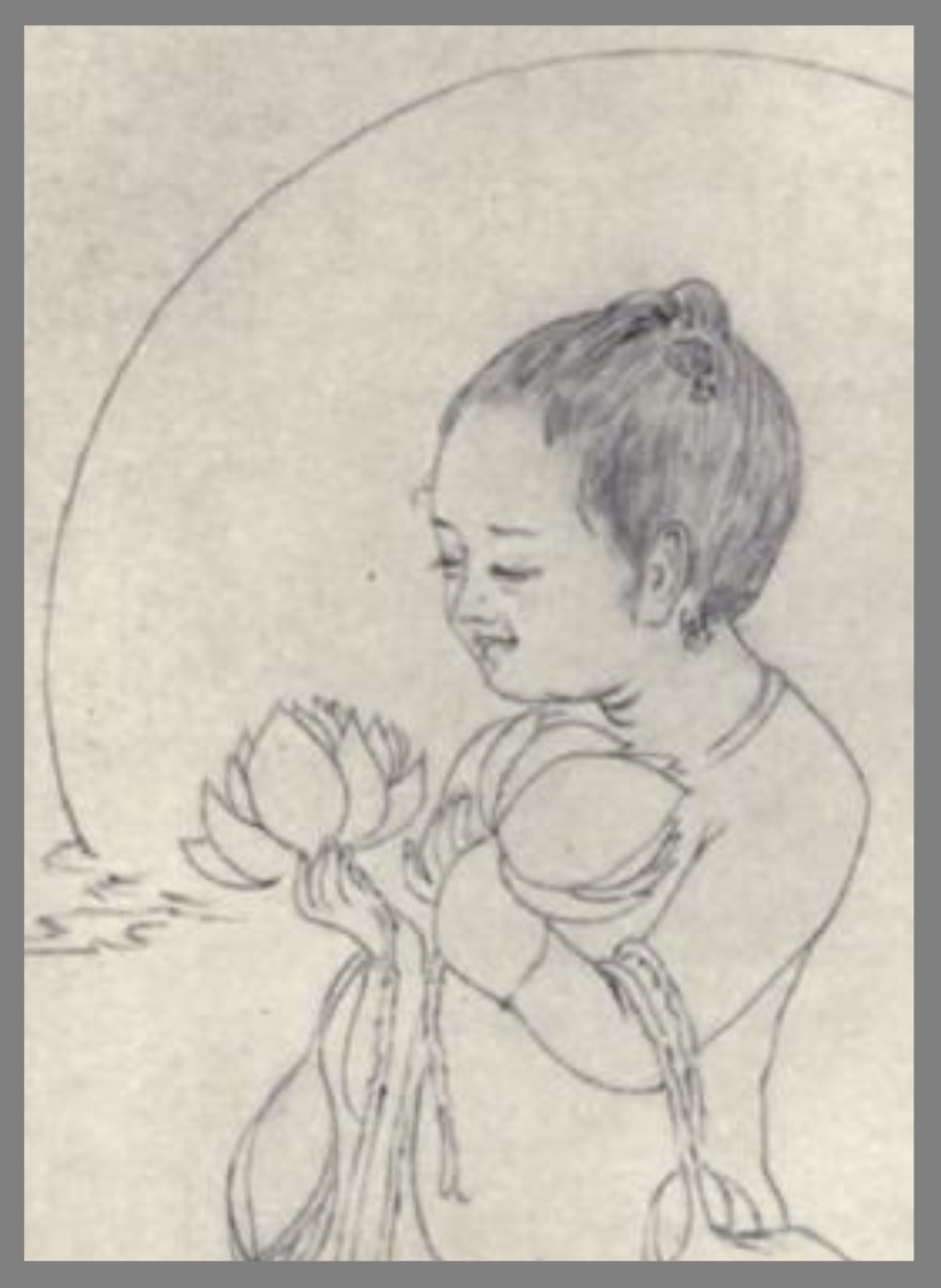
One of the things we enjoyed about this edition were the included illustrations, like this drawing by Asit Kumar Haldar, which accompanies one of our favorite poems in the collection, number 96 or “When I go from hence let this be my parting word”.
We ended up rating Gitanjali three out of five stars. Most of it is deeply spiritual poetry which addresses the author’s relationship with God, and as we do not share his faith, and perhaps also because we do not know the allusions to his prose work, it did not speak to us. The format also makes it difficult to tell whether each poem is supposed to stand alone or is a continuation of the previous poem. But there are still several gems in the collection that speak to universal themes of joy, oneness with the universe, and human nature.
Poem number 30 made us laugh:
I CAME out alone on my way to my tryst. But who is this that follows me in the silent dark?
I move aside to avoid his presence but I escape him not.
He makes the dust rise from the earth with his swagger; he adds his loud voice to every word that I utter.
He is my own little self, my lord, he knows no shame; but I am ashamed to come to thy door in his company.
Rabindranath Tagore, Gitanjali, poem no. 30
Who hasn’t experienced this? Perhaps last time we were in our friends company we were arrogant and boastful or couldn’t help lashing out in anger and despair.Now we come to our friend sheepishly, hoping they will still embrace us despite the dumbass things we did.
There were also poems that gave us goosebumps from sheer brilliance. One of these was poem number 74:
THE day is no more, the shadow is upon the earth. It is time that I go to the stream to fill my pitcher.
The evening air is eager with the sad music of the water. Ah, it calls me out into the dusk. In the lonely lane there is no passer by, the wind is up, the ripples are rampant in the river.
I know not if I shall come back home. I know not whom I shall chance to meet. There at the fording in the little boat the unknown man plays upon his lute.
Rabindranath Tagore, Gitanjali, poem no. 74
This poem gives a feeling of ineffable sadness, but also beauty, and makes us think of Swan Lake’s haunting refrain. We can easily envision the dusk closing in on this nearly deserted shore. Even the lute player has a sense of ghostly liminality. It is the sort of scene where worlds meet and tales begin.
So if you enjoy poetry, are looking to expand your knowledge of Bengali writers, or both we encourage you to read this small poetry collection for the few gems that might sparkle as brightly for you.

 Honeycomb's Hive