Book review: Black Water Sister by Zen Cho

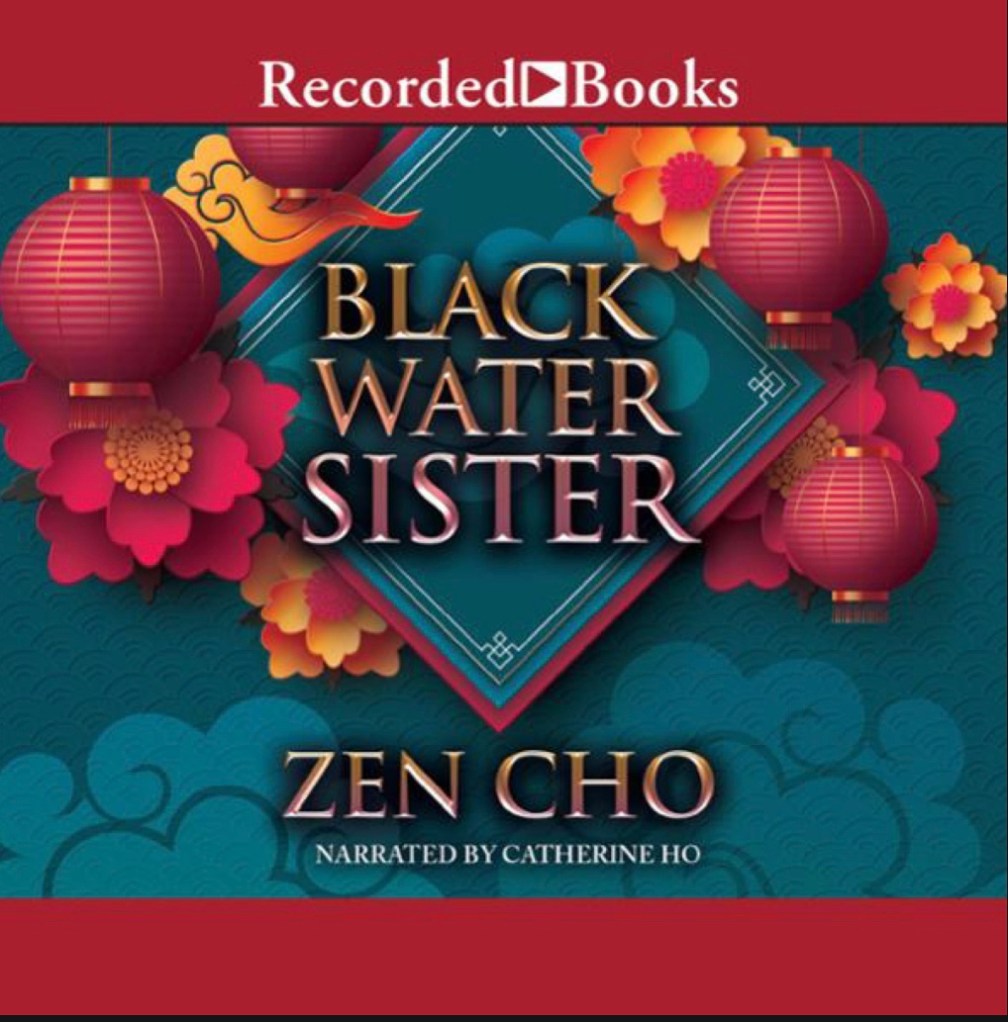
Black Water Sister by Zen Cho, our second listen for the 2021 Asian Readathon, has earned all 5 stars! We absolutely loved it! Here’s why:

Wanna Skip Ahead?
  1. The Publisher’s Blurb
  2. Why You Should Listen
    1. Because Book
    1. Because Narrator
  3. A Word to the Wise (Content Warnings)
  4. TL;DR
  5. Get Your Own

The Publisher’s Blurb

A reluctant medium discovers the ties that bind can unleash a dangerous power in this compelling Malaysian-set contemporary fantasy.

When Jessamyn Teoh starts hearing a voice in her head, she chalks it up to stress. Closeted, broke and jobless, she’s moving back to Malaysia with her parents – a country she last saw when she was a toddler.

She soon learns the new voice isn’t even hers, it’s the ghost of her estranged grandmother. In life, Ah Ma was a spirit medium, avatar of a mysterious deity called the Black Water Sister. Now she’s determined to settle a score against a business magnate who has offended the god–and she’s decided Jess is going to help her do it, whether Jess wants to or not.

Drawn into a world of gods, ghosts, and family secrets, Jess finds that making deals with capricious spirits is a dangerous business, but dealing with her grandmother is just as complicated. Especially when Ah Ma tries to spy on her personal life, threatens to spill her secrets to her family and uses her body to commit felonies. As Jess fights for retribution for Ah Ma, she’ll also need to regain control of her body and destiny – or the Black Water Sister may finish her off for good.

Why You Should Listen

~Because Book~

Couldn’t put this one down! If you’ve even thought in passing of checking this one out, DO IT! Jess moves to Malaysia with her parents, only to wind up possessed by her grandmother’s ghost. Ah Ma was the medium for the god Black Water Sister and is determined to have Jess become the god’s next medium so the god can take revenge on a developer who plans to redevelop her temple. Of course Jess, who spent most of her life in the US, has no idea what she’s agreeing to and quickly gets in over her head. To be fair, she does try to bargain with Ah Ma, but knowing the duplicitous nature of many spirits, we were anticipating betrayal. If only Jess had read the Dresden Files! 😂 Jess must figure out who to trust, while juggling complicated family dynamics, cultural expectations, and a secret lesbian romance. Zen Cho does an excellent job balancing insider and outsider cultural perspectives, making this story accessible to any reader. She keeps the twists coming and the ending is unforeseen, powerful, and satisfying.

~Because Narrator~

Catherine Ho does a brilliant job narrating. So brilliant we’re disappointed she’s not narrating Zen Cho’s upcoming short story collection Spirits Abroad. Emily Woo Zeller, who seems to be Audible’s go-to for female Asian narration, was tapped instead. And Zeller is great. But Catherine Ho really gets the potent combination of emotion, magic, and gritty reality in Black Water Sister and brings it all out for the listener. While she does use accents for some characters, it’s never difficult to understand and all the voices are distinct.

The very first sentence was confusing because it ends in a Hokien word. We weren’t expecting that and at first thought we had misheard. Keep going; the word will be explained. This was the only instance where the experience suffered from being audio, simply because we couldn’t tell it was a non-English word and not terrible narration or our hearing by looking at the text.

A Word to the Wise (Content Warnings)

Major: Sexual assault, homophobia, violence, manipulation/gaslighting, religious abuse.

Moderate: Heteronormativity.

Minor: Brief mention of drugs.

TL;DR

This audiobook was an amazing experience and we are looking forward to more from Zen Cho! Do yourself a favor and listen to or read this one!

4 out of 5 stars
5 out of 5 stars!

Get Your Own


Advertising Disclosure: Support local bookstores and our book habit by purchasing through our shop on Bookshop.org

(We decided to drop Amazon because they wouldn’t pay for any of the purchases folks were making. We like Bookshop.org better anyhow. 😝)

Star rating graphics are by Yasir72.multan and are licensed via CC BY-SA 3.0.

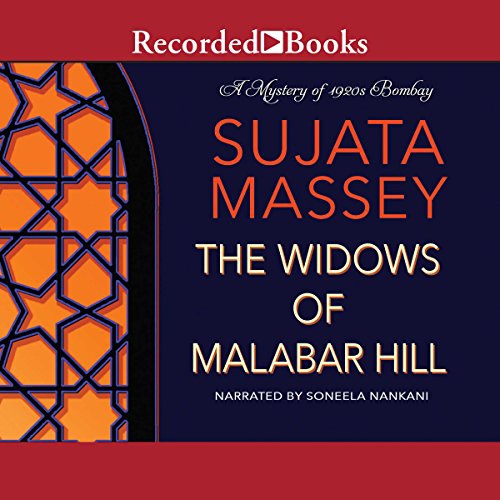
The Widows of Malabar Hill by Sujata Massey review

We listened to The Widows of Malabar Hill by Sujata Massey, our first pick for the 2021 Asian Readathon and enjoyed it enough we will listen to the sequel. We gave it 4 out of 5 stars. Here’s why:

Wanna Skip Ahead?
  1. The Publisher’s Blurb
  2. Why You Should Listen
    1. Because Book
    1. Because Narrator
  3. A Word to the Wise (Content Warnings)
  4. TL;DR
  5. Get Your Own

The Publisher’s Blurb

Bombay, 1921: Perveen Mistry, the daughter of a respected Zoroastrian family, has just joined her father’s law firm, becoming one of the first female lawyers in India. Armed with a legal education from Oxford, Perveen also has a tragic personal history that makes her especially devoted to championing and protecting women’s rights. 

Mistry Law is handling the will of Mr. Omar Farid, a wealthy Muslim mill owner who has left three widows behind. But as Perveen goes through the papers, she notices something strange: all three have signed over their inheritance to a charity. What will they live on if they forefeit what their husband left them? Perveen is suspicious.

The Farid widows live in purdah: strict seclusion, never leaving the women’s quarters or speaking to any men. Are they being taken advantage of by an unscrupulous guardian? Perveen tries to investigate and realizes her instincts about the will were correct when tensions escalate to murder. It’s her responsibility to figure out what really happened on Malabar Hill, and to ensure that nobody is in further danger.

Why You Should Listen

~Because Book~

We would classify The Widows of Malabar Hill by Sujata Massey as a cozy mystery that just happens to be set in 1920s Bombay. Think the legal maneuvering of David Rosenfeldt’s Andy Carpenter series with the small town feel of Rita Mae Brown’s Mrs. Murphy series, all infused with the delicious flavors of India.

The main character, Perveen Mistry, is based on the first female lawyer in India. We really enjoyed watching her use the law to fight for justice where only she can: within a Muslim household’s zenana. We also enjoyed watching her grow as she becomes more competent, takes on new challenges, and learns to work around the constraints society places on her. The characters in the story kept us hooked – for the most part.

Sadly there were some sections where the book started to drag and it felt like we were slogging through the doldrums. We enjoyed the rest of the book so much that it thoroughly aggravates us that Massey chose to include the chapters set in 1917. At first we assumed that there would be a connection between Cyrus, the love interest featured in these chapters, and the murder in 1920. Spoiler: Cyrus is a Chekhov’s gun. We really have no idea why the author thought it was necessary to include him at all. It feels like the 1917 chapters are Massey preaching to the reader about how awful things were for women in Bombay. These chapters should’ve hit the cutting room floor, or at the least been massively condensed. Take our advice and skip the 1917 chapters. It will significantly improve your reading experience.

But we still loved the book enough to read it four out of five stars and buy the sequel. Perveen, her father Jamshadji, and her friend Alice are all characters we definitely want to spend more time with. We also love the vivid pictures Massey paints of life in Bombay with the wide variety of cultures and their clashes with British colonialism. She uses just the right salting of languages like Hindi to add authentic detail without confusing readers who don’t know these terms – especially important in an audiobook when we didn’t know how to spell the non-English words in order to look them up.

The Twitch VODs below are great resources if you’d like to learn more about the history of ancient Persia and Zoroastrianism. They aren’t necessary to enjoy the book, but definitely added to our experience. We had no knowledge of Zoroastrianism before reading this book and as Perveen is Parsi, Zoroastrian customs play a role throughout. We felt better having a basic understanding of the religion as a framework to help mentally organize what we read about in the book. Note that there will be plenty of irreverent nerd humor!

History of Ancient Persia
History of Zoroastrianism
~Because Narrator~

Soneela Nankani does an excellent job of narrating. She gives slightly different accents to characters from different cultures and has a pleasant voice. She never seems to stumble over non-English words. While some reviewers found it difficult to keep track of who is who, we had no trouble tracking who was speaking. While we appreciate the energy Nankani brings to the narration, after a while we noticed that she seems to give every sentence an astonished feeling, which does become annoying. We noticed that Audible switches narrators with the sequel. We usually hate it when they do this, but perhaps Sneha Mathan’s narration will not suffer from the constant astonishment problem.

A Word to the Wise (Content Warnings)

Major: Domestic violence; sexism, misogyny, and colonialism/racism appropriate to the period; toxic family dynamics; manipulation/gaslighting; religious abuse.

Moderate: Assault, alcoholism, kidnapping, child abuse, violence, homophobia, heteronormativity.

Minor: Brief mention of blood, incest.

TL;DR

We already consider the Asian Readathon a success because we found a new series to love. The Widows of Malabar Hill by Sujata Massey is a book anyone who loves a good cozy legal mystery with a plucky heroine should try. we are already looking forward to book two!

4 out of 5 stars
4 out of 5 stars

Get Your Own


Advertising Disclosure: As an Amazon Associate, we earn a commission on qualifying purchases.
You may also support local bookstores and our book habit by purchasing through our Bookshop.

Star rating graphics are by Yasir72.multan and are licensed via CC BY-SA 3.0.

Gitanjali by Rabindranath Tagore mini review

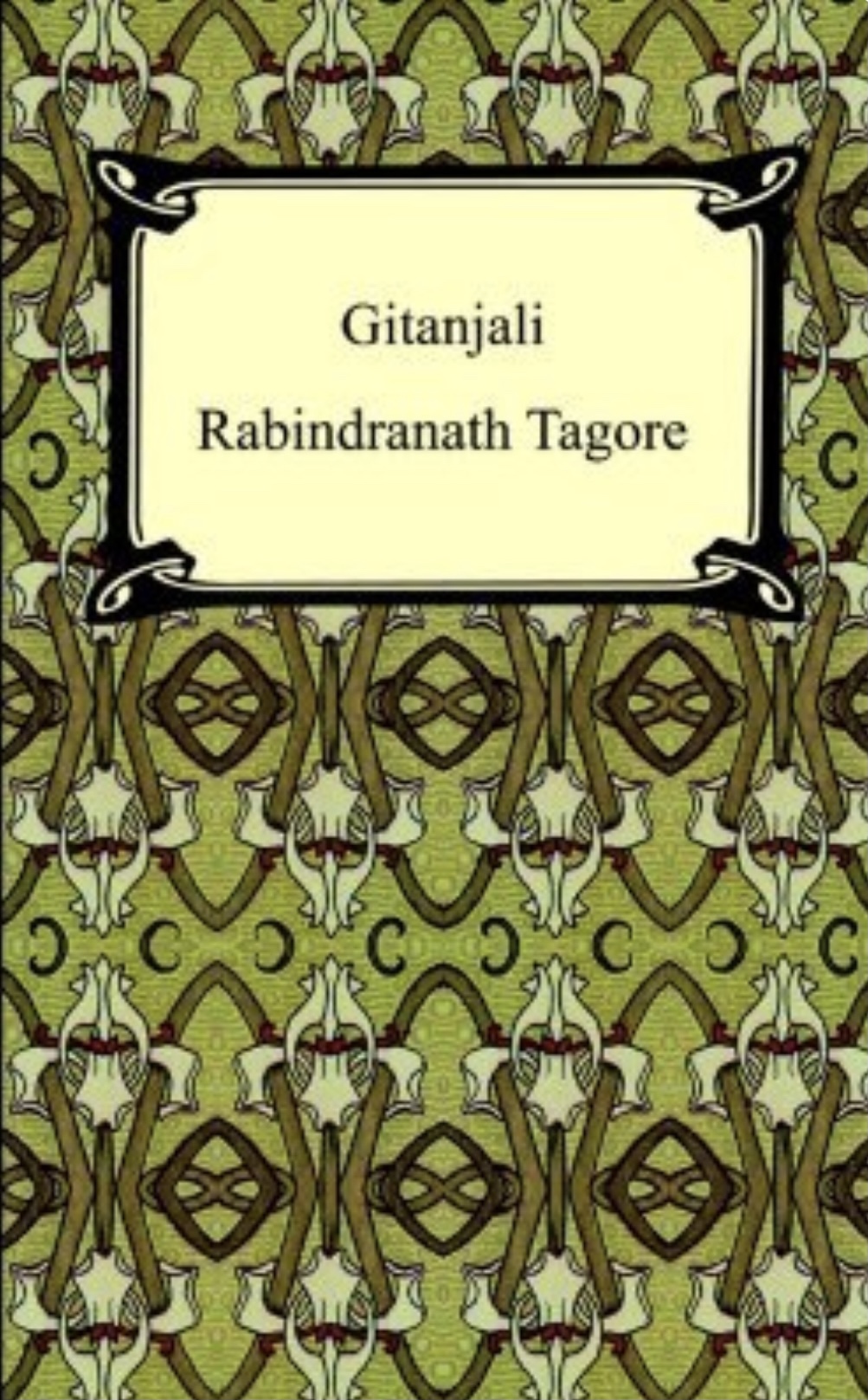
Gitanjali is a collection of poems by Bengali poet Rabindranath Tagore. It was first published in 1913 and is one of his best known works, for which he earned the Nobel Prize in Literature. We read the English translation. We aren’t clear whether it was translated by W.B. Yeats, or Yeats had it translated, but it is clear from his introduction that Yeats greatly admired Tagore’s work. Since we have enjoyed Yeats, we were intrigued.

We had never heard of Rabindranath Tagore before. We discovered Gitanjali when we were looking for a book that would fulfill The StoryGraph’s 2021 Genre Challenge’s “Read a poetry collection under 100 pages” prompt. Happily, we could also use this book to fulfill prompts for The StoryGraph’s 2021 Translation Challenge and as a bonus read for ReadWithCindy’s 2021 Asian Readathon. (If you decide to participate in reading challenges, we suggest doubling up on prompts as much as possible.)

Since Gitanjali is now in the public domain, you can find it for free online. We happened to find the copy we read on spiritualbee.com. The website also has several of Rabindranath Tagore’s other works and they recommend you read his prose first so you can better appreciate his poetry. Good advice we cheerfully ignored.

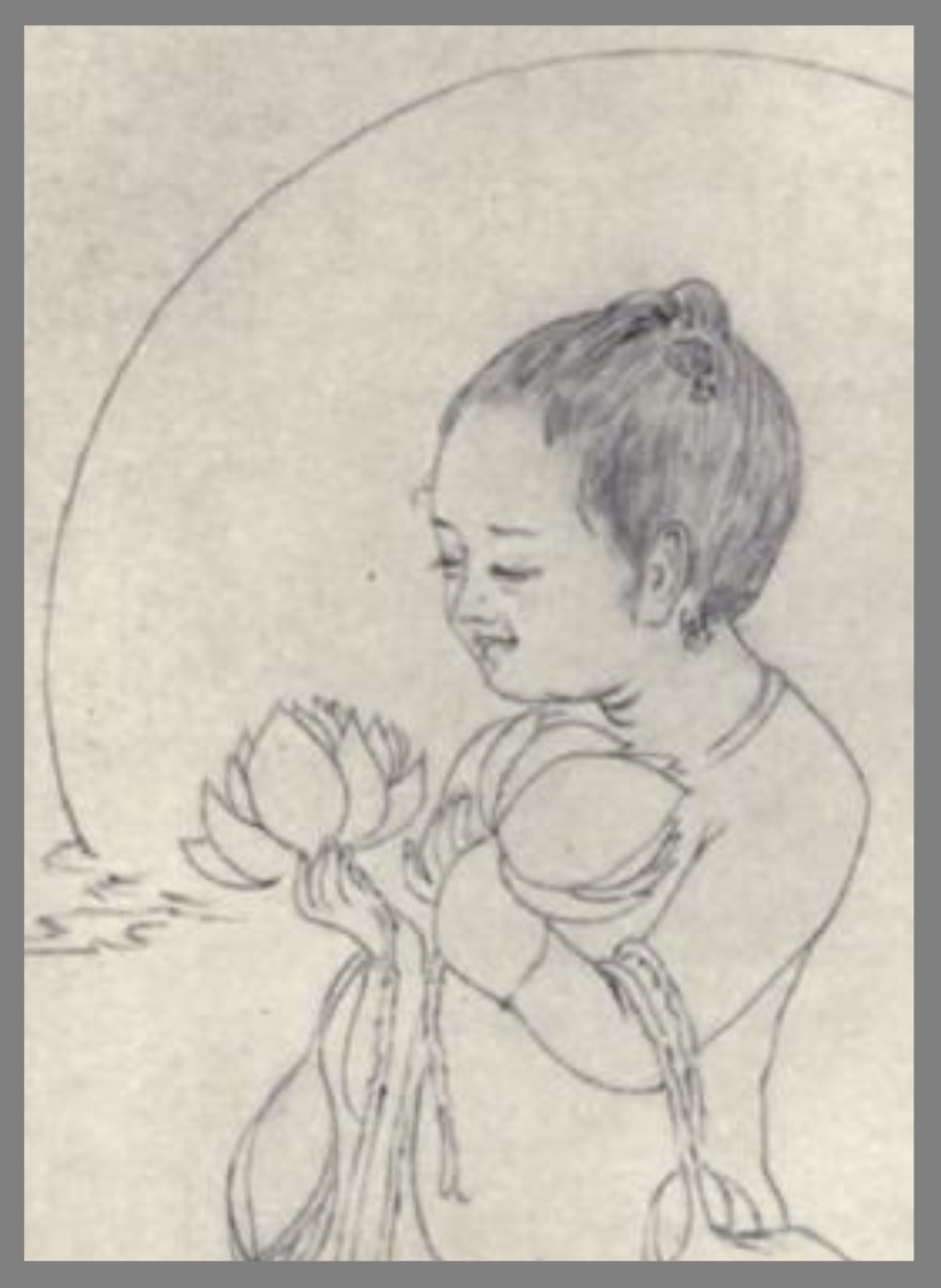
One of the things we enjoyed about this edition were the included illustrations, like this drawing by Asit Kumar Haldar, which accompanies one of our favorite poems in the collection, number 96 or “When I go from hence let this be my parting word”.

We ended up rating Gitanjali three out of five stars. Most of it is deeply spiritual poetry which addresses the author’s relationship with God, and as we do not share his faith, and perhaps also because we do not know the allusions to his prose work, it did not speak to us. The format also makes it difficult to tell whether each poem is supposed to stand alone or is a continuation of the previous poem. But there are still several gems in the collection that speak to universal themes of joy, oneness with the universe, and human nature.

Poem number 30 made us laugh:

I CAME out alone on my way to my tryst. But who is this that follows me in the silent dark?

I move aside to avoid his presence but I escape him not.

He makes the dust rise from the earth with his swagger; he adds his loud voice to every word that I utter.

He is my own little self, my lord, he knows no shame; but I am ashamed to come to thy door in his company.

Rabindranath Tagore, Gitanjali, poem no. 30

Who hasn’t experienced this? Perhaps last time we were in our friends company we were arrogant and boastful or couldn’t help lashing out in anger and despair.Now we come to our friend sheepishly, hoping they will still embrace us despite the dumbass things we did.

There were also poems that gave us goosebumps from sheer brilliance. One of these was poem number 74:

THE day is no more, the shadow is upon the earth. It is time that I go to the stream to fill my pitcher.

The evening air is eager with the sad music of the water. Ah, it calls me out into the dusk. In the lonely lane there is no passer by, the wind is up, the ripples are rampant in the river.

I know not if I shall come back home. I know not whom I shall chance to meet. There at the fording in the little boat the unknown man plays upon his lute.

Rabindranath Tagore, Gitanjali, poem no. 74

This poem gives a feeling of ineffable sadness, but also beauty, and makes us think of Swan Lake’s haunting refrain. We can easily envision the dusk closing in on this nearly deserted shore. Even the lute player has a sense of ghostly liminality. It is the sort of scene where worlds meet and tales begin.

So if you enjoy poetry, are looking to expand your knowledge of Bengali writers, or both we encourage you to read this small poetry collection for the few gems that might sparkle as brightly for you.

3 out of 5 stars
Rated 3 out of 5 stars.
Get a copy from Bookshop and support both local bookstores and this reviewer’s book habit!

Star rating graphics are by Yasir72.multan and are licensed via CC BY-SA 3.0.