
FREE PANEL: Autism on the Job: Navigating Neurodiversity in the Workplace Thursday, April 22nd at 7:00pm ET/6pm CST
Free Virtual Panel – Navigating Neurodiversity in the Workplace – Hosted by Different Brains
FREE PANEL: Autism on the Job: Navigating Neurodiversity in the Workplace Thursday, April 22nd at 7:00pm ET/6pm CST
Free Virtual Panel – Navigating Neurodiversity in the Workplace – Hosted by Different Brains

Some Quick Tips, and Why Autistic People Belong in Publishing By: Lindsay Fortin Hi! I’m Lindsay, one of the bloggers with the Secret Writers Guild, …
Autism Acceptance Month
Did you know April is Autism Acceptance Month? We didn’t. So we’re taking this opportunity to boost the signal and support neurodiversity!
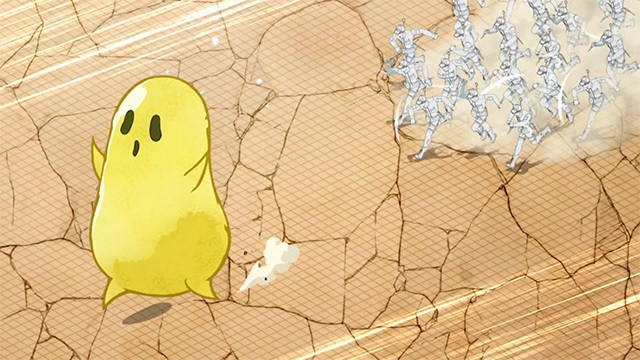
We just watched this excellent video by Rebecca Watson which discusses, among other things, the hygiene hypothesis. The hygiene hypothesis is the theory that early life exposure to a variety of allergens and benign microbes trains your immune system not to go apeshit over every little thing. If you’ve seen Cells at Work Season 1 Episode 5, you know all about this. Cedar pollen shows up. It’s big and bumbles about, but is essentially harmless. Until the immune system decides it’s an enemy invasion and causes harm (i.e. an allergy attack) trying to eradicate the pollen.
According to the hygiene hypothesis, if the body had enough exposure to harmless visitors early on, the immune system would chill and ignore the cedar pollen. No allergy apocalypse.
But the hygiene hypothesis is far from settled science. Or, as this journal article puts it:
Recent evidence does not provide unequivocal support for the hygiene hypothesis: […] asthma prevalence has begun to decline in some western countries, but there is little evidence that they have become less clean[.…] It is possible that a more general version of the hygiene hypothesis is still valid, but the aetiologic mechanisms involved are currently unclear.
Brooks, Collin; Pearce, Neil; Douwes, Jeroen The hygiene hypothesis in allergy and asthma, Current Opinion in Allergy and Clinical Immunology: February 2013 – Volume 13 – Issue 1 – p 70-77
doi: 10.1097/ACI.0b013e32835ad0d2
In other words, it’s possible that the hygiene hypothesis partly explains why some people get allergies and asthma while others don’t. It’s certainly not the whole picture. And if it is a thing, we don’t really know how it works.
In her video, Rebecca Watson mentions that the hygiene hypothesis goes back to at least the early 1800s, when doctors noted allergies and asthma were almost exclusively upper class diseases.
Hay-fever is said to be an aristocratic disease, and there can be no doubt that, if it is not almost wholly con- fined to the upper classes of society, it is rarely, if ever, met with but among the educated.
Blackley, Charles H. Experimental researches on the causes and nature of catarrhus æstivus (hay-fever or hay-asthma). (London : Bailliere, Tindall & Cox, 1873), 6, section 20, Wellcome Library, https://archive.org/details/b20418620/page/6/mode/2up, accessed April 18, 2021.
This piqued our interest. The strongest, most consistent evidence for the hygiene hypothesis is that farmer’s children get allergies and asthma far less than other children. Something about the rural lifestyle seems to be protective. Brooks, Pearce, and Douwes note while it “remains unclear which specific factors are most important, […] microbial exposures may play a role” (Brooks, Pearce, and Douwes, “The hygiene hypothesis”).
There are many pieces to this puzzle, but what if major contributors are being overlooked? We spent plenty of time in dirty outdoor pursuits as a kid, and we still wound up with allergies and asthma up the wazoo. Sure, there’s a genetic predisposition in our family, but what else could be going on?
What is a major difference between 1800s aristocrats and farmers? Time spent outdoors engaged in physical labor. This means there are two major contributors that appear to be overlooked in the literature: physical fitness and access to fresh air.
The available evidence indicates that physical activity is a possible protective factor against asthma development.
Eijkemans M, Mommers M, Draaisma JM, Thijs C, Prins MH. Physical activity and asthma: a systematic review and meta-analysis. PLoS One. 2012;7(12):e50775. doi: 10.1371/journal.pone.0050775. Epub 2012 Dec 20. PMID: 23284646; PMCID: PMC3527462.
In addition, asthmatics can improve their heart and lung function via exercise, leading to reduced symptoms and increased quality of life. We’ve seen this in our own life. When we were on a water polo team, we were in amazing shape and could actually enjoy running a mile in P.E.! The jury is still out on whether exercise protects against allergies, but studies seem to indicate moderate exercise lowers inflammation. In other words, it helps your immune system chill out, which means less “ERMAHGAWD, CEDAR POLLEN!!! KILL IT! KILL IT! KIIIILLLL IIIIIT!!!” episodes.
Access to good air quality with plenty of ventilation is also an important factor, and it’s in increasingly short supply.
In the last several years, a growing body of scientific evidence has indicated that the air within homes and other buildings can be more seriously polluted than the outdoor air in even the largest and most industrialized cities. Other research indicates that people spend approximately 90% of their time indoors. Thus, for many people, the risks to health from exposure to indoor air pollution may be greater than risks from outdoor pollution.
Centers for Disease Control and Prevention and U.S. Department of Housing and Urban Development. Healthy housing reference manual. Atlanta: US Department of Health and Human Services; 2006, Chapter 5, https://www.cdc.gov/nceh/publications/books/housing/cha05.htm, accessed April 18, 2021.
Or to put it more succinctly:
Walking into a modern building can sometimes be compared to placing your head inside a plastic bag that is filled with toxic fumes.
John Bower, founder Healthy House Institute, quoted in Centers for Disease Control and Prevention and U.S. Department of Housing and Urban Development. Healthy housing reference manual. Atlanta: US Department of Health and Human Services; 2006, Chapter 5, https://www.cdc.gov/nceh/publications/books/housing/cha05.htm, accessed April 18, 2021.
And you’re probably spending 90% of your time with your head stuck in that plastic bag. Unless you have a job like farming, which requires you to be outside most of the time. Even though we spent many hours gardening, hiking, and animal canoodling as a kid, we still spent the vast majority of our life indoors. Maybe if we’d grown up on a working farm our immune system wouldn’t have had as much exposure to toxins. See how it all comes together?
We hope that scientists will start investigating the indoor toxicity angle in particular. If the evidence backs our hypothesis, we hope it will drive policy changes that help make the great indoors a healthier place to be.
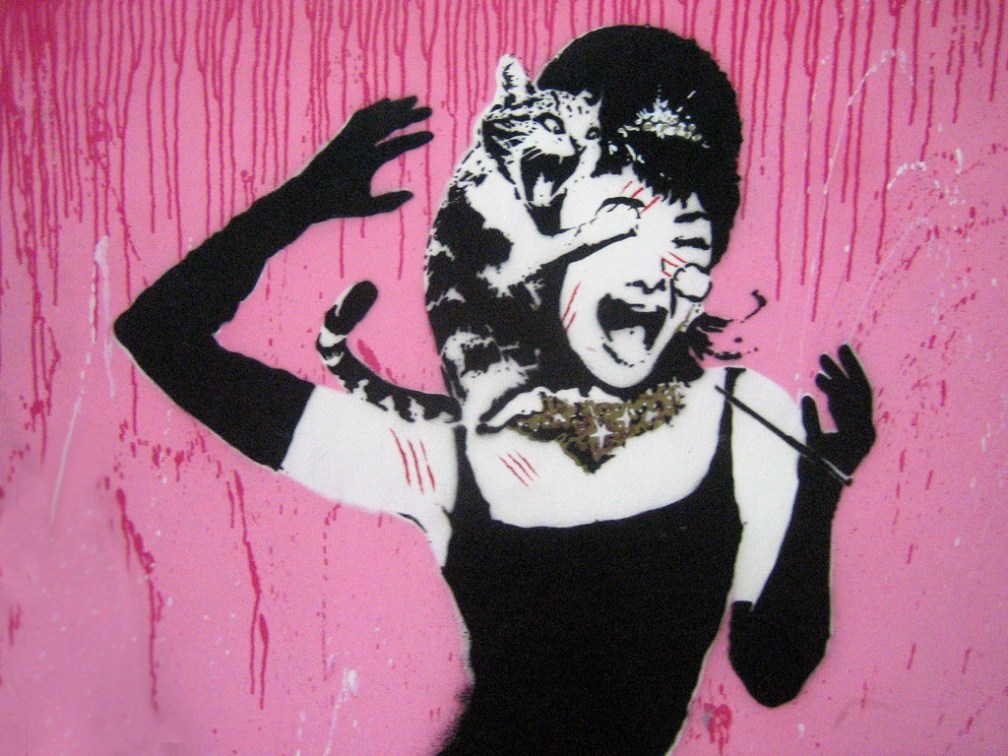
Seriously. Even if you adore pussies, do you want a random stranger’s pussy all up in your face? (If you answered yes, imagine it has mange. Want it in your face now?)
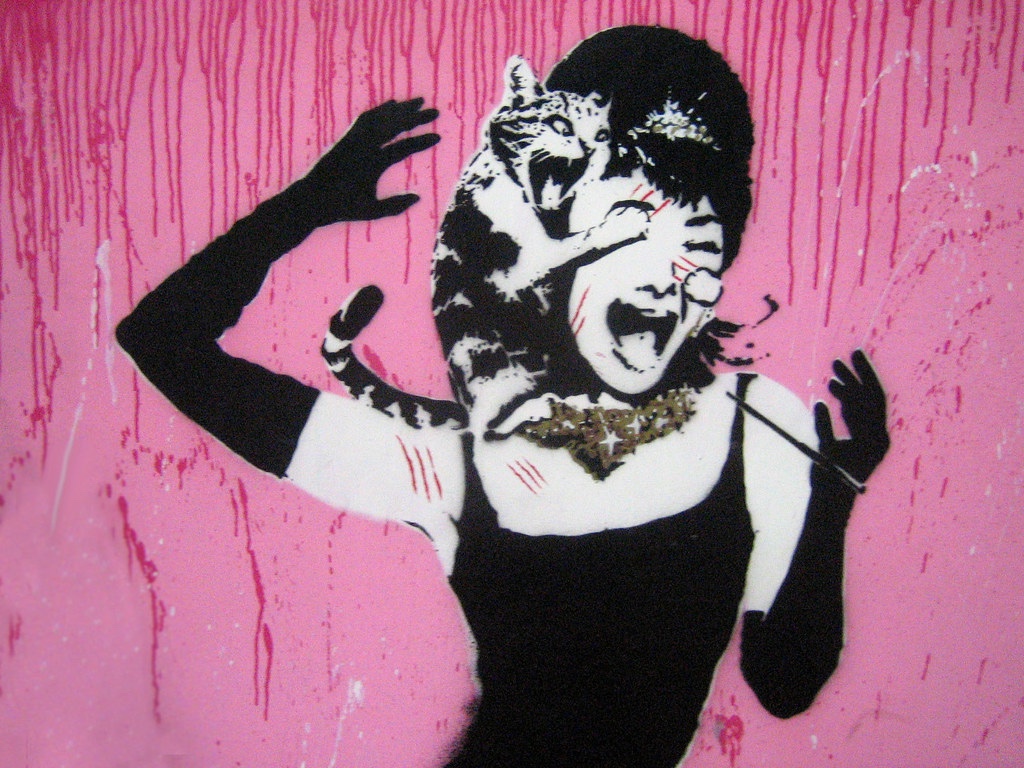
This is what dealing with the general public is like for us. We went to the optometrist today to pick up new glasses for the first time in over five years. We’ve been avoiding getting new specs for exactly this reason.
Pause to admire the new specs.

Okay, back to rant.
As soon as we walked into the office, other people’s pussies were all up in our face without our consent. Ew.
When we left, we were still covered in it. To extend the analogy, it’s like visiting someone with a pussy and leaving covered in fur. Even lint rollers rarely get it all. It takes time and effort to remove, and six months later you still find stray hairs.
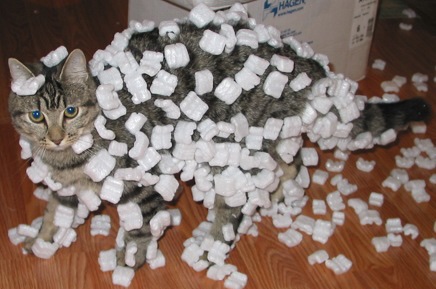
If you aren’t allergic to other people’s pussies, this is merely annoying. If your immune system freaks out at the mere thought of pussies, it makes everyday life extremely hazardous.
Our immune system must be misogynist because it sure hates pussy. (Ba-dum ching!)
Think you’re unscented? Probably not. Fragrance is found in most personal care products, just for starters. They are also probably affecting your health whether you realize it or not. According to the Environmental Working Group, 66% of the chemicals lumped in under “fragrance” or “parfum” on ingredient labels have not been assessed for safety by the FDA. That’s a whopping two-thirds!
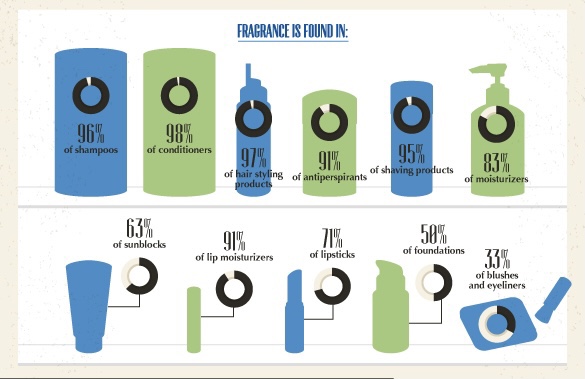
This study from Vanderbilt University analyzed the chemical makeup of twelve popular scents using gas chromatography-mass spectrometry and then tallied their health hazards. 109 out of 130 chemicals identified are health hazards according to the United Nations Globally Harmonized System of Classification and Labeling of Chemicals. Love Bath and Body Works’ sweet pea scent? 87% of its ingredients are toxic. And it’s not the worst offender in the study.
So if scents are pussies, you probably don’t want to smell your own pussy, let alone other people’s. Remember that next time you go shopping. Kthxbai.
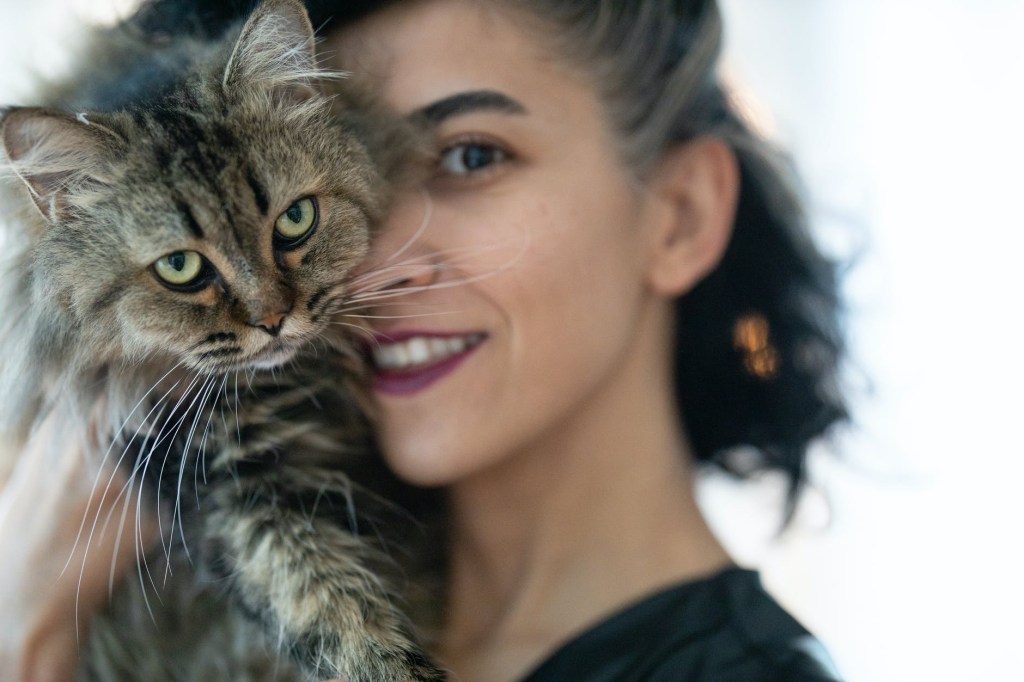
Author’s note: Yes, we’re old enough to remember “O.P.P.” by Naughty by Nature and we had a lot of fun with the double entendres in this.
We’re not saying being woke is a bad thing, but it stinks when you suddenly can’t stand books or authors you used to enjoy. We read to escape, darn it, and here comes our sociopolitical awareness jolting us out of a nice fantasy. So rude!
This has been happening a lot with romance novels lately. Romance novels are the epitome of escapism. No other section in the book store offers quite the same level of pure fun—and we say that as card-carrying SFF and manga buffs. Sci-fi, fantasy, and comics—at least the kind we enjoy—all ask you to think on some level. Even fantasy romps like Piers Anthony’s Xanth series have a cleverly concealed commentary on society. So does Ranma 1/2. Marvel and DC’s comics do, too.
Romance novels, on the other hand, usually conform very closely to social norms. They uphold the “one true love” ideal and a whole bunch of other nonsense.
Case in point: we were listening to Selkies are a Girl’s Best Friend by Molly Harper. (No, that is not our typo. That’s the published title. Shame on whoever edited it!) Molly Harper is good with the snark and we were looking forward to another laugh out loud installment. And then the main character, Sophia, has an inner monologue in which she submits to societal pressure to settle down and have kids with a guy she has only known for a few days and initially hated. Cue our inner monologue saying, “This is ridiculous and unhealthy. We’re returning this book.”
We’ve also been listening to Ravenheart by Dannika Dark, the second novel in the Crossbreed series. This series is more action murder mystery in an urban fantasy setting than romance and it’s also full of snark. At one point our heroine Raven goes on a date with Detective Glass. Glass insists on ordering for her and overrules her saying she’d prefer a chicken salad. At which point we’re wondering why she doesn’t get up and leave. After the date Raven’s internal monologue is all about how she liked Glass being dominant (we’d call that being a domineering asshole). This is way out of character for Raven, who we expected was only dating Glass to get close to the investigation and piss off her work partner Sebastian. But it does support toxic social norms around masculinity and romance. We’re not sure yet if this is a blip in an otherwise enjoyable series.
We are wondering if outgrowing romance novels is a mark of emotional maturity, of being ready to set those toxic norms behind us.
Thoughts welcome.
Have you gotten stuck in a rewrite rut? We certainly have! A rewrite rut is when you keep rewriting and polishing instead of moving on and getting the rest of your first draft written. Last month’s East Bay Science Fiction and Fantasy Writers Craft Klatsch’s topic was “How do you know when to stop editing?” The discussion got us thinking; there just might be a good reason you’re in a rut.
The standard advice on getting out of a rewrite rut is all about wrangling your perfectionism demons. And it’s not wrong—learning to ignore your inner critic and give yourself permission to just get the bare bones down and make it pretty later is hard.
We found that choosing a low-pressure writing project to practice helped. For us low-pressure meant writing a short story for a friend’s eyes only about a vampire and a hellhound’s perfect date. Keeping the mood campy and darkly humorous helped us not take ourselves too seriously. Knowing only our friend would read it helped us feel safe making mistakes.
But sometimes your inner critic is trying to tell you something really important.
We realized one reason we’d gotten stuck in a rewrite rut was that there were some fundamental flaws in our first chapters that needed addressing before we moved on, and it took us several rewrites to figure out what they were. To wit, we needed to change the setting from San Francisco to New York, rewrite one chapter from a different character’s point of view so it made more sense, and turn Mama Cleo’s pack of six werewolves into three. All of these would’ve meant major—like throw it all out and start over major—revisions if we’d kept going. Thankfully, we could feel something was amiss. The rewrite rut helped us identify the problems so we could safely move forward.
We also got stuck because we weren’t mentally ready to write some of the scenes we knew were coming up. We plan to write more about this in another post, but it’s okay to stop and put your mental health first. Writing is emotionally taxing. Maybe you’re not ready to go where the story will take you yet.
So if you’re in a rewrite rut, try asking yourself these questions:
Sometimes a rewrite rut is productive! The trick, as always, is telling the difference. 😊

It’s been a while and there’s been a lot happening behind the scenes! A lot of healing and growth has taken place, and it took us a good while to recover from surgeries to release our burn scars. We’ll focus on the positive in this post.
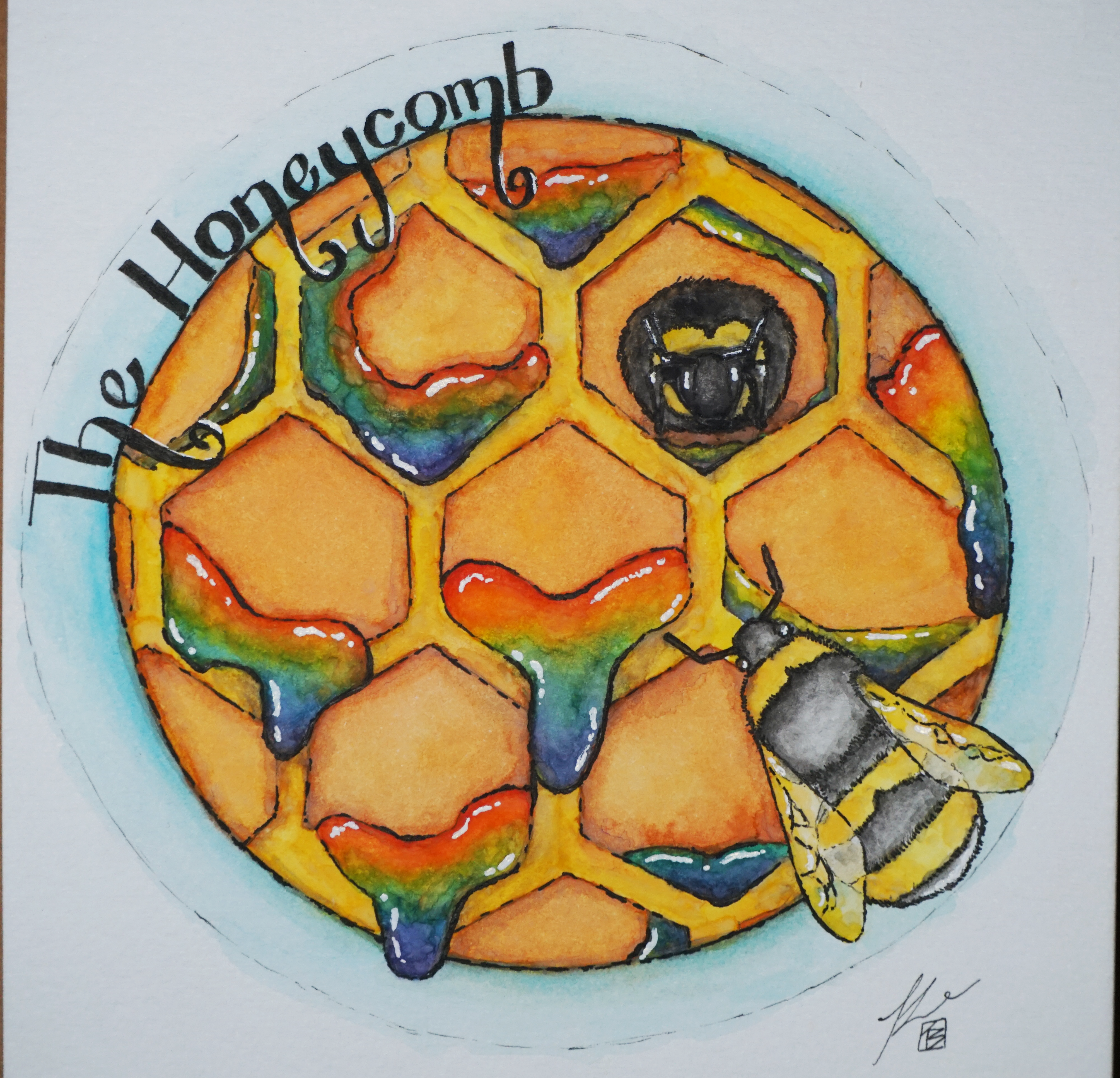
While we plan to be more active again, we are still prioritizing self care and likely have another surgery coming up soon, so our official blogging schedule for now is whenever the fuck we feel like it. 😎
Cory Doctorow’s audiobook Kickstarter campaign pisses us off. It’s being billed as a campaign to take down Audible, Amazon’s audiobook arm. It is actually an independent audiobook marketing campaign disguised as part of the movement against monopolies like Amazon, restrictive Digital Rights Management (DRM), and copyright laws that increasingly serve large corporations rather than creators.
Doctorow tries to focus attention on Audible’s monopoly with gems like, “90 percent of [the] market for audiobooks is dominated by a single firm [Audible], and every title that is sold by that firm is locked forever to that firm’s ecosystem” (Interview). Sounds horrible, right?
Here’s what Doctorow is conveniently overlooking: if you cancel your Audible subscription, “any titles you purchase are yours to keep forever”—or until Audible goes out of business (Audible’s Help Center, accessed Oct. 3, 2020). Audible could not offer this guarantee to customers unless they contracted with authors for permanent access to audiobooks sold on their platform. While it might seem more fair to allow customers to keep purchases after an author leaves the platform, it makes sense on Audible’s end to want something for continuing to provide that access. Server space and streaming bandwidth ain’t free.
Doctorow also blithely ignores the considerable privilege that has enabled him to take a rather extreme position on copyright. He initially published his first novel, Down and Out in the Magic Kingdom, for free under a Creative Commons license that allowed readers to share and remix it. “So many of the writers I grew up idolizing or who mentored me ended their careers in real significant financial problems and really struggling artistically as well, that I would easily trade a little bit of money at the beginning for a long-term high-fidelity relationship with an audience at the other end of my career,” he says, seeming to completely miss that he was able to do this because he’s in an extremely privileged position (Interview). Most authors cannot afford to use this strategy.
While Doctorow does make some good points about flaws in copyright law and how much monopolies have come to dominate the marketplace, a Kickstarter campaign to independently produce an audiobook is not the way to change that. Electing lawmakers who will enforce anti-trust law and overhaul the copyright system in creators’ favor is. But that answer is much less appealing than, “Buy my audiobook to stick it to Amazon and other copyright and DRM-abusing corporations.”
So back the Kickstarter if you enjoy his books, but don’t expect it to have any meaningful impact on the law or the marketplace.

A belated Happy New Year to all! 2018 has brought changes in several areas.
I discussed kindred (vampire) biology with my bestie and science editor, Mad Doktor Matt, and realized I need to make the following changes:
I’m glad we had the discussion. These all serve as great examples of how every writer has blind spots.
As I mentioned previously, I’m having another release surgery. All burn survivors need such surgeries periodically as the scar does not grow with the rest of the body. Burn scars actually contract over time. I’ll be getting a combination of z-plastys and laser treatment tomorrow. Right now I’m bummed I’ll have to stop work on my cross stitch project so I don’t leak all over it, but it helps to have gone through all this before. Here’s a shot of my work in progress:
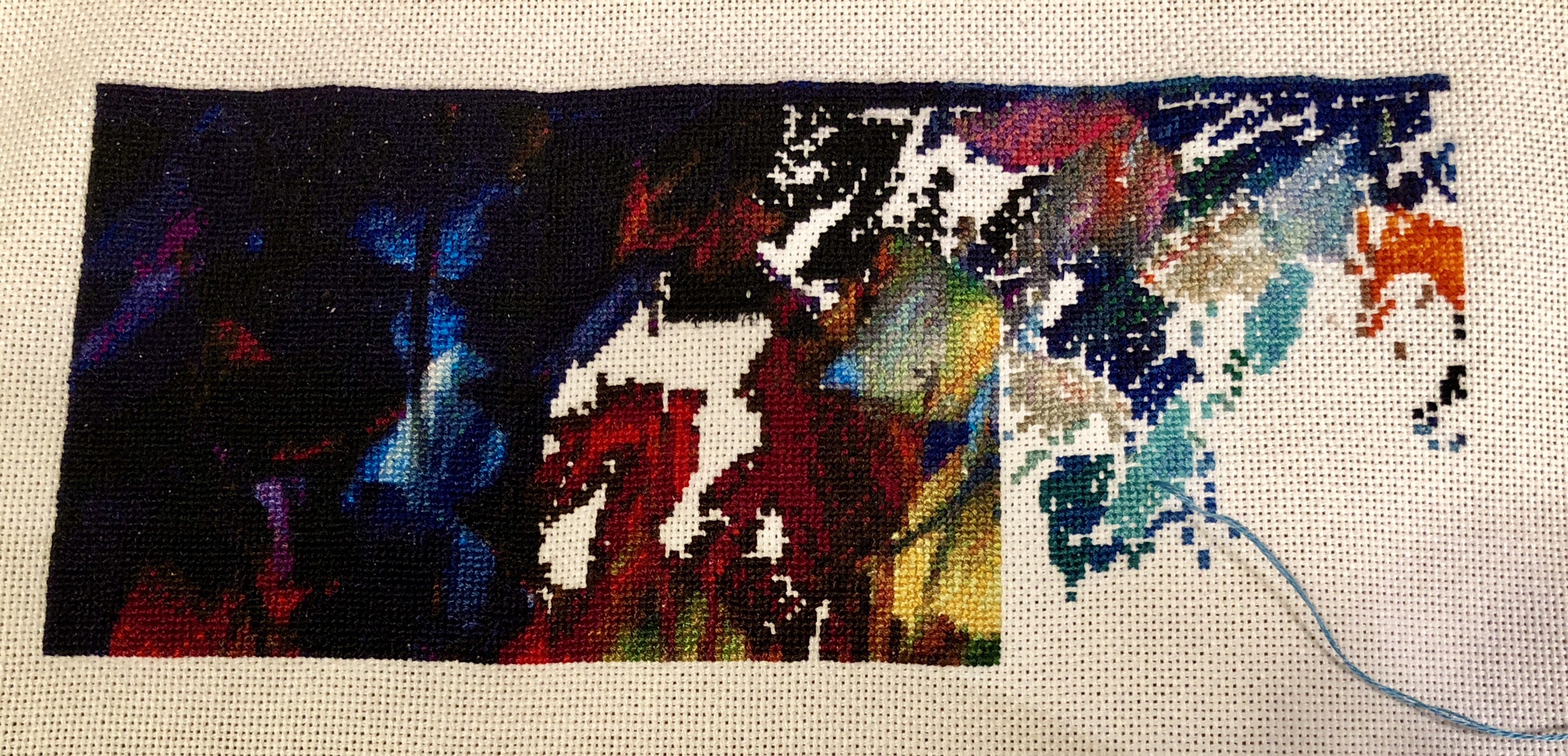
I’m a little over halfway across the top. I still haven’t filled in the background on the chart’s second page because the post office lost my floss. Hopefully they’ll find it!
I plan to use some of my downtime to fulfill a childhood dream and learn Русская (Russian)! I think I was attracted to the Cyrillic alphabet. I’ve also always loved Russian fairytales. I’ve always wanted to learn all the languages in the world! It amuses me that once I learn Russian and Italian, I’ll know all the axis languages. (Totally unplanned!)
While I’m healing, I wish all of you tranquility and joy in abundance.
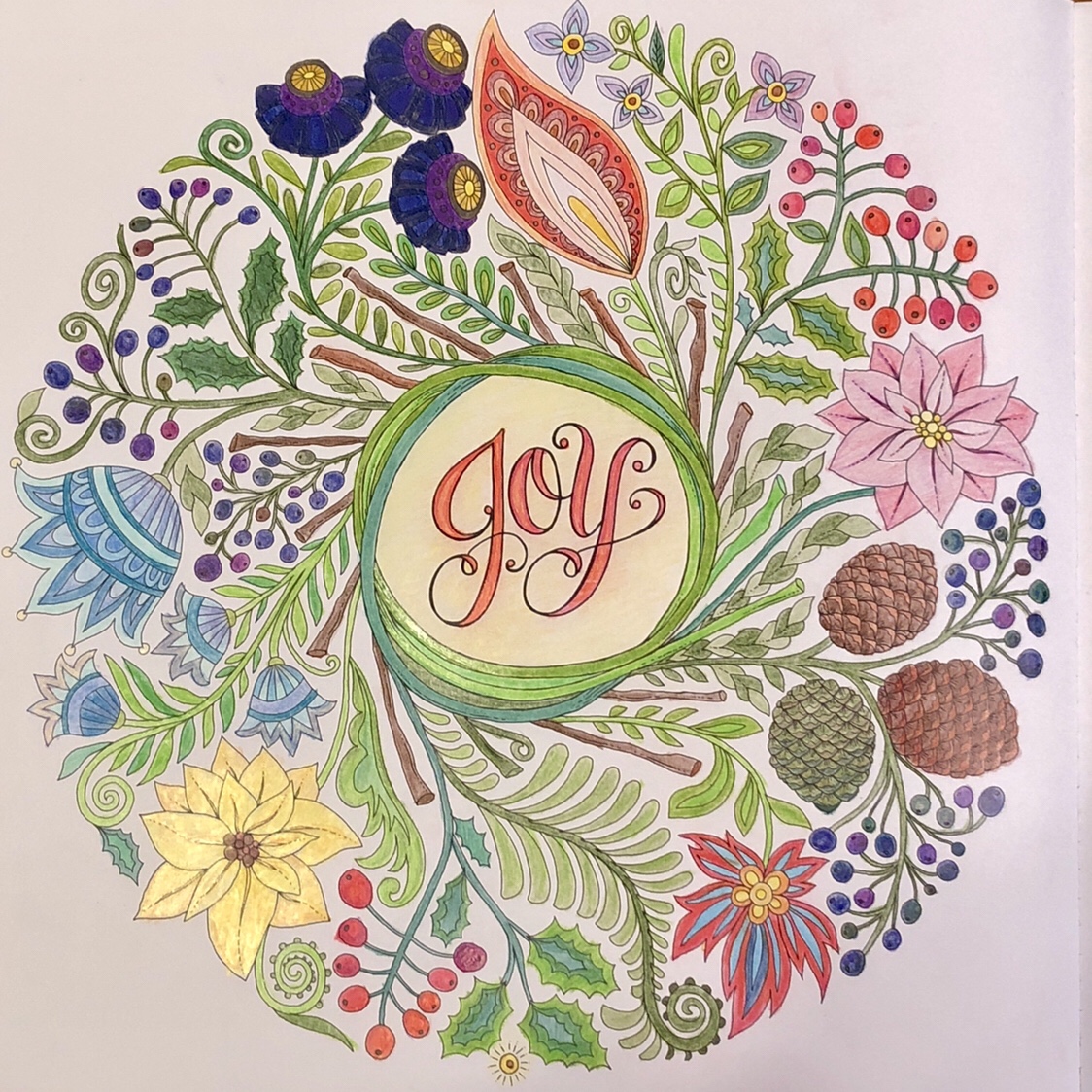
Joy wreath from Christmas to Color by Mary Tanana, colored by yours truly.
The Shortest Day
by Susan Cooper
And so the Shortest Day came and the year died
And everywhere down the centuries of the snow-white world
Came people singing, dancing,
To drive the dark away.
They lighted candles in the winter trees;
They hung their homes with evergreen;
They burned beseeching fires all night long
To keep the year alive.
And when the new year’s sunshine blazed awake
They shouted, revelling.
Through all the frosty ages you can hear them
Echoing behind us – listen!
All the long echoes, sing the same delight,
This Shortest Day,
As promise wakens in the sleeping land:
They carol, feast, give thanks,
And dearly love their friends,
And hope for peace.
And now so do we, here, now,
This year and every year.
Welcome, Yule!
(Audience responds: Welcome, Yule!)
Okay, so I missed posting this on the solstice, proper. The sentiment remains true. Susan Cooper (yes, the author of The Dark is Rising series!) wrote this poem especially for the Christmas Revels, a holiday treat celebrated in cities around the US that features traditions from a different country each year. “The Shortest Day” is one of the elements that is part of every production.
As the light returns,
May you gather it to you
With joy.
Happy holidays to you and yours!
 Honeycomb's Hive