Let’s Take a Cue from Japan on Gun Violence

In the wake of the most recent mass shooting in the US, it’s past time for legislators to take a stand and find ways to drastically reduce gun violence in our country. I’m writing as a gun user. Target shooting is great fun! I’m very proud of a target I have with just two beautiful bullseyes in it. I only had two bullets in the revolver. 😀 But that doesn’t mean we should continue to turn a blind eye to the proliferation of gun violence.

I suggest looking to Japan for model legislation. Japan is probably more restrictive than most Americans would like, but their policies have been extremely effective. In 2014 only six people died from gunshots in Japan. Compare that to 33,599 in the same year in the US. The BBC has done an excellent job writing about Japanese gun laws. In essence:

  • The police are not militarized. They are conditioned to de-escalate instead of draw their gun.
  • Obtaining a firearm in Japan is a lengthy process involving intense scrutinization of the applicant, their family, and their associates. You must get at least 95% on the marksmanship test in order to pass.
  • Several laws ensure the Japanese government knows where all the guns and ammunition are. You must have a safe in which guns and ammo are stored separately and the police must know its location. You must return your spent cartridges to the store to obtain new ones (this law also helps ensure that guns are being used for lawful purposes such as target shooting).
  • The Japanese began one of the world’s first buyback programs back in 1685 and it’s still going strong. When a gun owner dies, their heirs must turn the gun and ammunition in to the police.
  • Gun shops are strictly monitored and kept to a small number. These are the only places Japanese can legally buy guns and ammo.
  • Shotguns and air rifles are the only firearms civilians are allowed to purchase. Japanese police leave their firearms at the station when they leave work.

While not all of these policies would work for the United States (for example, Americans would probably demand to continue to have access to pistols and revolvers, and historical collectors would want to be able to pass down their collection), I think versions of them would. I would feel a lot safer knowing that anyone buying a firearm had to go through such a lengthy and rigorous process. Retraining our police to use the most peaceful means possible to de-escalate situations first would go far toward addressing the epidemic of police shootings in America.
Addressing Hazing

About a week ago I stumbled across NBC News’ “Hazing in America”. I’ve been trying to decide what I could add to the subject and made a stab at it earlier tonight, which I deleted. It’s difficult to talk about in any substantial way without exposing others to scrutiny.

And now I have my first point; hazing is surrounded by a culture of silence. Typically, no one in a given organization (and I include sports teams in “organization”) is innocent, with the exception of the haze-ees. All group members participate in hazing so the guilt is shared. If a student reports that a rival group hazes new members, he or she risks exposing their own group. Administrations that turn a blind eye don’t want their university’s reputation besmirched.

Hazees, of course, are incentivized to not report because they want to be a group member. Women pledging my local sorority were told they could opt-out of any activity and we’d come up with an alternative they were comfortable with. In reality, pledges were cajoled into going along with the program. Substitutions were never made. Not maliciously, mind you. There was a genuine desire to use such moments to help the pledge grow or get over a fear while pushing group unity. But in effect, speaking up was almost useless. This happened across the board.

Even when a new member got the courage to go to the administration about hazing, the ultimate effect was to destroy the pledge. Hazing continued in the reported organization as usual. This became a powerful object lesson for others about the futility and consequences of reporting hazing.

Even if campuses properly incentivized student organizations to report hazing, many have a confused understanding of what hazing is. For the most part the state laws that address hazing only take into account actions that cause, or could reasonably cause, physical injury. When I got to know members of national Greek organizations (think Pi Beta Phi, with chapters at multiple schools, as opposed to a local, which only exists at one school), I learned that hazing includes anything that demeans, degrades, or harasses new members. Under this definition calling new members “babies” or requiring them to dress up in diapers are both hazing. Because the local Greek organizations at my alma mater think hazing is only stuff like making pledges drink until they puke, they truly believe that they don’t haze and aren’t legally liable. Except they do and they should be.

So reform starts with aligning all players’ definitions of hazing with the definition above. Next, organizations should be required to treat new members as full members as soon as a bid to pledge or join the team is accepted. Students must be educated about what hazing is and alternate means of bonding and ensuring group unity. Schools must figure out how to incentivize students to report hazing and appropriately punish complicity, including complicity by staff. And schools and organizations must work together to create alternate, healthy traditions and rites of passage for their students.

Here at the End of All Things

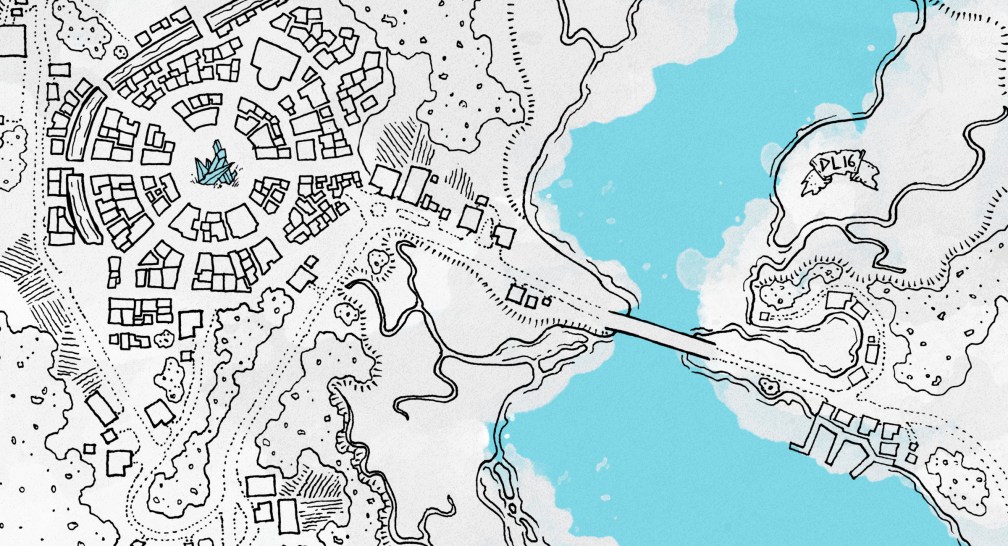
A thoughtful exploration of fantasy maps and the meaning behind them.

Adrian Daub's avatarLongreads

Adrian Daub | Longreads | August 2017 | 20 minutes (5,033 words)

1.

“The following Generations, who were not so fond of the Study of Cartography as their Forebears had been, saw that that vast Map was Useless, and not without some Pitilessness was it, that they delivered it up to the Inclemencies of Sun and Winters. In the Deserts of the West, still today, there are Tattered Ruins of that Map, inhabited by Animals and Beggars [
].”

— Jorge Luis Borges, “On Exactitude in Science”

I spent my adolescence around maps of places that didn’t exist. An older cousin read The Lord of the Rings over the course of a hot summer when I was nine, and I watched in fascination as he traced the Fellowship’s progress across the foldout map that came with the book in those days. This, I decided, had to be what grown-up reading looked


View original post 5,173 more words

Link

Groove with Rosemerry!

Apple Music now allows you to see what friends are listening to and listen to their playlists a la Spotify. Check out my “Writer’s Candy” playlist, chock full of songs that inspire my writing. And please share your own favorite writing jams!

The Internet of Risky Things

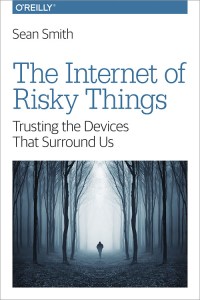
The Internet of Risky Things: Trusting the Devices that Surround Us by Sean Smith

The Internet of Risky Things: Trusting the Devices that Surround Us by Sean Smith

I’ve been trying to beef up my IT knowledge so I can make sure all the nifty things I want to do in my novel in progress, House Ibsen, are grounded in reality. So when I saw The Internet of Risky Things at the library, I pounced.

The book is very well-written and does an amazing job of striking the balance between detailed technical information and sufficient background material. My big overall takeaway: if you care about privacy, don’t use the Internet of Things. The amount of things that can—and probably will—go wrong is staggering! Author Sean Smith describes the issues with legacy components, the current “program now, patch later” paradigm, and security. For example, many Internet of Things devices use out-of-date components because they’re cheaper. Many of these components have bugs, but can’t be patched. Even if they can be patched, eventually they become so “old” that they’re no longer supported. This leaves millions upon millions of devices wide open to hackers. Especially when these devices are used for mission critical applications, like the power grid or pacemakers, that risk is unacceptable. Yet it runs rampant throughout the Internet of Things. Gives me the heebie-jeebies, I tell you.

On the other hand, as a writer this gives me lots of ways for both my bad- and good-guy characters to exploit Internet of Things weaknesses and make things
interesting. 🙂

THE BOTTOM LINE:

teacup1teacup5teacup4teacup3teacup2

If you’re interested in this field, I highly recommend reading The Internet of Risky Things.


Smith, Sean W. The internet of risky things trusting the devices that surround us. S.l.: OReilly UK Ltd, 2017.

Trump, King of Dulness

I’ve been listening to Alexander Pope’s collected poems. I was first inspired to do so by Anne McCaffery, whose characters often reference the poet. I was particularly struck by “The Dunciad”, a poem about crowning the King of Dulness (sic) and expanding Dulness’ empire. Pope is at his best when his tongue is sharpest, and “The Dunciad” could read as a screed against Trumpism and the creep of anti-intellectualism. Great literature remains relevant, but in light of today’s news about Roy Moore, Pope seems prescient:

All as a partridge plump, full fed and fair,

She form’d this image of well-bodied air;

With pert flat eyes she window’d well its head,

A brain of Feathers, and a heart of Lead;

And empty words she gave, and sounding strain,

But senseless, lifeless! idol void and vain!

Never was dash’d out, at one lucky hit,

A Fool so just a copy of a Wit;

So like, that Critics said, and Courtiers swore,

A Wit it was, and call’d the phantom Moore.

Pope, Alexander. “The Dunciad”, Book II, 41-50. In The complete poetical works of Alexander Pope. Boston: Houghton, Mifflin, 1903. Accessed September 26, 2017. http://www.bartleby.com/203/164.html.

Free Speech, Flags, and Toilet Paper

This weekend the National Football League finally joined Colin Kapernick in protest. I’m sad that it took them so long, but am glad they’re finally doing it. This story has prompted a lot of thinking.

Back before 2009, when it became de rigueur for players to stand for the pledge of allegiance, I remember my hometown football team usually knelt for the pledge. Kneeling was considered a sign of profound respect. It’s fascinating that now President Trump and the alt-right argue it’s disrespectful. As one viewer tweeted to The Young Turks, if it’s disrespectful to kneel, why is it traditional to kneel when praying? According to Trumpian logic, wouldn’t that be saying “F you!” to God?

On the free speech angle, I was prompted to think about a photo I’d taken on my iPhone using a special camera app. Now I’ll be honest, sometimes when I glance in the toilet before flushing, I notice that the TP has formed a recognizable shape. This random origami, if you will, fascinates me. So sometimes I’ll take a picture of an especially good one.

A week or so before the 2016 election, I noticed the TP had made a beautifully expressive checkmark, as if the toilet bowl was a checkbox. This perfectly expressed my feelings about an election in which the leading choices were both pretty crappy and it was hard to feel like my vote mattered. I might as well flush my vote down the toilet. So I took a photo, though I wound up never posting it anywhere. Then a couple of months ago I opened the app only to discover that all of my photos had disappeared without warning! I don’t know this for certain, but it appears that the app may have deleted my content, even though I had kept it private, because they deemed my TP photos obscene and thus in violation of their TOS.

Now, as a private company the app had the right to do that, as much as I didn’t like it. But this brings up several questions. What is obscene? I could argue that a great deal of constitutionally protected speech is obscene. Does that mean that it should, therefore, not be heard? Where should we draw the line? I don’t think that the Nazi crowds in Charlottesville’s speech should be protected. I think it’s obscene, obvious hate speech, and incitement to violence. Yet some think that Colin Kapernick kneeling during the pledge of allegiance is obscene and hateful speech.

I’m not going to answer these questions here. But if I were in charge I would make changes to the pledge of allegiance. Doing so won’t solve any free speech issues, but it would remove some of the major objections to reciting it based on the wording.

I pledge allegiance to the United States of America. Many peoples creating one nation with freedom and justice for all.

This wording pledges allegiance directly to the nation, not to its flag. It also removes mention of God (I’d also remove “In God we trust” from US currency). Whatever one’s religious beliefs, church and state are supposed to be separate in the United States, so it’s inappropriate for God to be in our national pledge (or on our currency). Finally, this wording focuses on our history of melding immigrants from around the globe into one nation founded on constitutional principles.

This post has followed my thought association. So to thank those who’ve read this far and to return to TP origami, here’s an excerpt from a story in progress tentatively titled “Cordelia and the Shit Demon” that was inspired by this manifestation of serendipity. Enjoy:

            “Cordelia, why are you setting up the high-speed over the toilet?”

The small, mousy witch so addressed blushed and continued to adjust the video camera’s controls for a moment before replying. “You know I’m good at reading the tea leaves. Well, it turns out you can get a lot more interesting and accurate information reading toilet paper because of the – ahem – biological materials involved. Is something wrong?” She fiddled with the lapel of her robe, which was fraying from this nervous tic, and looked up at Pansy with concerned doe-like eyes. Rumor had it that Cordelia’s glasses were made with two magnifying glasses, a touch of magic, and a bit of wire. They certainly did enlarge her eyes in a way Pansy found both absurd and irresistible. She couldn’t scoff at the silly project with those brown orbs turned on her.

Giving in, Pansy crossed her arms and leaned against the doorjamb. “So why the high-speed? You never needed it for tea.”

Cordelia smacked her fist into her palm. “Oh, right! I didn’t say, did I? This camera,” she gestured like a model displaying a product, “will capture the flush cycle, in case it goes by too fast or there are nuances my eye alone can’t see. The tripod is set up to breakdown quickly so my scrying will occupy the bathroom for the least time possible.” The little witch beamed.

Evolving Irregularities

I just tweeted a link to The Guardian’s excellent article “To boldly go for it: why the split infinitive is no longer a mistake” (do follow me @RosemerrySong). Loved it!

But it did make me think about a grammar evolution that’s one of my pet peeves: the incorrect conjugation of irregular verbs. English is a difficult language to learn because it’s a conglomeration of many languages. Irregular verbs don’t help.

The two irregular verbs I see misconjugated most frequently are “to shine” and “to dive”. “To shine” is extra tricky because it has two past tenses: shoes were shined, whereas light shone. More and more I’m seeing sentences like, “The assassin dived behind the wall,” and, “She shined the flashlight into the tunnel.” Grates on my ears! But I realize that applying the “just add a ‘d’ after an ‘e’ to make past tense” rule to every verb ending in an ‘e’ is much easier than learning all the irregularities.

I have a feeling that ‘shined’ and ‘dived’ will become standard grammar in a decade or two. As I type, the WordPress grammar-checker doesn’t flag them as incorrect, indicating how much they’ve already been normalized. I’m not aware of any research on this topic, so if you, dear reader, know of any, please let me know in the comments.

Vincente for Presidente and the US Electoral System

If you haven’t already seen former Mexican President Vincente Fox’s YouTube videos addressing US President Donald Trump, you should. They’re hilarious. Here’s one of my favorites:

https://www.youtube.com/watch?v=-ukv9v7IGZw

Vincente Fox’s humor makes me think he’d make a wonderful US presidential candidate, though I know nothing of his policies. This also made me reflect on a high school friend who wanted to be POTUS, but couldn’t because he was born in China prior to his parents’ immigration. While I understand the reasons for not allowing people like my friend to run for president, it saddens me that we lose out on some folks who would make fantastic elected officials.

I often think about what I would do if I was in charge. This helps me both think through the issues and build story worlds in which I can experiment with those policies and their opposites. Donald Trump’s election helped bring debate over the electoral college to the forefront. Before Trump was elected, many of my friends and I were for abolishing the electoral college. But once Trump’s election was on the horizon, I changed my mind.

The founders wrote the electoral college into the constitution as a fail-safe measure. They envisioned the electors’ job as preventing demagogues and unqualified or incompetent candidates from rising to power. Yet in the 2016 presidential election, they arguably failed to do so.

I believe this failure is the result of the way the electors’ job description is written. Electors are told they are “faithless” if they do not vote for the candidate who wins the majority of votes in their state. Many states fine faithless electors. With this state of affairs, we might as well eliminate the electoral college and implement true direct democracy. But we need electors to be the nation’s failsafe. So I’d rewrite their job description to be explicit about their mandate to prevent demagogues from achieving office. A faithless elector would be one who failed to prevent another Trump from becoming POTUS. How the nation would determine the president-elect is unacceptable would need to be spelled out. When there is not an untenable candidate in the race, electors would simply be required to certify the accuracy and legitimacy of their state’s vote tallies (so rather than voting for a candidate as in the current winner-take-all system, the certified state vote tallies would be added to those of all other states, creating a nationwide popular vote). This would mean acting to eliminate voter suppression, ensuring security, and eliminating fraud.

I would also make nationwide changes to the voting process. Election Day would be moved to Monday and declared a federal holiday. I would follow Australia’s example and pass a law requiring all eligible US citizens to vote. To make that easier, I would create an electronic, online voting system that would allow people to vote from the convenience of the nearest online device. I’d supplement this system with vote by mail and polling stations at every library and school computer center to ensure access. Naturally, this would require strong security protocols, but I’m convinced it can be done.

If you were in charge, how would you change the United States’ voting system?

To Grid or Not to Grid

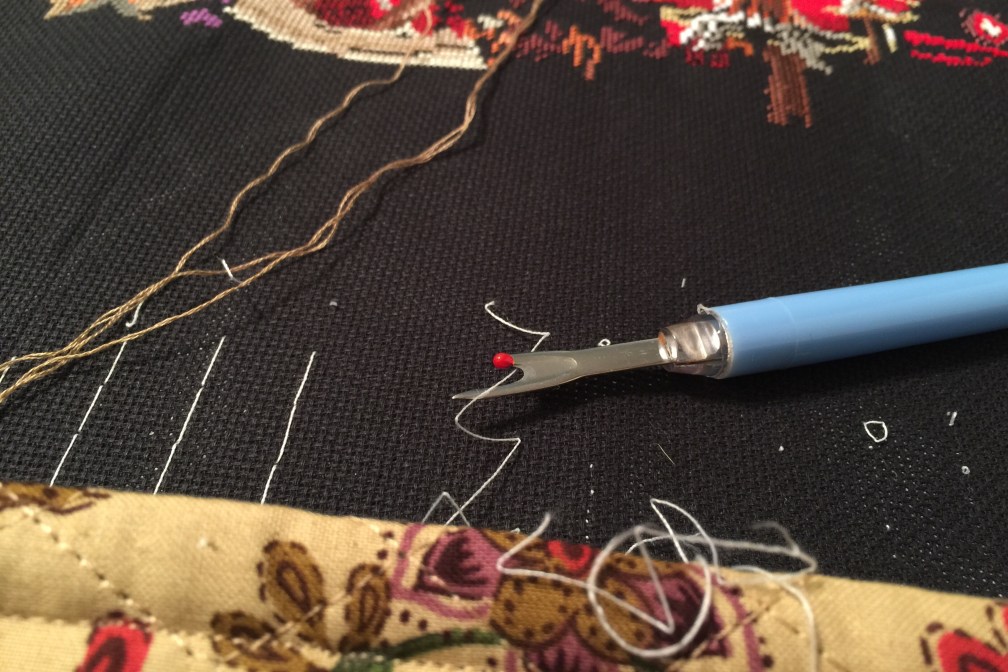
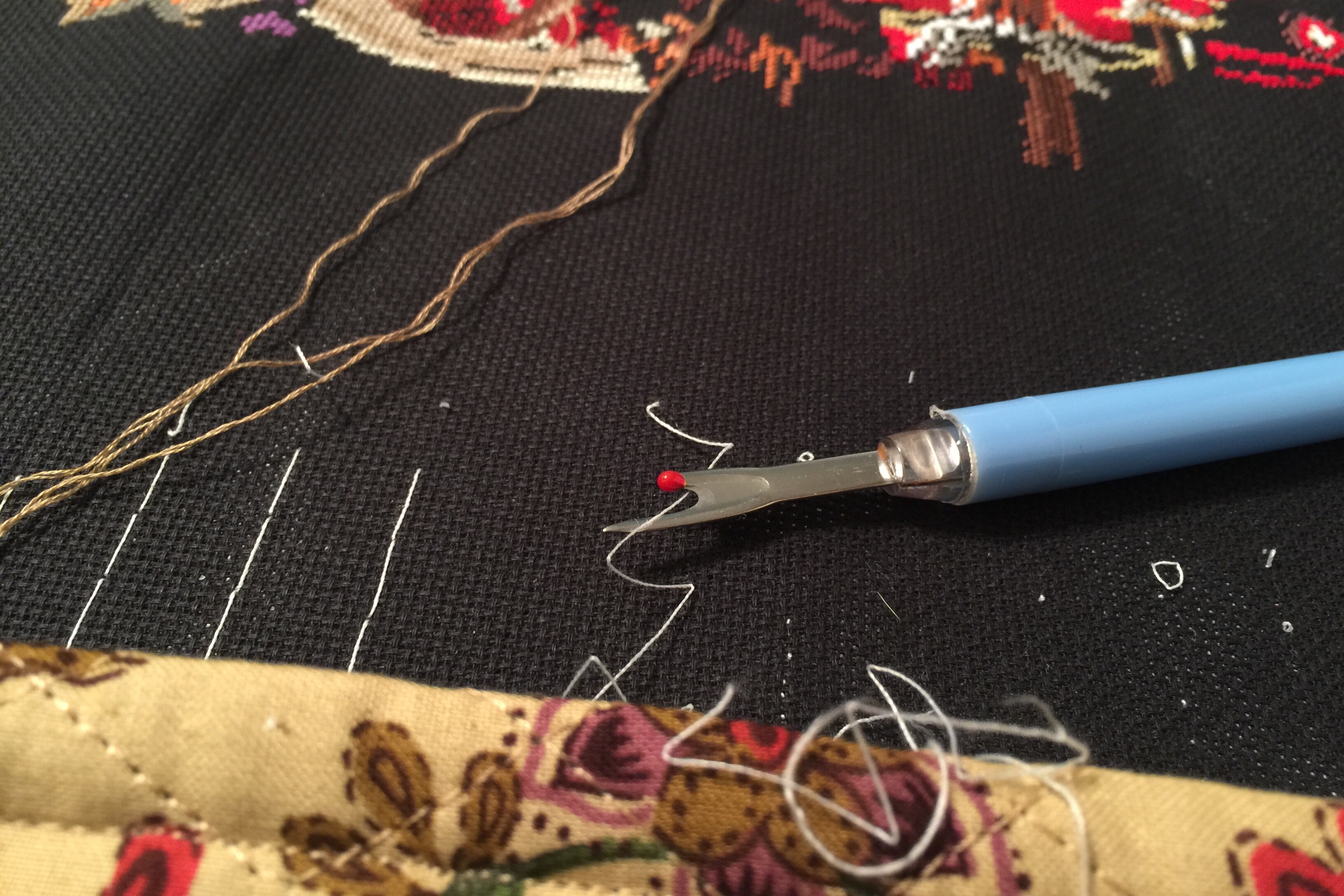
When I embarked on my current counted cross stitch project, I decided to try out a tip. I used white thread to stitch a 10 x 10 grid on my aida cloth. This reference did make it much easier and faster to stitch as it reduced the need to carefully count. I could determine the location of any stitch primarily spatially and never had to count higher than five to find my place.

But once I’d completed the top of the piece, I decided to test the tipster’s assertion that the grid stitches would be easy to remove. Turns out it’s a very finicky process. I wound up accidentally cutting a couple of cross stitches and having to leave some grid thread pieces where they were inconspicuous so I didn’t cut more of my project. I removed the grid threads from the rest of my fabric and don’t think I’ll use this method again.

My troubles with gridding my cross stitch project made me think about my struggles with outlining. I’m what’s often referred to as a “pantser” because I write by the seat of my pants instead of relying on an outline. I usually have a general idea of where I’m headed and even have some detailed scenes I know I want to get to along the way, like taking a road trip and penciling in a few must-see destinations and an end point, but leaving the rest up to serendipity. I’m one of those authors to whom her characters are very real, separate beings who tell me their story. My job is to listen and record, sometimes running along after shouting, “Wait! I can hardly keep up!”

Writing with an outline feels very restrictive to me, rather like rally driving. When I was required to turn in outlines for school papers, I almost always wrote the paper first and then the outline. My sophomore year of high school I finally figured out a nonfiction outlining style that worked for me. Using 3″ x 5″ cards I wrote down the points I wanted to make and supporting information. Then I sat down and rearranged the cards until I had a stack that led me almost from sentence to sentence. But I’ve only done this for thesis-length research papers. And for fiction, it feels too regimented and constricting.

I’ve heard a lot of great things about different styles of outlining, like the grid or post-it notes, and I keep trying because it seems like such a good idea. I have yet to find my match, though.

How do you feel about outlining first? What works best for you? I’d love to hear about it in the comments.