For the Love of Station Wagons

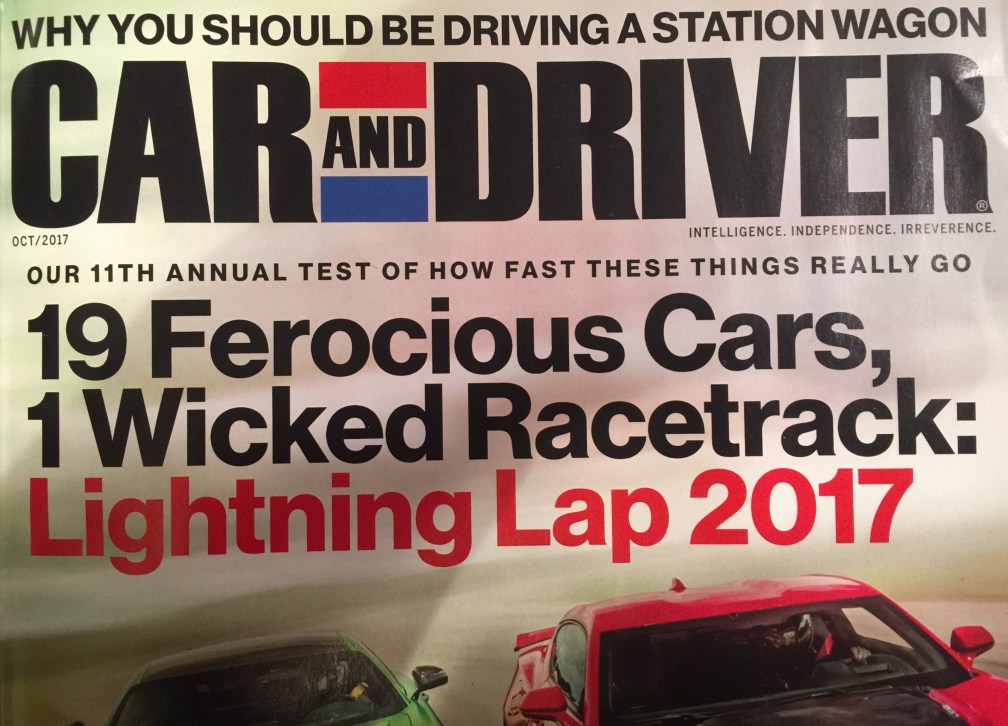
Continuing this week’s theme… I usually don’t read Car and Driver magazine—my dad’s the one who subscribes—but I was tickled to see “Why You Should be Driving a Station Wagon” on the cover. They pit a 2017 Mercedes-AMG GLE43 and a 2017 Mercedes Benz E400 Wagon head to head. Naturally, the station wagon wins. 🙂

The feature reminded me of my first car, a silver Camry station wagon. I moved out of the dorms my sophomore year and inherited the wagon from my parents. At first I was disappointed. All the other kids had SUVs, pickups, or sporty little cars. I wanted a sporty little car, too.

But I soon realized my station wagon was the bomb.

It was the perfect car for a pledge captain, sorority president, and all-around girl-on-the-go. I could fill it with friends and all the stuff we needed for whatever we were doing. Grocery shopping was a snap. And it was indispensable for moving.

My Camry station wagon handled better than most of friends’ little sports cars, too, and satisfied my inner speed demon. Oregon rain, ice, and snow were no problem. (Pro tip: when a constant sheet of rain is flowing down your windshield, you can see better if you turn your wipers off.) It racked up the miles on multiple trips up and down the West Coast, and it’s still going strong as my brother’s car.

Now that’s a great vehicle.

Solar Roads for the Win!

Today we’ve battened down the hatches because the city finished road work on our street this morning. We’re trying to wait out the toxic fumes coming off the fresh asphalt. Of course our home isn’t a biodome, so some gets in anyway and wreaks havoc with my chemical sensitivities. 😷

That makes this a great day to write about replacing our asphalt roads with solar roads.

There are several good reasons to make the switch. According to OSHA:

“Over a half-million workers are exposed to fumes from asphalt, a petroleum product used extensively in road paving, roofing, siding, and concrete work. When hot asphalt is applied in a molten state, it generates toxic fumes. Workers exposed to asphalt fumes are at risk of developing headaches, rashes, cough, and possibly cancer.”

In addition to mitigating these health risks, converting our roads would allow us to harvest solar energy from millions of square miles.

Solar Roadways® is currently under contract with the US Department of Transportation to deliver this!

“Solar Roadways® (SR) is a modular system of specially engineered solar panels that can be walked and driven upon. Our panels contain LED lights to create lines and signage without paint. They contain heating elements to prevent snow and ice accumulation. The panels have microprocessors, which makes them intelligent. This allows the panels to communicate with each other, a central control station, and vehicles. Many people are surprised to learn that our panels are made of glass… but not ordinary glass. SR panels are made of specifically formulated tempered glass, which can support the weight of semi-trucks. The glass has a tractioned surface which is equivalent to asphalt. [….] Eventually our panels will be available for highways, but first will come non-critical applications such as driveways and parking lots. We are readying to install the first projects now.”

These panels would increase driving safety and reduce health hazards from installation. The modular nature of the solar panels would allow quicker, easier, and cheaper repair of broken or malfunctioning portions than our current system. (How many roads in your neighborhood have been nigh undriveable for years before getting fixed? How many times has the DOT in your area patched a pothole only for it to wash out again in the next rainstorm? Now imagine life without potholes!) Technology upgrades might allow cars to recharge from the solar road while driving, helping to eliminate dependence on fossil fuels and their harmful emissions.

All of the wiring could run in a covered channel that would replace the sidewalk curb. This would allow easier access to fix any problems (the modularity of the panels would also make it much easier to work on pipes and other infrastructure under the road way. Instead of digging up the road, just remove the necessary panels and put them back when you’re done!).

Internet, telecom, and electric grid wiring could also run through the curb channels. This would make it easier for these pieces of infrastructure to reach more people and allow them to be worked on more safely. In the case of telephone wires, running them through the channel would be much safer for everyone than our current arial system. I was on a school bus when a telephone wire fell and struck the windshield once. It was very dangerous as it twitched and sparked like a demonic cat’s tail on the road. This danger would be eliminated.

I do question whether using LEDs to replace road striping is a good idea. There’s already a lot of light pollution in our world and we don’t need more.

It’s possible that LED street-level lighting could replace streetlights. This would be a great change because streetlights are inefficient and can actually increase your danger of attack by human predators. At night, it’s better to have low light at our feet, just enough to see the ground. This is more efficient, produces less light pollution, and helps preserve night vision. Preserving night vision is important because human predators often attack when victims walk between the spotlights created by streetlights. The victim is temporarily blinded by the lighting change. Consistent foot- or street-level lighting would help.

On the other hand, LEDs tend to be very bright. As their use has increased in cars and streetlights, I’ve increasingly needed to wear sunglasses at night (cue the music!) to ward off the painful glare so I can see. More super-bright little lights is not the answer.

I would replace the LEDs in the Solar Roadways panels with colored chips that can flip between colors and rely on other solutions for light.

Overall I am very excited about this project and don’t think they can roll it out nationwide fast enough!
Blog News

Hello, dear readers! Thank you for the warm welcome to the blogosphere!💖 I appreciate every like, comment, and follow I’ve received. I hope I always have the same giddy response to each interaction and that you continue to enjoy my posts. I’ve been intimidated by the current requirement for writers to have a “social media presence”, but y’all have made it a lot less scary. It feels doable and fun now! Blogging has also helped me develop a habit of writing something every day.

I do have to make some small changes to my blogging schedule. I’ve realized I don’t have enough energy to blog and work on my novel in the same day. So I’ve decided I’ll post on Monday, Wednesday, and Friday and devote the other days to novel writing.

I also want to devote more time to studying Japanese.🇯🇵 I want to increase my mastery of reading and writing in particular. So I’ll also post on Lang-8.com once a week and copy it here. If you also speak Japanese, please join me on Lang-8! I’m Rosemerry Song (ロズメール サング) there, too. Please be patient with my mistakes. 😊

(NB: As of this writing, there’s a freeze on new sign-ups to Lang-8 while they promote their new mobile app, HiNative. So if you’re already on Lang-8, I’ll see you there! If not, I hope to see you after the freeze is lifted.)

What is Addiction?

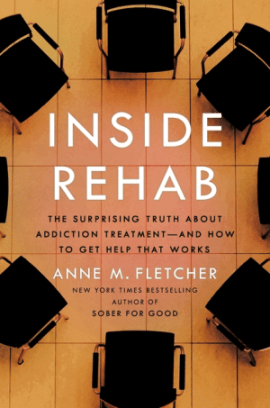
Inside Rehab Fletcher

I started reading Inside Rehab by Anne M. Fletcher and was surprised to learn that “the word ‘addiction’ comes from a Roman law having to do with ‘surrender to a master'” (11). I checked the OED and learned it’s derived from the Latin a dicere, which means one who is dictated to.

There’s debate in psychology circles about whether someone can be addicted to a person. I’ve always held that the answer is yes from personal experience. It looks like this was an original sense of the word.

Another sense of the original Latin tells us that one can be addicted to anyone or anything which dictates one’s actions. This supports the experience of many people from abusive relationship or cult survivors to Internet porn or social media addicts.

I call this debate settled.


Fletcher, Anne M. Inside rehab: the surprising truth about addiction treatment: and how to get help that works. NY, NY: Viking, 2013.

Happiness is a Fluffy Puppy

I think we could all use some happy today. So without further ado, here’s Panda Bear!


It’s Time to Bust a Few Myths

I’m angry. The recent coverage of the Puerto Rico rescue effort has shown once again that the macrocosm and the microcosm are the same. As above, so below.

What am I talking about? Puerto Rico had to rely on non-governmental organizations, companies, and charities for prompt(ish) response to the hurricane’s aftermath. Government response was slow, reluctant, and inadequate—primarily due to poor administration. Puerto Rico received the same message as individuals who need help—due to abuse, homelessness, disability, and other personal disasters. They’re told that the government will help you. That there are charities and programs to help anyone who needs it. In reality, this is a myth.

And it’s a myth that badly needs busting.

Because most Americans believe this myth, they turn away from those in distress. Friends who need help are fobbed off with platitudes in the belief “I don’t need to help because there’s plenty of help out there.” The myth fosters the attitude that people in trouble can get out if they really want to; which means, conversely, if you’re in terrible straights, you must want to be there or be too incompetent to help yourself.

I have been a victim of domestic violence and other abuse. I believed the myth, so I went to all the appropriate government agencies. They told me they didn’t have enough funds, so unless I reached a horrific level of abuse where my life was in obvious imminent danger, unless I was willing to go to a shelter or become homeless, they could not help me. Charities and programs for disabled adults between eighteen and sixty-four are few and far between, and gave me the same answer. I had come under the dark side of another myth: adults between eighteen and sixty-four are in the prime of life and are healthy, productive members of society who don’t need assistance.

Even though study after study shows that abusers become worse over time and it is important to act quickly at the first signs, even though all of my doctors had documented the ways in which the toll of daily “low level” abuse drastically worsened my disability, depression, and general health, I wasn’t eligible to receive assistance. My personal disaster just wasn’t bad enough. My abuser was elderly, so laws protected his right to remain in his own home and he could not be removed. So much for the rights of other family members to live free from fear and abuse. I could not leave for the streets or a shelter because of my fragile health, disability, and service dog. Most friends didn’t offer practical assistance, mostly because they believed the myth that help existed and was easily obtainable.

I’m strongly reminded of this article by the BBC in which a family has no recourse to remove an extremely violent and dangerous adopted child from their home. Instead, the parents must enter a program for abusive parents (which these were not) in order to get any kind of help from the government.

Trump is treating Puerto Rico similarly, declaring that their disaster isn’t really bad enough to merit government assistance. At the same time, Puerto Rico has been in dire economic straights for some time. They hadn’t reached the point that society thought their disaster was bad enough, they should receive help. I hope a positive outcome of the recent hurricanes is busting some of the myths that create barriers for the neediest.

Dear readers, please help me bust these myths and the realities that give rise to them wherever you encounter them.


Recommended Further Reading:

The Myth of Just Desserts

If You’ve Never Lived In Poverty, Stop Telling Poor People What To Do

Hell yes! This lies at the root of those myths I’ll be blogging about later today.

Rick Cooley's avatarRcooley123's Blog

Wouldn’t it be nice? As time goes on, it seems like more and more people with the power to change things for the better for those living in poverty haven’t a clue as to what life is like for those living in it. How many millionaires are there in Congress and the White House these days? How many of those people have even an ounce of empathy for the rest of us? – RJC

Source: If You’ve Never Lived In Poverty, Stop Telling Poor People What To Do

View original post

Fan art illustration of Hermione, Harry, and Ron from the Harry Potter series by Anoosha Syed.

Dear J. K. Rowling: I’m Confused

I was surprised when I came across this article on the BBC News website: “Backlash over illustrator’s black Hermione fan art”. And then I was confused.

Fan art illustration of Hermione, Harry, and Ron from the Harry Potter series by Anoosha Syed.

Anoosha Syed’s black Hermione is super cute! But, alas, confusing.

First, I’d like to say that writing a diverse cast of characters with regard to ethnicity, sexuality, gender identity, and so on without making it the focus or raison d’être is one of my goals. I’ve run into some problems because I’m untangling racism I didn’t realize I’d imbibed growing up and because it can be difficult to write the other, let’s be real. I’ve had to realize that you can’t please everybody and I just have to do my best to navigate these issues.

Now, Anoosha Syed argues that J. K. Rowling never states what race Hermione Granger is in the books. The closest she comes is one line in The Prisoner of Azkaban in which her skin is described as brown. So it’s not surprising that readers of all ethnicities would assume that she was their ethnicity. When done consciously, this process is called disidentification. When unconsciously, it’s called ethnocentrism. Syed further argues that Rowling selected a black woman, Noma Dumezweni, to play Hermione in the stage version. The author also retweeted her fan art, giving it the seal of approval.

Rowling’s actions are legitimately confusing for fans. She also selected Emma Watson, a white girl, to star in the film versions. Much was made of Rowling’s power to ensure accuracy in the films. And yet I’ve always been bothered by many inaccuracies that weren’t demanded by changing the medium. For example, in the books all of the Dursleys are clearly described multiple times as blond. Yet in the films they are brunettes. If the actors playing the Dursleys were the best available for the parts, hair dye or wigs could have easily fixed this problem.

So does Rowling herself not have a clear vision of what her characters look like? Does she just not care? Is she content to have multiple versions of her characters?

In a June 5, 2016 interview with The Guardian she says, “It was 17 years and just because I’ve stopped on the page doesn’t mean my imagination stopped.” So if the world of Harry Potter is still vivid in her mind, which casting choice better reflects her imagination?

In the same interview, Rowling addressed the controversy directly. “I decided not to get too agitated about it and simply state quite firmly that Hermione can be a black woman with my absolute blessing and enthusiasm,” she said.

“Can be a black woman.” (Emphasis mine.)

This wording suggests that Hermione was not originally a black woman in Rowling’s imagination, just that she’s okay with her character being portrayed as multiple races. She does not definitively state what ethnicity she had in mind when she wrote the Harry Potter series. So with the evidence at hand, I must conclude that Emma Watson best reflects Rowling’s vision. Watson was cast first and Rowling insisted the film accurately portrayed the books.

I understand Rowling’s impulse to embrace a more multicultural version of her characters. In essence, she is rewriting the Harry Potter series with her choices. And perhaps she didn’t have as much control over the films and play as purported. We’ll never really know. But I think a better and less confusing choice would have been acknowledging a black Hermione is a brilliant idea she wished she’d thought of, and then working to write with a wider color palette.

Musings

Beautifully said. Keep evolving, folks.

DirtySciFiBuddha's avatarDirty Sci-Fi Buddha

I suspect that most people settle into [chosen identity] by following the clues shown to them through nature and nurture.  IMHO, however, the consummate artist will not settle for [chosen identity].  The consummate artist will push themselves to access ALL identities, eventually discarding the concept of identity itself.  

And during that process, I believe the act of living itself becomes The Art.

View original post